
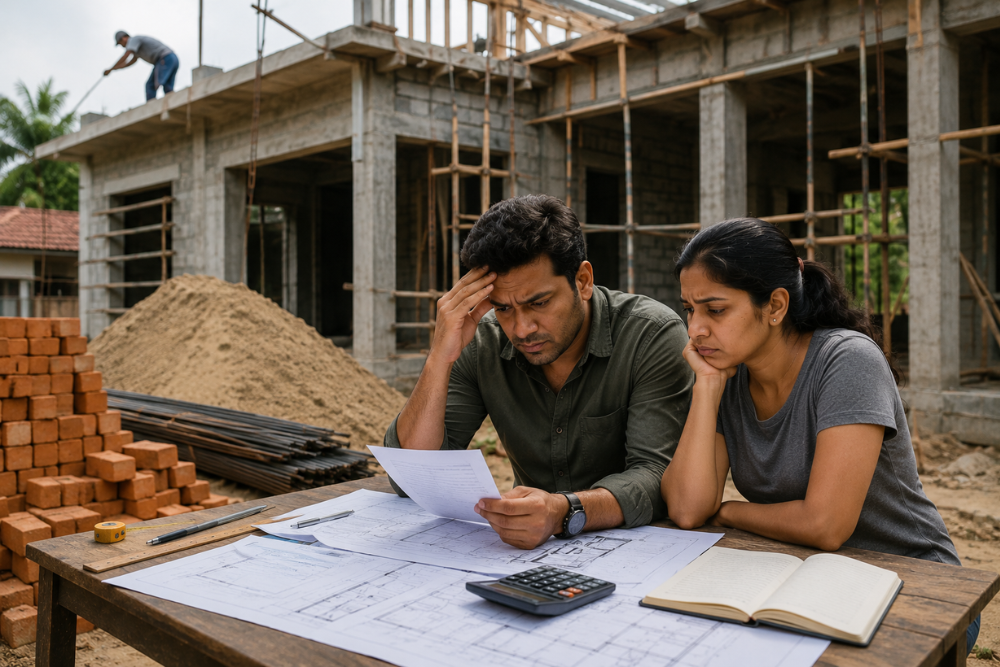
Building a home in Sri Lanka is one of the biggest financial investments most people will ever make. Yet many homeowners find themselves spending far more than they originally planned. What starts as a well-budgeted project can quickly become a costly experience due to poor planning, design changes, rising material prices, construction delays, and unexpected expenses. The good news is that most budget overruns can be avoided when you know what causes them and how to plan ahead.
In this guide, we explain the 7 most common reasons home builders in Sri Lanka go over budget and share practical steps you can take to keep your construction project on track and under control. Read on to learn how to protect your budget and avoid expensive mistakes.
Reason 1: Starting with a Vague or Incomplete Budget
Most people begin with a number in their head, 'I want to build for around Rs. 15 million,' and treat that as a budget. It is not. That is a guess.
A real budget lists every single cost before construction starts. And in Sri Lanka, there are many costs that homeowners forget to include. Local authority approval fees, utility connection charges, site clearing, soil testing, retaining walls, boundary walls, landscaping, and even temporary water and electricity during construction. None of these are small, and none of them are optional.
By the time these forgotten costs appear, the build is already in progress. At that point, you cannot stop. You either borrow more money or cut corners somewhere that matters.
How to fix it:
Before you finalize anything, ask your contractor or quantity surveyor for a full cost breakdown, line by line. Then go through it and ask what is not included. Cross-check with at least two other contractors. Add every cost you can think of, including approval fees, site work, and finishing touches like gates and paving.
A complete budget before day one will save you from painful surprises later.
Reason 2: Choosing the Wrong Contractor
In Sri Lanka's construction market, the cheapest quote is rarely the honest one. Many contractors deliberately put in a low number to win the job. Once the build starts and you are committed, they begin adding extra charges for things that should have been included from the start. These extras are called 'variations,' and they can add 20 to 30 percent on top of your original agreed price before the roof goes on.
The problem is that most homeowners compare quotes by the final number only. They do not check what is actually included, what is excluded, and what assumptions the contractor has made to bring the price down.
How to fix it:
When comparing quotes, do not just look at the bottom line. Go through each quote item by item and check what is covered. Ask every contractor the same questions so you are comparing like for like.
Beyond the quote, look at these three things before you sign anything.
- Fixed-price contracts: Ask if the contractor will commit to a set price with clearly defined scope.
- Past work: Visit at least one completed project and speak to that homeowner directly.
- References: Call previous clients and ask if the final cost matched the original quote.
Reason 3: Making Design Changes During Construction
Once construction starts, every change you make costs more than it would have on paper. Moving a wall, switching to a different tile, adding an extra window, changing the kitchen layout. Each of these sounds simple, but on a live construction site they are not.
One change rarely travels alone. If you move a wall, the electrical wiring needs to shift. If the wiring moves, the ceiling plan changes. If the ceiling plan changes, the tiling layout is affected. What started as one decision becomes five, and each one adds cost and pushes your timeline back.
This is one of the most common reasons Sri Lankan homeowners go over budget. The house looks different in real life than it did on paper, and the temptation to adjust things mid-build is strong. But acting on that temptation is expensive.
How to fix it:
Make every decision before work begins, not during. This includes the following.
- Layout: Finalise every room size, wall position, door and window placement on the drawings.
- Materials: Select your tiles, paint, roofing, and fittings before the contractor starts.
- Fixtures: Confirm bathrooms, kitchen fittings, and electrical points in writing ahead of time.
Once these are locked in, treat them as final.
Reason 4: Not Setting Aside a Contingency Fund
A contingency fund is a portion of your budget that you set aside and do not touch unless something unexpected comes up. Most Sri Lankan homeowners skip this completely. They budget for exactly what they plan to build, with nothing left over. When a surprise hits, and it almost always does, they have no room to absorb it.
Construction surprises are not rare. They are normal. The ground beneath your plot may tell a different story once digging starts. Rocky soil, soft ground, or a high water table can all force you into more expensive foundation work. Material prices can also shift between the time you plan and the time you buy, especially for cement, steel, and sand.
None of these problems are your fault. But without a contingency fund, they become your financial crisis.
How to fix it:
Before construction starts, set aside 10 to 15 percent of your total budget as a contingency. Keep it separate and treat it as money that is already spent. Common situations where this fund saves you include the following.
- Soil issues: Unexpected ground conditions that require deeper or wider foundations.
- Material price shifts: Price increases between your planning stage and your buying stage.
- Rework: Fixing mistakes or poor workmanship that needs to be redone correctly.
Reason 5: Fluctuating Material Prices and Poor Buying Timing
Building material prices in Sri Lanka do not stay still. Cement, steel, river sand, and tiles have all seen significant price movements in recent years, driven by import costs, fuel prices, and currency shifts. A price that is accurate when you plan your budget may be noticeably higher by the time your contractor actually needs that material on site.
The problem gets worse when materials are bought in small amounts at different times throughout the build. Each purchase happens at whatever the market price is that week. Over a full construction timeline of 8 to 12 months, those small differences add up to a large gap between your original estimate and your final bill.
How to fix it:
Do not leave material purchasing to chance or to the last minute. Take control of the timing and the volume. Here is how to approach the key materials.
- Cement and steel: Buy in bulk early in the project when your contractor confirms the quantities needed.
- River sand: Source locally and arrange delivery in larger loads to reduce per-unit cost.
- Tiles and fittings: Select and order early to lock in the price and avoid discontinued stock later.
- Supplier agreements: Ask suppliers if they will hold a price for a set period and get it in writing.
Reason 6: Construction Delays That Cost More Than Time
Most people think of a construction delay as an inconvenience. In reality, it is a cost. Every extra week your build runs over schedule means more money going out the door, even when no work is being done.
Labor costs continue when workers are kept waiting or brought back for incomplete phases. If you are renting while building, that monthly payment keeps running. If materials have already been delivered, you are paying to store them on site or risk them being damaged by weather. A delay does not pause your budget. It drains it quietly from multiple directions at once.
In Sri Lanka, delays happen for reasons that are very predictable. Monsoon rains slow or stop outdoor work for weeks at a time. Skilled tradespeople, especially for electrical and plumbing work, are often shared across multiple sites and do not always show up when scheduled. Material deliveries, particularly for imported items, can be held up without warning.
How to fix it:
Build a phase by phase timeline with your contractor before work starts and add buffer time to each stage.
- Foundation and structure: Add two extra weeks to account for weather and soil surprises.
- Electrical and plumbing: Schedule trades early and confirm their availability in writing.
- Material delivery: Order ahead of when each phase needs them, not at the same time.
- Monsoon season: Plan your roof and slab work to finish before the rains arrive.
Reason 7: No One Tracking the Money Week by Week
Many homeowners check their construction spending the same way they check their weight. Not often enough, and only after the damage is done. Waiting until the end of a phase to review costs means the overspending has already happened and there is nothing left to do but absorb it.
Construction costs leak in small amounts throughout a build. A few extra bags of cement here, an unplanned labor day there, a material substitution that cost more than the original. None of these feel significant on their own. But across months of building, these small untracked expenses can quietly add up to hundreds of thousands of rupees above your budget.
The fix is not complicated. It just requires consistency.
How to fix it: Set up a simple weekly money review with your contractor and stick to it without fail. Make these four habits part of your build from day one.
- Weekly expense report: Ask your contractor to provide a written summary of every cost from that week.
- Receipt file: Keep every receipt, either physical or photographed, sorted by week and category.
- Budget comparison: Check each week's spending against your original budget line by line.
- Early warning habit: If any category is running high, address it that week, not next month.
Need Help on Building Your Dream Home?
At Hello Builders, we specialize in turning your vision into reality with high-quality construction, modern designs, and expert project management. From luxury villas to contemporary homes, we handle every step of the process with professionalism and attention to detail.
Here’s why Hello Builders is the trusted choice for homeowners in Sri Lanka:
- Expertise & Quality: We use certified materials and follow best practices to ensure your home is safe, durable, and stylish.
- Comprehensive Services: Architectural design, structural engineering, interior solutions, council approvals, and full project management(all under one roof).
- Customer-Focused Approach: We work closely with you to bring your dream home to life while respecting your budget and timeline.
Take the first step toward your perfect home today. Click below to get in touch with our team!
| Contact Us |
Conclusion: What a Well-Managed Build Looks Like
A well-managed home construction project is not one that avoids every challenge. It is one that is prepared for them. Homeowners who stay within budget usually start with a detailed cost plan, choose the right contractor, finalise their design before construction begins, and keep a contingency fund for unexpected expenses. They also track spending regularly, plan material purchases carefully, and take steps to minimise delays.
Building a home in Sri Lanka will always involve decisions and risks, but most budget overruns can be prevented with proper planning and control. By avoiding the seven common mistakes covered in this guide, you can reduce financial stress, keep your project on schedule, and move into a home that meets both your expectations and your budget.
Key Takeaways
- Starting a home build without a detailed budget is one of the main reasons construction costs exceed expectations.
- Many homeowners overlook expenses such as approvals, utility connections, site preparation, and landscaping.
- Choosing a contractor based solely on the lowest quote can lead to costly variations and hidden charges later.
- Design changes made after construction begins often increase both costs and project timelines.
- Setting aside a contingency fund of 10% to 15% helps cover unexpected expenses without disrupting the project.
- Material price fluctuations can significantly affect the final construction cost if purchases are not planned properly.
- Buying key materials early and in bulk can help reduce the impact of future price increases.
- Construction delays caused by weather, labour shortages, or material issues can add substantial costs to a project.
- Regularly tracking expenses and comparing them against the original budget helps identify problems before they become serious.
- Careful planning, strong contractor management, and consistent budget monitoring are the keys to keeping a home build on budget in Sri Lanka.
FAQs
Can fixed-price contracts prevent budget overruns?
Fixed-price contracts significantly reduce the risk of budget overruns because the contractor commits to a set cost upfront. However, they only work when the full project scope is clearly defined before signing. If the scope is vague, contractors can still add charges through exclusions. A fixed price with a detailed scope document is the safest combination.
What is the current construction cost per square foot in Sri Lanka?
As of 2026, basic finish homes cost around Rs. 5,500 per square foot, mid-range homes cost Rs. 8,000 to 12,000 per square foot, and luxury homes cost Rs. 13,000 to 20,000 or more per square foot. These figures cover construction only. Land, furniture, and landscaping are separate costs that need to be budgeted for independently.
How much does it cost to build a complete house in Sri Lanka in 2026?
A standard two to three bedroom home of around 1,500 to 2,200 square feet typically costs between Rs. 10 to 50 million for a mid to luxury finish. Smaller homes with a basic finish can come in lower. The final number depends heavily on your location, design complexity, materials chosen, and finishing standard.
How do terrain and soil conditions affect building costs in Sri Lanka?
Rocky ground, soft soil, high water tables, and sloped land can all require deeper or wider foundations than originally planned. These are costs that no standard quote covers upfront because they only become clear once digging starts. Plots in hilly areas like Kandy or coastal zones near Galle carry a higher risk of unexpected foundation costs.
How do rising labor costs affect construction budgets in Sri Lanka?
Skilled labor costs in Sri Lanka, particularly for electrical, plumbing, and tiling work, have increased steadily. When delays push a project timeline out, labor costs rise further because tradespeople charge for return visits and extended time on site. Locking in labor agreements early and building a realistic schedule helps limit exposure to rising rates.
How does material wastage affect construction costs in Sri Lanka?
Poor site management leads to over-ordering, mishandling, and theft of materials, all of which add to your final bill without adding anything to your home. Wastage on unmanaged sites can account for 10 to 15 percent of material costs. Asking your contractor how they manage and track material use on site is a question worth asking before you sign.