
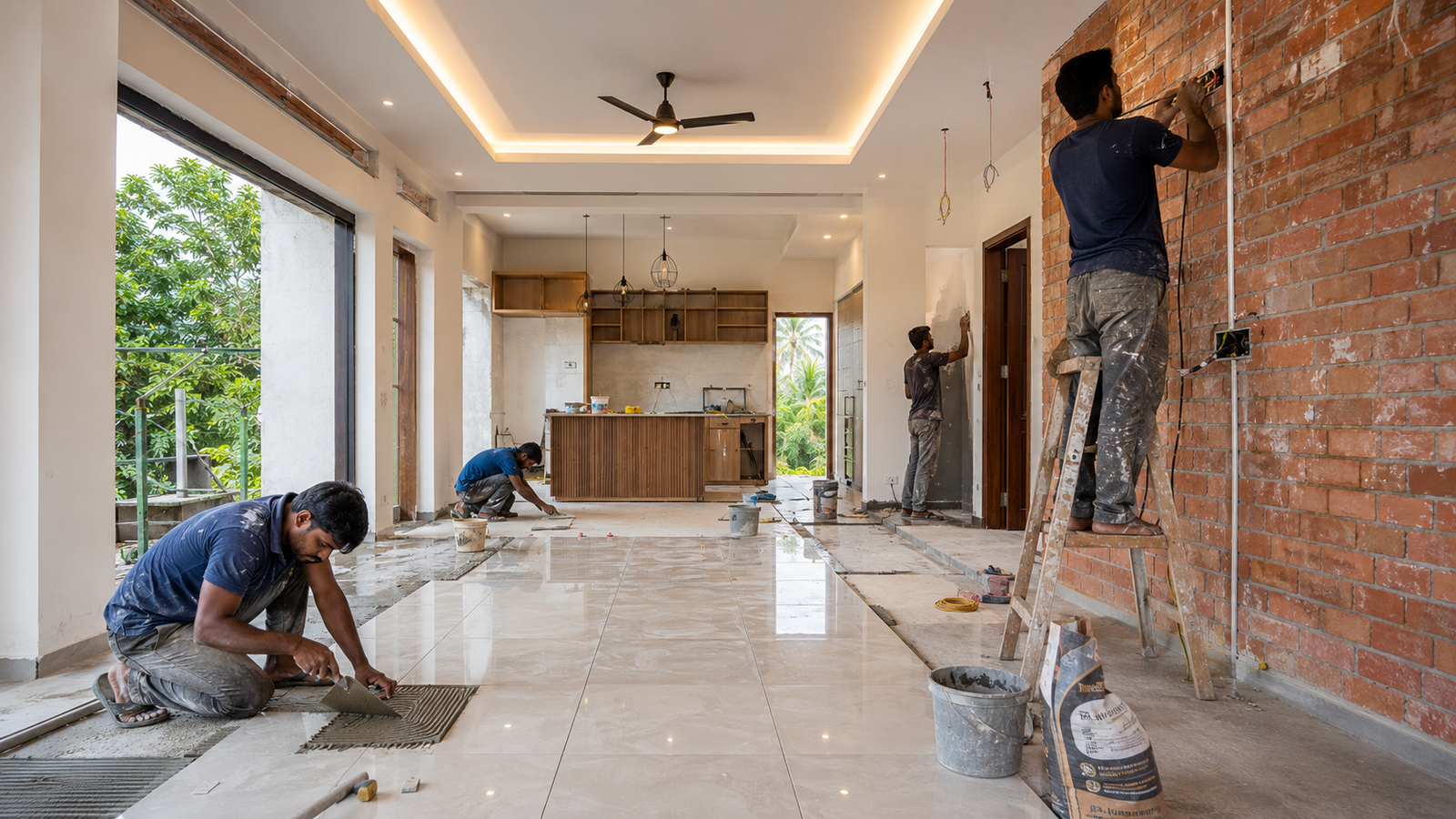
Deciding whether to renovate your existing home or rebuild it from the ground up is one of the biggest decisions a homeowner can make. Both options come with their own costs, benefits, challenges, and long-term implications. While renovation can help preserve the character of your home and reduce upfront expenses, rebuilding may provide a fresh start with a modern design that better suits your family's future needs.
In this guide, we'll explore what experienced home builders in Sri Lanka really advise, compare both options across key factors, and help you determine which path makes the most sense for your property, budget, and goals.
What Is Home Renovation
Home renovation means improving or updating your existing house without tearing it down. It can involve small changes like repainting walls and replacing flooring, or bigger jobs like rewiring the electrical system, redoing plumbing, or extending a room. The main structure and foundation of the house usually stay the same.
Renovation is a good way to fix problems, add space, or bring an old house up to modern standards while keeping its original character. Many homeowners in Sri Lanka choose renovation because it costs less than building a new house and takes less time to complete.
It also lets you stay connected to a home you already love, especially if it holds sentimental value or sits on land you don't want to disturb.
When Do Home Builders in Sri Lanka Recommend Renovating?
Home builders usually recommend renovation when:
- The foundation and main structure are still strong and safe.
- The house only needs cosmetic updates, like new flooring, paint, or fixtures.
- You want to add or reconfigure a few rooms without major structural changes.
- Your budget is limited and a full rebuild isn't affordable.
- The house has heritage value or a design you want to preserve.
- You want to finish the project faster and avoid long construction delays.
- You plan to stay in the house while work is being done.
If your home checks most of these boxes, builders will usually suggest renovating instead of starting from scratch.
What Is Home Rebuilding
Home rebuilding means demolishing your existing house completely and constructing a brand-new one in its place. Unlike renovation, rebuilding gives you a clean slate. You're not limited by the old foundation, layout, or structural constraints. This means you can design a home from scratch that fits your exact needs, choose modern materials, and follow current building codes and safety standards.
Rebuilding is a bigger commitment in terms of cost, time, and disruption to your daily life, since you'll likely need to move out during construction. But it's often the better long-term option when the existing house has serious problems or can't support the changes you want. Many homeowners in Sri Lanka choose to rebuild when renovation would end up costing nearly as much, without solving the underlying issues.
When Do Home Builders in Sri Lanka Recommend Rebuilding?
Home builders usually recommend rebuilding when:
- The foundation is damaged, cracked, or structurally unsound.
- The house has severe water damage or persistent dampness issues.
- Electrical and plumbing systems are outdated and unsafe throughout.
- The existing layout can't be adapted to fit your family's needs.
- Renovation costs would come close to the price of a new build.
- You want full design freedom without working around old constraints.
- The land has potential for a larger or more modern structure.
If your house shows several of these signs, builders will usually recommend rebuilding over trying to patch up an aging structure.
Renovate or Rebuild: A Comparison
Once you understand what each option involves, the real question becomes how they stack up against each other on the factors that matter most to you. Here's a quick side-by-side summary before we break down each aspect in detail.
| Aspect | Renovation | Rebuild |
| Cost | Generally lower, especially for partial updates | Higher upfront, but can offer better long-term value |
| Timeline | Faster, often weeks to a few months | Slower, typically several months to a year |
| Design Flexibility | Limited by existing structure | Full freedom to design from scratch |
| Permits & Approvals | Fewer approvals needed for minor work | Full council and NBRO approval process required |
| Living Arrangements | Often possible to stay during work | Usually requires moving out |
| Property & Resale Value | Moderate boost, depends on scope | Higher long-term value with modern build |
Now let's look closer at how renovation and rebuilding actually perform under each of these six aspects.
1. Cost
Money is usually the first thing homeowners weigh when choosing between the two options.
Renovation Approach
Renovation costs less upfront, especially if you're only updating finishes, fixtures, or a single room. A fresh coat of paint, new flooring, or an updated kitchen can be done on a modest budget. However, costs rise quickly once structural changes come into play, such as extending a room, moving walls, or reworking the foundation. Older homes can also reveal hidden issues, like damaged wiring or weak beams, once work begins, pushing the budget higher than expected.
Rebuild Approach
Rebuilding costs more from the start, since it covers demolition, a new foundation, and full construction from the ground up. But because everything is built fresh and to current standards, there are fewer surprise expenses along the way. You're paying more upfront, but with a clearer, more predictable budget overall.
Winner
Renovation, for homeowners with a limited budget or smaller-scope needs.
2. Timeline / Duration
How fast you need the project finished can shape your decision just as much as budget does.
Renovation Approach
Smaller renovations, like updating a kitchen or bathroom, can take just a few weeks. Larger ones involving structural work, extensions, or full rewiring may stretch to several months. Because much of the existing structure stays in place, there's usually less groundwork to redo, which helps keep the timeline shorter than starting from scratch.
Rebuild Approach
A full rebuild typically takes many months to a year, factoring in demolition, council approvals, NBRO clearance, and the full construction process from foundation to finishing. Delays are also more likely here, since every stage of the build depends on the one before it, and permit processing times can add weeks or months before construction even begins.
Winner
Renovation, if speed is a priority.
3. Design Flexibility & Customization
This aspect comes down to how much control you want over the final result.
Renovation Approach
You're working within the existing layout and foundation, which limits how much you can change without major cost increases. Moving load-bearing walls, changing room orientation, or altering the roofline is possible, but it often means extra structural work and engineering costs. Renovation is better suited to improving what's already there rather than reimagining it entirely.
Rebuild Approach
You get a blank slate to design a layout, style, and flow that suits your lifestyle completely. From room placement to natural lighting, ceiling height, and modern layouts like open-plan living, nothing is restricted by an old structure. This makes rebuilding the better choice if your current home simply doesn't match how you want to live.
Winner
Rebuild, for full design freedom.
4. Permits & Approvals
Sri Lanka's approval process differs significantly depending on the scale of work.
Renovation Approach
Minor renovations, like interior updates, painting, or fixture changes, often need fewer or no approvals at all. However, structural changes, such as extensions, added floors, or altered floor plans, may still require clearance from your local council. It's always worth checking with your builder before starting work, since even smaller structural changes can fall under approval requirements.
Rebuild Approach
A rebuild requires full approval from the Pradeshiya Sabha, Municipal, or Urban Council, along with NBRO clearance if applicable, and other statutory permits such as building plan approval and a certificate of conformity. This process takes time and requires proper documentation, which is why many homeowners rely on their builder to handle submissions and approvals on their behalf.
Winner
Renovation, for a simpler approval process.
5. Living Arrangements During Construction
Where you'll live during the project is a practical concern many homeowners overlook early on.
Renovation Approach
Depending on scope, you can often stay in your home, especially if work is done room by room. A kitchen or bathroom renovation might only mean temporary inconvenience, while larger projects involving multiple rooms may require staying elsewhere for short stretches. Either way, you generally have more flexibility to plan around the work.
Rebuild Approach
You'll almost always need to move out, since the entire structure is being demolished and rebuilt from the ground up. This means arranging temporary housing for several months to a year, along with the added cost and logistics of relocating your belongings during that period.
Winner
Renovation, for minimal disruption to daily life.
6. Property & Resale Value
Long-term value is worth considering even if you're not planning to sell soon.
Renovation Approach
Well-planned renovations can boost value, particularly kitchen and bathroom updates, since these are areas buyers pay close attention to. That said, returns vary depending on the project, and not every upgrade pays for itself at resale. Over-improving a home beyond what similar properties in the area are worth can also limit how much value you actually gain.
Rebuild Approach
A new, modern home built to current standards tends to command higher resale value and buyer interest. It offers updated systems, better energy efficiency, and a layout designed for how people live today, all qualities that make a strong impression on potential buyers and can justify a higher asking price.
Winner
Rebuild, for long-term property value.
How Home Builders in Sri Lanka Assess Your Existing House Before Giving Advice
Before recommending renovation or rebuilding, experienced home builders carry out a thorough assessment of your property. This helps them give advice based on facts, not guesswork.
They typically start with a structural inspection, checking the foundation, walls, and roof for cracks, dampness, or signs of weakening. Electrical wiring and plumbing systems are also reviewed, since outdated systems often influence whether renovation is even practical.
Builders then evaluate the existing layout against your needs, looking at whether the current floor plan can reasonably be adapted or if it's too restrictive to work with. Land size, soil condition, and zoning regulations are considered too, especially if a rebuild or extension is being discussed.
Alongside the physical inspection, builders usually sit down with homeowners to understand budget, timeline expectations, and long-term goals for the property. This conversation helps match the technical findings with what's realistic and affordable.
Once these factors are weighed together, builders can offer a clear, honest recommendation, one based on the actual condition of your home rather than assumptions. This process is what separates a professional assessment from a quick, surface-level opinion.
Common Mistakes Homeowners Make When Choosing Between Renovation and Rebuilding
Choosing between renovating and rebuilding is a major decision, and it's easy to get it wrong without the right guidance. Here are some common mistakes homeowners make:
- Underestimating hidden costs. Renovation budgets often balloon once contractors uncover structural damage, outdated wiring, or plumbing issues behind the walls.
- Skipping a professional structural assessment. Deciding based on appearance alone can lead to renovating a home that actually needs a rebuild, or vice versa.
- Ignoring permits and approvals. Some homeowners start work without proper council clearance, risking fines, delays, or issues when selling the property later.
- Letting emotions override practicality. Attachment to a family home is understandable, but it can lead to pouring money into a structure that's beyond reasonable repair.
- Not planning for living arrangements. Many underestimate how disruptive construction can be, especially with rebuilds that require moving out for months.
- Choosing based on price alone. The cheaper option upfront isn't always the better long-term investment, especially if it doesn't solve the underlying problem.
- Not consulting a builder early enough. Waiting too long to get professional input means decisions are often made with incomplete information.
Avoiding these mistakes usually comes down to one thing: getting a proper assessment and honest advice before committing to either option.
Questions to Ask Home Builders Before Making Your Decision
Before committing to renovation or a rebuild, it helps to ask your builder the right questions. Here's a practical checklist to guide that conversation.
| Question | Why It Matters |
| Is my home's foundation and structure still sound? | Determines whether renovation is even a safe, viable option |
| What permits or approvals will this project require? | Helps you understand the legal process and avoid delays |
| What's a realistic cost estimate, including contingencies? | Prevents budget surprises once work begins |
| How long will the project take from start to finish? | Helps you plan living arrangements and set expectations |
| Will I need to move out during construction? | Affects your daily life and any temporary housing costs |
| What hidden issues are common in homes like mine? | Gives insight into risks specific to your property's age or condition |
| Can the existing layout support the changes I want? | Clarifies whether renovation can realistically meet your needs |
| What warranties or guarantees do you offer? | Protects you against defects or issues after completion |
| Can you provide references or examples of similar projects? | Confirms the builder's experience with your specific situation |
| What's your recommendation, and why? | Gets a clear, honest professional opinion based on your home |
Asking these questions upfront helps you make a confident, well-informed decision, rather than relying on assumptions about what your home actually needs.
Not Sure Whether to Renovate or Rebuild?
At Hello Builders, we help homeowners across Sri Lanka make this decision with confidence, backed by honest assessments, expert advice, and years of hands-on experience. Whether your home needs a thoughtful renovation or a complete rebuild, we manage every step with professionalism and attention to detail.
Here's why Hello Builders is the trusted choice for homeowners in Sri Lanka:
- Expert Assessment: We evaluate your home's structure, layout, and condition to recommend the option that truly fits your needs, not a one-size-fits-all answer.
- Comprehensive Services: Architectural design, structural engineering, interior solutions, council approvals, and full project management, all under one roof.
- Customer-Focused Approach: We work closely with you to bring your vision to life while respecting your budget and timeline.
Whether you renovate or rebuild, the right decision starts with the right advice. Get in touch with our team today!
| Contact Us |
Conclusion: Renovate or Rebuild?
There is no one-size-fits-all answer to whether you should renovate or rebuild. The advice most home builders in Sri Lanka give is simple: renovate when your home's foundation and structure are still strong, the required changes are manageable, and you want to keep costs and construction time under control. Rebuilding is usually the better choice when the house has major structural issues, outdated systems, or a layout that can no longer meet your family's needs.
The right decision depends on the condition of your existing home, your budget, your long-term plans, and the value you expect from the investment. Rather than making a decision based on cost alone, it's important to get a professional assessment and consider the bigger picture. With expert guidance from experienced home builders in Sri Lanka, you can confidently choose the option that delivers the best balance of safety, functionality, and long-term value for your property.
Key Takeaways
- Renovation involves improving an existing home while keeping its main structure and foundation intact.
- Rebuilding involves demolishing the current house and constructing a completely new home from the ground up.
- Home builders in Sri Lanka usually recommend renovation when the foundation and structural elements remain strong and safe.
- Rebuilding is often advised when a house has serious structural damage, outdated systems, or major design limitations.
- Renovation generally costs less upfront and can be completed faster than a full rebuild.
- Rebuilding provides complete design freedom and allows homeowners to create a modern home that suits their current and future needs.
- Minor renovation projects typically require fewer approvals, while rebuilding requires a full approval process from the relevant authorities.
- Homeowners can often continue living in their house during renovation work, whereas rebuilding usually requires temporary relocation.
- A professional assessment of the structure, layout, utilities, and land potential is essential before deciding whether to renovate or rebuild.
- The best choice depends on the condition of the property, available budget, long-term goals, and advice from experienced home builders in Sri Lanka.
FAQs
Is it cheaper to renovate or rebuild a house in Sri Lanka?
Renovation is usually cheaper upfront, especially for cosmetic updates. Costs rise if structural work is needed. Rebuilding costs more from the start but offers a more predictable budget with fewer surprises, since everything is built fresh to current standards.
What are the signs that a house needs to be rebuilt instead of renovated?
Warning signs include cracked or damaged foundations, severe water damage, outdated wiring and plumbing throughout, and a layout that can't be adapted to your needs. If renovation costs approach the price of rebuilding, a rebuild is usually the better option.
How much does it cost to renovate an old house in Sri Lanka?
Costs vary widely based on scope, from minor cosmetic updates to major structural work. Smaller renovations cost significantly less than a full rebuild, but prices rise quickly once structural repairs, rewiring, or plumbing replacement are involved.
How much does it cost to build a new house in Sri Lanka?
New home construction costs depend on location, size, design, and material quality. Prices range widely, from basic builds using local materials to luxury homes with premium finishes. A builder can provide an accurate estimate based on your land and requirements.
Do I need permits to renovate a house in Sri Lanka?
No. Minor renovations, like painting or fixture updates, often don't require approval. However, structural changes such as extensions or added floors typically need clearance from your local Pradeshiya Sabha, Municipal, or Urban Council before work begins.
How long does renovation take in Sri Lanka?
Smaller renovations can take just a few weeks, while larger projects involving structural changes may take several months. Timelines depend on the scope of work and whether hidden issues are discovered once construction begins.
How long does it take to rebuild a house in Sri Lanka?
A full rebuild typically takes several months to a year, factoring in demolition, council approvals, NBRO clearance, and construction. Delays are common if permit processing takes longer than expected.
Does renovating increase property value in Sri Lanka?
Yes. Well-planned renovations, especially kitchen and bathroom updates, can boost property value. However, returns vary by project, and over-improving a home beyond neighborhood standards may limit how much value you actually gain at resale.
Should I hire home builders in Sri Lanka before deciding to renovate?
Yes. A professional assessment helps identify structural issues, realistic costs, and whether renovation can actually meet your needs. Getting expert input early prevents costly mistakes and ensures your decision is based on your home's actual condition.
How do I decide between renovating and rebuilding?
The right choice depends on your home's structural condition, budget, timeline, and long-term goals. A professional assessment from a home builder gives you a clear, honest recommendation based on facts rather than assumptions.