
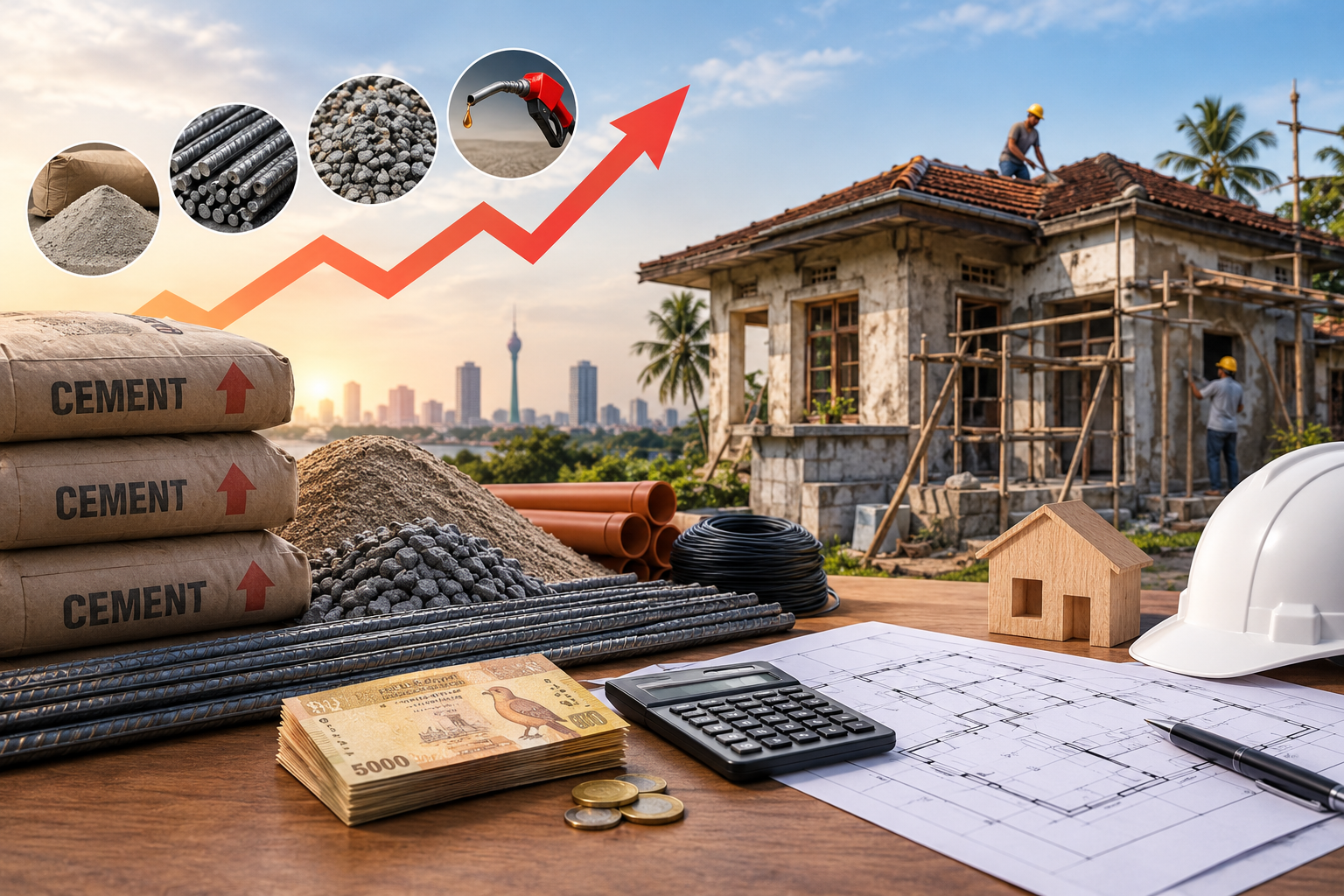
Rising material costs are changing house construction in Sri Lanka in clear ways. Cement went up by Rs. 150 to Rs. 175 in March 2026, and sand, gravel, and steel have also gone up. More than 60% of building materials are imported, so a weak rupee and high fuel prices push costs up fast. As a result, families are renovating old houses, building in stages, choosing smaller plans, and waiting longer to finish their homes.
If you plan to build, buy, or renovate, these changes affect you. In this article, we look at seven changes that are happening right now, plus a few more worth knowing. Read on to see what is changing and what it means for your own plans.
Change 1: More People Are Buying Old Houses and Renovating
More buyers in Sri Lanka now choose land with an old house on it instead of empty land. The reason is simple. Building a new home costs too much, and material prices keep going up.
In May 2026, the Daily Mirror reported that interest is growing in plots with older or smaller houses. Lanka Property Web’s Managing Director, Daham Gunaratne, said people would rather renovate or extend a house than build from the ground up.
This makes sense for many families. An old house already has walls, a roof, and a foundation, so they spend less on cement, steel, and sand. They can repair the house first and add rooms later when money allows.
For house construction in Sri Lanka, this means fewer brand new builds and more repair and extension work.
Change 2: Families Are Building in Stages
Many families no longer build the whole house at once. They build it in stages and finish each part when they have the money.
A common plan is to start with the foundation, walls, and roof. Once the house is covered and safe, the family slowly adds floors, tiles, paint, and fittings. Some also leave extra rooms or a second floor for later.
This helps because material prices change fast. The Sunday Times reported in August 2026 that a bag of cement had gone from about Rs. 1,700 to Rs. 2,300. Paying in smaller parts is easier than finding the full amount in one go.
There is a downside. Prices may rise again before the next stage starts, so the later work can cost more than planned.
Change 3: House Plans Are Getting Smaller and Simpler
Rising material costs are pushing families to plan smaller and simpler homes. Instead of a large house with many rooms, more people now choose a compact layout with only the rooms they really need.
Simple shapes cost less to build. A plain rectangular house needs less cement, steel, and labour than one with many corners, curved walls, or a complex roof. Families also cut back on extras like large windows, high ceilings, and costly finishes.
Many also plan the layout so the house can grow later. They leave space for an extra room or a second floor and add it when they can afford it. This links closely to building in stages.
The result is that more homes in Sri Lanka are now planned around need first and looks second.
Change 4: Projects Are Taking Longer
House projects in Sri Lanka are taking longer to finish. When material prices jump, many builders and owners stop and wait instead of buying at a high price.
The Sunday Times reported in August 2026 that construction has slowed because of the rising dollar and higher raw material costs. An industry analyst said this will continue until the exchange rate and oil prices settle. More than 60% of building materials are imported, so any change in the dollar rate affects the work quickly.
The Morning reported in March 2026 that price swings have made budgeting harder and slowed project work. When the cost of the next batch of cement or steel is unclear, owners often pause until they can pay for it.
For families, this means a longer wait before they can move in.
Change 5: Builders Are Changing How They Quote and Sign Contracts
Builders in Sri Lanka are changing how they price and sign house projects. When cement, steel, and other materials can rise in a few weeks, a fixed price for a long project is risky for them.
Many builders now give quotes that are valid for a short time only. Some add a price change clause, which lets them raise the cost if material prices go up during the project. Others ask for payment in smaller parts, linked to each stage of work.
This idea is not new in larger contracts. The Chamber of Construction Industry Sri Lanka has said that price increases should be paid on projects that run longer than three months.
For homeowners, this means reading the contract with care before signing.
Change 6: People Are Switching to Other Materials
Higher prices are pushing many families to look for other materials. Since more than 60% of building materials in Sri Lanka are imported, items that depend on the dollar rate cost the most. Cement, steel, PVC pipes, and electric cables have all gone up in recent years.
To cut costs, some owners choose locally made products over imported ones. Others pick simpler options for floors, walls, and roofs, such as plain finishes instead of costly tiles or fittings. Some also use less of the most expensive materials by keeping the design simple.
Quality still matters. Cheaper does not always mean better, so owners should check that materials meet Sri Lanka Standards and ask their builder or engineer before making a switch.
Change 7: Small Builders and Contractors Are Under More Pressure
Small builders and contractors feel the price rises more than anyone else in the industry. They usually work with small budgets and cannot buy materials in large amounts. Large firms can buy cement in bulk, so they face fewer shortages and smaller price jumps. Small firms buy as they go, so they pay the new price each time.
Fixed price jobs make this harder. If cement or steel goes up after the contract is signed, the builder has to cover the gap or stop work. The Morning has reported that small and medium companies saw projects delayed for months by cement shortages and rising material costs. Finding skilled workers is another problem, and labour costs are pushing total costs up as well.
For homeowners, this means fewer small builders to choose from and a higher chance of delays when hiring one.
Additional Changes
Along with the seven changes above, a few other shifts are showing up in house construction in Sri Lanka.
- Buying materials early or in bulk. Some owners and builders buy cement, steel, and other items when prices look low, and store them for later use. This protects them from the next price rise, but it needs cash upfront and a safe place to keep the materials.
- Choosing ready-made homes or apartments. Some people now buy a finished house or apartment instead of building. Lanka Property Web reported in 2022 that high material costs and a weak rupee changed buying habits in this way. A finished home has a clear price, and the buyer avoids the risk of rising costs during construction.
- Relying more on home loans. Banks have cut housing loan rates, which now range from 7% to 15%, according to the Daily Mirror in May 2026. More families use loans to cover high building costs, but a loan adds a monthly payment for many years.
- Slower government and large projects. The Sunday Times reported in August 2026 that the government has restarted some road and irrigation works, but at a slower pace than private projects. This affects how much material is available and how busy suppliers are.
Plan Your Home Around Today’s Material Prices
Material prices change fast, and a plan made a few months ago may already be out of date. Our team at Hello Builders can help you build around today’s costs. Our team prepares a detailed cost estimate (BOQ), so you know where your money goes before work starts. We also design custom modern homes to fit your budget, so you don’t have to give up the home you want.
Use our cost calculator for a quick idea, or call us to talk through your plan.
| Calculate Your Cost | Talk to Our Team |
Conclusion
Rising material costs are changing house construction in Sri Lanka in many ways. More people are renovating old houses, building in stages, and choosing smaller, simpler plans. Projects take longer, builders are changing how they quote and sign contracts, and small contractors are under more pressure. Families are also switching materials, buying early, or choosing ready-made homes.
These changes show how much material prices now shape every decision, from the house plan to the contract. If you plan to build, start early, check current prices often, and read every contract with care before you sign.
Key Takeaways.
- Cement went up by Rs. 150 to Rs. 175 in March 2026, and sand, gravel, and steel have also gone up.
- More than 60% of building materials in Sri Lanka are imported, so a weak rupee and high fuel prices push costs up fast.
- More buyers now choose land with an old house and renovate or extend it instead of building a new one.
- Many families build in stages and finish each part when they have the money.
- House plans are getting smaller and simpler, and many are planned so the house can grow later.
- Projects take longer because owners and builders often wait when material prices jump.
- Builders now give quotes that are valid for a short time, so homeowners should read every contract with care.
- Some families switch to local or simpler materials, but they should still check that the materials meet Sri Lanka Standards.
- Small builders and contractors feel the price rises the most, which means fewer choices and a higher chance of delays for homeowners.
- Other shifts include buying materials early, choosing ready-made homes, relying more on home loans at 7% to 15%, and slower government projects.
FAQs
Is building a house in stages a good idea now?
Building in stages can work well right now, because it spreads the cost over time. It suits families who cannot pay for everything at once. The main risk is that prices may rise before the next stage starts. It helps to finish the structure and roof first, so the house stays safe while you wait.
Are builders still giving fixed price quotes?
Some builders still give fixed price quotes, but many now keep them valid for a short time only. Others add a price change clause that lets them raise the cost if material prices go up. Always ask what happens if cement or steel prices rise, and get the answer in writing.
Which building materials have gone up the most?
Cement has risen clearly, with a 50 kg bag moving from about Rs. 1,700 to Rs. 2,300, according to the Sunday Times. Steel, sand, and gravel have also gone up, along with PVC pipes and electric cables in recent years. Cement and steel are named most often by industry officials.
Will building material prices come down soon?
It is hard to say. Steel and fuel prices fell in 2025, according to a CIOB report, but cement rose and 2026 brought new pressure. Industry officials say the slowdown will last until the exchange rate and oil prices settle. Prices may ease then, but check current rates before you buy.