
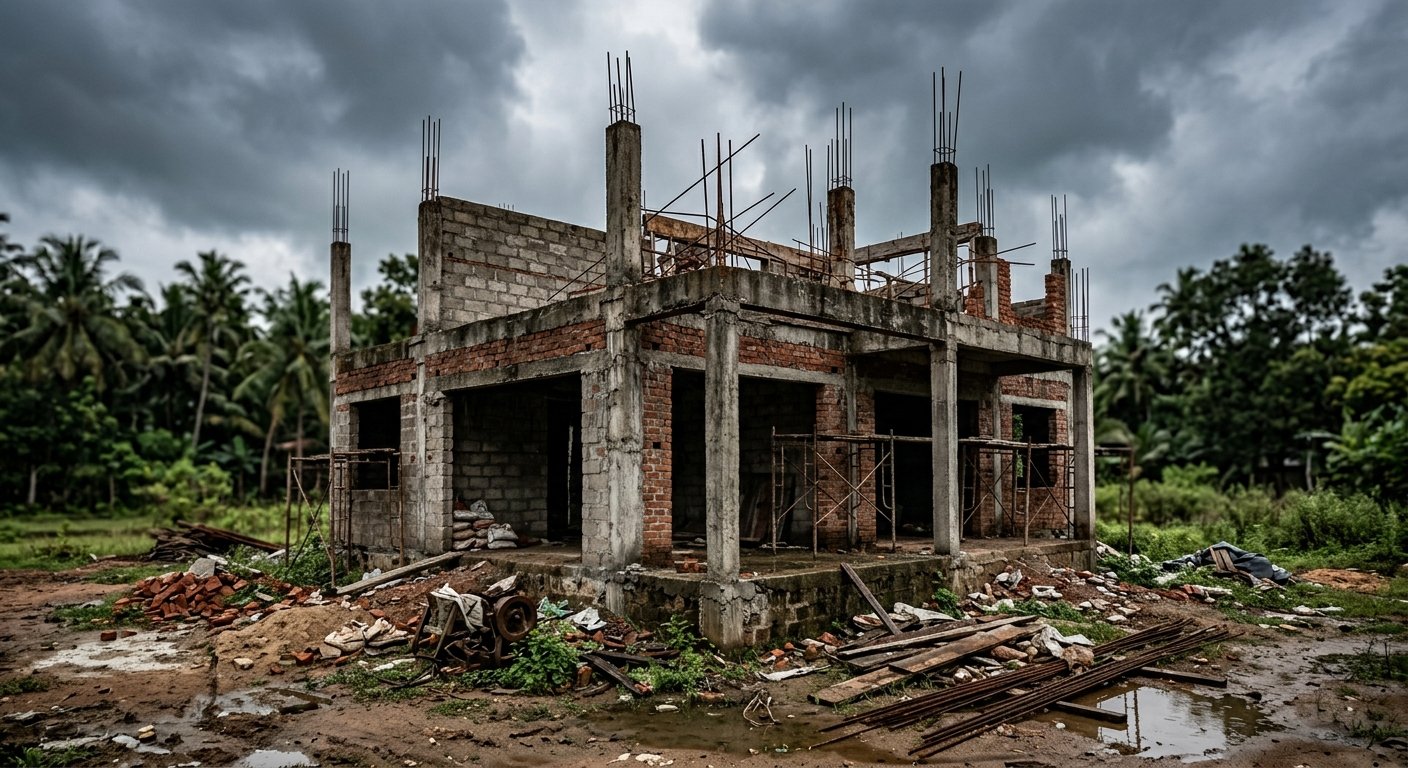
When house construction money runs out midway, work on the site stops immediately. The contractor moves on to other jobs, the unfinished structure gets exposed to sun and rain, exposed steel starts to rust, and banks are often reluctant to lend against a half-built house. What was meant to be a straightforward build turns into a costly, stressful pause, one that usually ends up costing more to fix than it would have to finish in the first place.
If you're currently facing this situation, or want to understand the risks before you start building, this guide walks you through exactly what happens when construction stalls due to a lack of funds, what you can do if it happens to you, and how to avoid it altogether. Whether you're troubleshooting a paused project or planning ahead, here's what you need to know.
1. Work on the Site Stops Immediately
The moment the money runs out, the site goes quiet. Masons pack up, laborers stop coming, and the contractor has no reason to continue without payment. This is often the first and most immediate sign that a house construction project is in trouble.
In Sri Lanka, most contractors work on a stage-by-stage payment basis. If you can't pay for the next stage, whether it's the roof, plastering, or finishing work, the contractor simply moves on. There's no legal obligation for them to wait around or keep working without funds.
What makes this worse is how fast it happens. One week the site is active, the next it's empty. No notice, no transition plan, just an abrupt stop that leaves your house standing half-done, often at one of the most vulnerable stages of construction.
2. Your Contractor Moves on to Other Jobs
Contractors in Sri Lanka rarely have the luxury of waiting for one client to sort out their finances. They have their own workers to pay, their own bills to manage, and other clients lined up. Once your payments stop, they move their team to the next project that can pay on time.
This is simply how the construction business works here. A contractor's income depends on keeping their crew busy, so an idle site is a loss they can't afford either.
The problem is, once your contractor leaves, getting them back isn't guaranteed. They may already be committed elsewhere by the time you're ready to resume. You could end up starting over with a new contractor who has to assess someone else's unfinished work, which often comes with its own delays and added costs.
3. The Unfinished House Is Exposed to Sun and Rain
Sri Lanka's climate doesn't wait for your budget to recover. Heavy monsoon rain, intense sun, and high humidity all take a toll on a half-built house left without a roof or proper covering.
Open walls soak up moisture during the rains, which can weaken plasterwork before it's even finished. Exposed floors and foundations collect standing water, especially during the monsoon seasons between May–September and October–January. Direct sun exposure over months can cause cement surfaces to crack and fade.
If the roof isn't on yet, the risk is even higher. Rain can seep into walls, ceilings, and electrical conduits, causing damage that isn't always visible right away. What looks like a pause in construction is often the house quietly deteriorating in the background, adding repair costs to whatever you'll need to spend when work finally resumes.
4. Steel Reinforcement Bars Start to Rust
Exposed steel reinforcement, the rebar inside columns, beams, and slabs, is one of the most serious risks of a stalled construction site. Once these bars are left uncovered and exposed to Sri Lanka's humidity and rain, rust starts forming within weeks.
Rusted rebar isn't just a surface problem. Rust causes the steel to expand slightly, which can crack the surrounding concrete once construction resumes and the structure is loaded. If left too long, corrosion can weaken the steel's structural strength, compromising the safety of the entire building.
This is especially risky for columns and slabs left waiting for the next stage, since these bars are meant to be covered with concrete fairly quickly. The longer they sit exposed, the more likely you'll need to clean, treat, or in worse cases, replace sections of steel before continuing, adding cost and delay to an already stalled project.
5. You Keep Paying Rent While the House Sits Unfinished
Most people start building because they want to stop renting. But when construction stalls, that plan backfires. You end up paying rent for a home you don't need, on top of whatever you've already spent on a house you can't live in yet.
This double cost adds up fast. Every month the site sits idle is another month of rent that could have gone toward finishing construction. It's money spent with nothing to show for it, while your unfinished house continues to sit there, unpaid for and unprotected.
For many families, this is what makes running out of money midway so painful. It's not just the stalled construction, it's the ongoing financial pressure of paying for two homes at once: the rented one you're living in, and the unfinished one you're still paying off.
6. Banks Won't Lend Against a Half-Built House
If you're hoping a bank loan will bail you out midway, that's usually not how it works. Most banks in Sri Lanka are hesitant to lend against a half-finished house, since an incomplete structure is hard to value and even harder to sell if you default.
Construction loans are typically released in stages, tied to progress, not handed out freely once work has stalled. If your original loan has already been used up and the house isn't complete, getting approved for additional financing becomes difficult without strong justification and updated documentation.
This leaves many homeowners stuck. The house isn't finished enough to be valued as a completed asset, but it's already too far along to simply walk away from. Without a clear plan and cost estimate for the remaining work, banks are unlikely to offer the extra funding needed to move forward.
7. Restarting Later Costs More Than Finishing Would Have
Pausing construction rarely saves money in the long run. It usually costs more. Material prices in Sri Lanka don't stay fixed, cement, steel, and sand rates can rise significantly by the time you're ready to resume.
There are also hidden costs of restarting. You may need to repair damage caused by exposure to weather, treat rusted rebar, or redo cracked plasterwork before continuing. If your original contractor has moved on, a new one will likely charge extra to assess and take over someone else's unfinished project.
On top of that, labor rates change too, and a new contractor may quote higher than your original agreement. What could have been finished in one continuous project now becomes two separate, more expensive undertakings, the original build and the cost of restarting it, adding up to far more than if the money had lasted the first time around.
Additional Things That Can Happen
Beyond the major setbacks, a stalled construction site brings a few other problems homeowners often don't expect.
- Cement work and plastering crack without proper curing. Concrete needs consistent moisture and time to cure properly. When work stops midway, unfinished cement surfaces can dry unevenly or crack, especially if curing was interrupted partway through.
- Materials and fittings left on site get stolen. Cement bags, roofing sheets, wiring, and even bathroom fittings left unattended on an idle site are an easy target. Without daily activity or supervision, theft becomes a real risk.
- Disputes with the contractor over what's owed and what's done. Without clear documentation, disagreements often arise over how much work was completed versus how much was paid, especially if there's no written agreement covering the halted stage.
- Family stress and pressure to find quick money. A stalled build isn't just financial. It brings ongoing stress, tension between family members, and pressure to find funds quickly, sometimes leading to rushed decisions like high-interest loans.
- The site attracts squatters or becomes a dumping ground. An unfinished, unattended structure can become an easy spot for squatters to move in or for others to dump garbage, especially in less monitored areas.
What Should You Do If You Run Out of Money Midway?
If you've run out of money midway, the first step is to stop and assess, not panic. Get a clear picture of exactly what's been completed and what's still left, ideally with a written cost estimate from your contractor or a quantity surveyor.
Protect the structure before anything else. Cover exposed rebar, tarp open walls and floors, and secure any materials or fittings still on site. This alone can prevent a lot of the weather and theft-related damage that adds to your costs later.
Next, look into your financing options. Speak to your bank about topping up your existing construction loan, or explore other lending options built specifically for stalled projects. Be upfront about your situation rather than letting the site sit idle while you figure things out.
If a full restart isn't possible right away, consider finishing in phases. Completing one section at a time, starting with structurally critical work like the roof, is often more manageable than waiting to fund the entire remaining project at once.
Most importantly, get a fixed-price quote for the remaining work before resuming, so you know exactly what it'll take to finish without running into the same problem twice.
How to Avoid Running Out of Money Before You Start
The best way to deal with running out of money midway is to avoid it in the first place. Start with a fixed-price contract rather than an open-ended agreement, so you know the full cost upfront instead of discovering surprises as work progresses.
Build in a contingency fund of at least 15–20% on top of your estimated budget. Material prices in Sri Lanka shift often, and this buffer protects you from getting caught short.
Get a proper cost estimate per square foot before construction begins, based on your actual design and finish level, not a generic figure from a friend or online source.
If you're using a loan, structure disbursements in stages tied to actual construction progress, rather than releasing large sums upfront. This keeps your funding aligned with the work completed, reducing the risk of running dry midway.
Planning to Build? Avoid This Before You Start
The most reliable way to avoid running out of money midway is to know your full costs before you break ground, not halfway through.
At Hello Builders, we build your home on a clear, fixed-price contract, so there are no surprise costs, no open-ended quotes, and no risk of running dry partway through the project. From detailed Bills of Quantities to staged, progress-based payments, every part of our process is designed to keep your budget and your build on track from start to finish.
If you're planning a new home and want to avoid this exact situation, our team can help you plan and budget with confidence from day one.
Conclusion
Running out of money midway through house construction is one of the most stressful situations a homeowner in Sri Lanka can face. Work stops, the structure sits exposed to weather and theft, banks hesitate to lend, and restarting almost always costs more than finishing would have.
The good news is that this situation is manageable if you act quickly. Protecting the structure, getting a clear cost estimate, and exploring financing options can help you get back on track without making the damage worse. And if you're still in the planning stage, the best way to avoid this altogether is to lock in a fixed-price contract and budget with a proper contingency before construction even begins.
Whether you're troubleshooting a stalled project or planning ahead, understanding these risks upfront puts you in a much stronger position to protect your investment and finish the home you set out to build.
Key Takeaways
- When construction money runs out, work on the site stops almost immediately, often without any notice or transition plan.
- Contractors typically move on to other paid jobs once payments stop, and getting them back later isn't guaranteed.
- An unfinished structure left exposed to Sri Lanka's sun and rain can suffer weather damage, especially without a roof in place.
- Exposed steel reinforcement bars start to rust within weeks, which can weaken the structure if left untreated for too long.
- Homeowners often end up paying rent while their unfinished house sits idle, adding ongoing costs on top of what's already been spent.
- Banks are generally reluctant to lend against a half-built house, since it's difficult to value and even harder to sell if things go wrong.
- Restarting a stalled project almost always costs more than finishing it would have, due to rising material prices and added labor costs.
- Additional risks include cracked plasterwork, theft of materials, contractor disputes, and squatters moving into an unattended site.
- If you run out of money midway, protecting the structure and getting a clear cost estimate should come before deciding on next steps.
- The most effective way to avoid this situation is to start with a fixed-price contract and a proper contingency fund before construction begins.
FAQs
Is it legal to leave a house construction unfinished in Sri Lanka?
Yes, there's no law against pausing construction on your own property. However, local authorities can issue notices if the structure becomes unsafe or a hazard, and you may be required to secure or repair it to avoid penalties.
How long can a half-built house sit before it becomes unsafe?
There's no fixed timeframe, but exposed steel and untreated concrete can start showing structural issues within months, especially through monsoon seasons. Regular inspections are recommended if you can't resume construction right away.
Does home insurance cover a stalled construction project?
Only if you have Contractor's All Risk (CAR) insurance in place before the pause. Without it, damage from weather, theft, or vandalism during a stalled period is typically not covered and becomes your financial responsibility.
Can I sell a half-built house in Sri Lanka?
Yes, but it's usually harder to find buyers and the sale price is often lower, since buyers factor in the cost and risk of completing someone else's unfinished project.
What should I do if squatters move into my unfinished house?
Report it to the local police and Grama Niladhari immediately. Keeping the site secured, visited regularly, and clearly marked as private property helps prevent this from happening in the first place.