
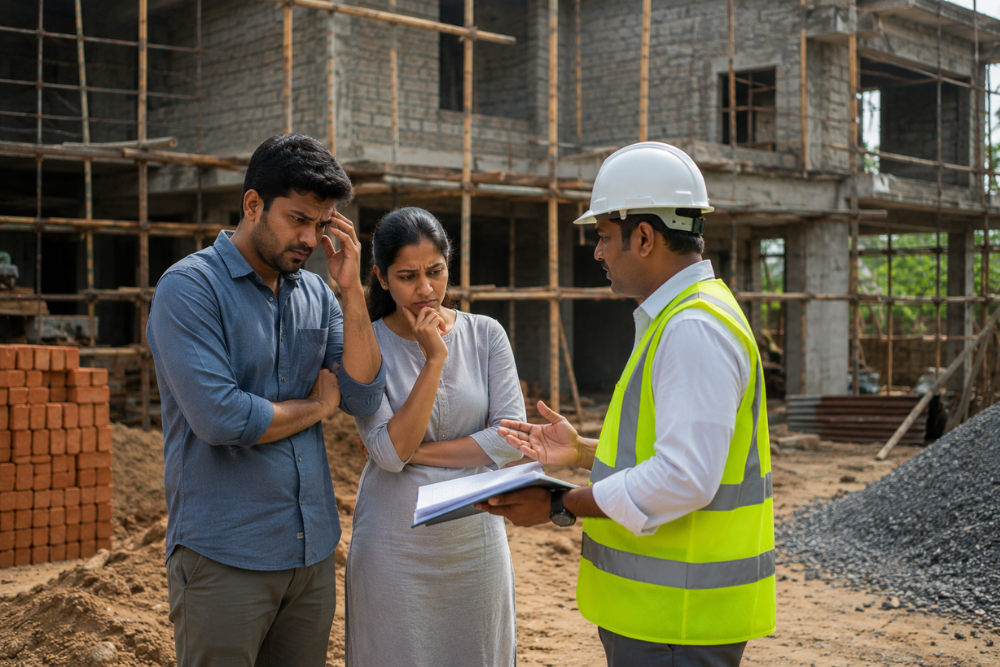
Building a house is one of the biggest investments most Sri Lankans will ever make, which is why choosing the right construction company is so important. Unfortunately, not every contractor delivers on their promises. Delays, poor workmanship, unexpected costs, and lack of communication can quickly turn your dream home into a stressful and expensive experience. The good news is that there are usually warning signs that something is wrong.
In this article, we look at five clear signs that you may have hired the wrong house construction company in Sri Lanka and explain what you can do to protect your investment before the problems become even more costly. Read on to learn what to watch for and how to take control of your project.
Sign #1: They Ignore the Contract and Agreed Specifications
Everything looks fine in the first few weeks. The workers show up, the foundation gets laid, and you feel confident about your decision. Then slowly, things start to shift. The tiles you selected are replaced with a cheaper brand. A wall gets built in the wrong position. The roofing material is different from what was quoted. When you ask, the contractor brushes it off as a 'small change' or claims the original material was unavailable.
This is one of the most common problems homeowners face in Sri Lanka. Many construction agreements are made verbally or through informal documents, which gives dishonest contractors room to make changes without real consequences.
Here is what this usually looks like on site:
- Changes made to the design or layout without informing you.
- Cheaper materials substituted without your approval.
- Agreed construction steps being skipped to save time or cost.
- Specifications from the quotation not matching the actual work.
How to handle it
Act as soon as you notice the first change. Do not wait for it to happen again.
- Put it in writing: Send a message or letter to the contractor clearly stating what was agreed and what was changed.
- Refer to the contract: Your signed agreement is your strongest tool. Use it.
- Document the site: Take photos of the materials used and the work completed.
- Get an independent opinion: If the contractor denies the issue, bring in a qualified engineer or quantity surveyor to assess the work.
Sign #2: Communication Has Become Difficult
You call, and it rings out. You send a message, and you get a one-word reply two days later. When you visit the site, the foreman tells you one thing and the contractor tells you another. At some point, getting a straight answer starts to feel like a full-time job.
Poor communication is rarely just an inconvenience. In house construction, it usually means decisions are being made on site without your knowledge, problems are being hidden, or the project is running into trouble the contractor does not want to admit.
This is especially common in Sri Lanka where many contractors manage multiple projects at once, leaving your site unsupervised for days with no one accountable.
Here is what this looks like in practice:
- Calls and messages go unanswered for days at a time.
- Site visits reveal work you were never told about.
- Different team members give conflicting information about progress.
- No regular updates unless you push for them.
- The contractor avoids direct questions about costs or timelines.
How to handle it
- Set a schedule: Agree on a fixed day each week for a progress update, either by call or site visit.
- Use written communication: WhatsApp or email creates a record. Avoid settling important matters over phone calls only.
- Ask direct questions: Ask for the current stage of work, what is planned for the next two weeks, and whether anything is behind schedule.
- Escalate if ignored: If the contractor continues to be unreachable, send a formal written notice referencing your contract terms.
Sign #3: The Quality of Work Is Poor
You do not need to be a construction expert to spot bad work. Uneven walls, crumbling plaster, poorly laid tiles, cracks appearing in fresh concrete, roofing sheets that are misaligned. These are things you can see with your own eyes, and if you are noticing them early in the build, it is a serious warning sign.
In Sri Lanka, quality issues often come down to cost cutting. When a contractor has underbid a project or is running low on funds, the easiest way to recover is to use cheaper materials, rush the work, or reduce the number of skilled workers on site. The problem is that poor workmanship at the foundation or structural stage does not always show up immediately. It shows up months or years later, as cracks, leaks, and costly repairs.
Here is what poor quality typically looks like on a Sri Lankan construction site:
- Concrete that looks thin, poorly mixed, or unevenly poured.
- Walls that are not straight or have visible gaps in the brickwork.
- Roofing with gaps, misaligned sheets, or weak supports.
- Plastering and finishes that crack or peel within weeks.
- Tiles laid unevenly with inconsistent spacing.
How to handle it
- Document everything: Photograph every defect clearly with dates.
- Raise it in writing: Inform the contractor of each issue formally and request a correction with a deadline.
- Bring in an independent inspector: A qualified engineer or building inspector can assess whether the work meets acceptable standards and provide a written report you can use if the situation escalates.
Sign #4: The Budget Keeps Increasing Every Few Weeks
You agreed on a price, signed a document, and felt comfortable with the budget. A few weeks in, the contractor comes back asking for more money. The reason sounds fair enough, so you pay. Then it happens again. And again. Before long, your project is costing significantly more than what was originally quoted, and you have no clear picture of where the money is actually going.
Some cost increases during construction are genuine. Material prices in Sri Lanka have risen sharply in recent years, and certain unforeseen site conditions can add legitimate costs. However, there is a clear difference between a transparent, documented cost revision and a contractor who simply keeps asking for more money with no proper explanation.
Here is what unreasonable budget increases look like:
- No detailed breakdown of why the cost has gone up.
- Variation charges added for work that was already part of the original scope.
- Verbal requests for cash payments with no receipt or record.
- The original quotation missing key line items that are now being billed separately.
- Pressure to pay quickly before the next stage can begin.
How to handle it
- Compare against your quotation: Check every new charge against the original agreed scope of work.
- Request a written variation order: Any cost change should be documented, signed, and agreed upon by both parties before the work is done.
- Get a quantity surveyor: If you suspect overcharging, a qualified quantity surveyor can review the bills and give you an independent assessment of fair costs.
- Pause payments: If charges cannot be explained clearly, hold the next payment until full written clarification is provided.
Sign #5: They Keep Missing Deadlines Without a Valid Reason
Your contractor gave you a completion date. You planned around it. Maybe you gave notice on a rental, arranged financing, or made family plans based on that timeline. Then the date passed. A new date was given. That passed too. Each time, there is an excuse, weather, material delays, worker shortages, but nothing that fully explains why the project keeps falling behind.
Some delays in Sri Lanka construction are real. Monsoon seasons, public holidays, and occasional material supply issues are part of building here. However, a contractor who is well organised will factor these into the schedule from the start and communicate changes early. Constant unexplained delays usually point to poor planning, cash flow problems, or a contractor who is running too many projects at once and spreading resources too thin.
Here is what genuine mismanagement looks like on site:
- The site sits idle for days or weeks with no workers present.
- Deadlines are revised repeatedly without a revised schedule being provided.
- Work on your project stops whenever another project needs attention.
- The contractor cannot give a clear answer on when the next stage will be completed.
- Delays are always blamed on external factors, never on planning or management.
How to handle it
- Refer to your contract: A well written contract will include a project timeline with milestones. Use this as your reference point.
- Request a revised schedule: Ask the contractor to provide an updated timeline in writing with clear completion dates for each remaining stage.
- Track idle days: Keep a record of days when no work takes place on site. This becomes useful evidence if the situation escalates.
- Set a formal deadline: If delays continue, send a written notice stating a final deadline and the consequences of missing it, including your right to engage another contractor.
Additional Signs to Watch Out For
The five signs above are the most common ones Sri Lankan homeowners report. However, there are two more situations worth knowing about before and during your build.
1. They Are Not Handling Permits and Approvals
Building approvals are not optional in Sri Lanka. Before construction begins, your contractor is responsible for submitting plans to the local government authority and obtaining the necessary permits. A Certificate of Conformity is also required at the end of the project.
Some contractors skip this step entirely to save time or avoid scrutiny. You may not realise it has been missed until you are halfway through the build, which is exactly what happened to many homeowners who then faced fines or were forced to redo work.
What to watch for:
- No mention of council plan submission after work has started
- Vague answers when you ask about approval status
- Contractor discouraging you from asking about permits
What to do: Ask for written proof of submitted plans early. You can also verify directly with your local council or Urban Development Authority office.
2. They Keep Asking for Large Upfront Payments
A trustworthy construction company will ask for a reasonable deposit to secure the project and begin work. What is not normal is repeated requests for large sums of money before any milestone has been reached or before materials have even arrived on site.
What to watch for:
- Requests for more than 25 to 30 percent of the total cost before work begins
- Cash payment requests with no receipt provided
- Pressure to pay quickly or risk delays
What to do: Structure all payments around completed milestones. Every payment should be documented with a receipt, and no stage payment should be made before the previous stage has been inspected and approved by you.
Why Homeowners Often Miss These Warning Signs
Most homeowners who end up with the wrong construction company did not ignore the risks. They simply did not know what to look for, or they trusted the wrong things at the wrong time.
These are the most common reasons warning signs go unnoticed until it is too late.
1. Trusting verbal promises
In Sri Lanka, it is still very common to finalise construction arrangements through conversations rather than written agreements. A contractor who seems confident, friendly, and experienced can easily earn trust through words alone. The problem is that verbal promises are almost impossible to enforce once the relationship breaks down. What was 'agreed' becomes a matter of opinion the moment something goes wrong.
2. Focusing only on the lowest quote
Price is important, especially when building costs have risen sharply in recent years. However, a quote that is significantly lower than others is rarely a good deal. It usually means the contractor has left out key line items, plans to use cheaper materials, or is underbidding to win the project and will recover the difference later through variation charges.
3. Not checking progress regularly
Many homeowners visit the site only occasionally, trusting the contractor to manage everything. This is understandable, particularly for those who are working full time or living away from the site. However, infrequent visits mean problems go unnoticed for longer, giving the contractor more room to cut corners or delay work without consequence.
4. Paying too much money upfront
Once a large portion of the budget has been handed over, the contractor has little pressure to perform. Homeowners who pay heavily upfront often find themselves in a weak position when problems arise, with limited financial leverage to demand corrections or push the project forward.
What You Should Do If You Spot These Signs
Noticing a problem early gives you the best chance of fixing it without major losses. Here is what to do as soon as something feels wrong.
- Document everything: photos, receipts, messages: Start recording everything immediately. Photograph the work on site, save all messages and emails, and keep copies of every payment receipt. If the situation escalates into a formal dispute, this evidence will be your strongest asset.
- Review your contract and payment records: Go back to your signed agreement and check what was promised against what has actually been delivered. Look at the payment schedule, the agreed materials, the timeline, and the scope of work. Identify exactly where the contractor has fallen short.
- Speak to the contractor formally in writing: Before taking any further action, give the contractor a clear written notice outlining the specific issues, what you expect to be corrected, and by when. A formal written message creates a record and signals that you are serious.
- Get a second opinion from a qualified professional: If you are unsure whether the work meets acceptable standards, bring in an independent engineer, architect, or quantity surveyor. Their assessment will give you an objective view and professional documentation to support your position.
- Stop further payments until issues are resolved: Withholding the next payment is one of the most effective tools available to you. Do not make the next milestone payment until the outstanding issues have been addressed and verified.
- Know when it is time to replace the contractor: If the contractor fails to respond, continues the same behaviour, or the relationship has completely broken down, replacing them is a legitimate option. Document the reason for termination clearly and refer to the exit terms in your contract.
- Consult a legal advisor if things escalate: If the contractor refuses to cooperate, has abandoned the site, or a significant amount of money is at stake, seek legal advice. A lawyer with construction experience can help you recover costs or take formal action where necessary.
How to Avoid Hiring the Wrong Construction Company Next Time
How to Avoid Hiring the Wrong Construction Company Next Time
The best way to protect yourself is to do the right checks before anyone sets foot on your site. Most homeowners who face problems later admit they skipped at least one of these steps at the start.
Here is a simple checklist you can use when evaluating any construction company in Sri Lanka.
| What to Check | What to Look For |
| Previous projects | Ask to visit or see photos of completed houses. Speak to past clients directly if possible. |
| References | Request at least two to three client references and actually call them. Ask about timeline, quality, and how problems were handled. |
| Licences and registrations | Check for a valid registration with the Construction Industry Development Authority (CIDA). Avoid any contractor who cannot produce this. |
| Experience | Ask how many residential projects they have completed in Sri Lanka and how long they have been operating. |
| Quotation detail | A reliable quotation will list every line item including materials, labour, and quantities. Avoid any quote given as a single total figure. |
| Payment terms | Payments should be tied to completed milestones, not to dates or verbal requests. A deposit of around 10 to 15 percent is reasonable to start. |
| Written contract | The contract should include scope of work, material specifications, payment schedule, project timeline, and what happens if either party defaults. |
| Communication style | Notice how quickly and clearly they respond during the quotation stage. This is usually how they will communicate throughout the project. |
One final point worth remembering. The cheapest quote and the fastest start date are two of the most common reasons homeowners end up in trouble. Take your time, compare properly, and do not let urgency push you into a decision you have not fully checked.
Need Help on Building Your Dream Home?
At Hello Builders, we specialize in turning your vision into reality with high-quality construction, modern designs, and expert project management. From luxury villas to contemporary homes, we handle every step of the process with professionalism and attention to detail.
Here’s why Hello Builders is the trusted choice for homeowners in Sri Lanka:
- Expertise & Quality: We use certified materials and follow best practices to ensure your home is safe, durable, and stylish.
- Comprehensive Services: Architectural design, structural engineering, interior solutions, council approvals, and full project management(all under one roof).
- Customer-Focused Approach: We work closely with you to bring your dream home to life while respecting your budget and timeline.
Take the first step toward your perfect home today. Click below to get in touch with our team!
| Contact Us |
Conclusion
Hiring the wrong house construction company can lead to delays, poor workmanship, unexpected costs, and endless frustration. The key is to recognise the warning signs early and take action before small problems turn into major financial losses. By monitoring your project closely, keeping clear records, communicating in writing, and seeking independent professional advice when necessary, you can protect both your investment and your future home.
Most importantly, remember that choosing a construction company should never be based on price alone. Experience, transparency, quality of work, and a strong track record are often far more valuable in the long run.
If you take the time to do proper checks before signing a contract and stay involved throughout the build, you will greatly reduce the risk of costly disputes and enjoy a smoother construction experience from start to finish.
Key Takeaways
- Ignoring the contract and agreed specifications is one of the earliest signs that you may have hired the wrong construction company.
- Poor communication often leads to misunderstandings, hidden problems, and costly construction mistakes.
- Low-quality workmanship can result in structural issues, repairs, and additional expenses in the future.
- Repeated budget increases without clear explanations may indicate poor planning or overcharging.
- Constant delays without valid reasons are often a sign of weak project management and resource shortages.
- Contractors should always obtain the required permits and approvals before major construction work begins.
- Requests for large upfront payments can increase your financial risk if problems arise later in the project.
- Keeping records of contracts, payments, messages, and site photos can help protect your interests during disputes.
- Independent engineers, architects, and quantity surveyors can provide valuable assessments when concerns arise.
- Careful contractor selection, detailed contracts, and milestone-based payments can help prevent construction problems from the start.
FAQs
How do I know if my builder is cheating me in Sri Lanka?
Watch for material substitutions without your approval, cash payment requests with no receipts, variation charges for work already in the original scope, and bills that do not match the agreed quotation. Keep records of all payments and compare every expense against your signed contract.
Can I cancel my contract with a house builder in Sri Lanka?
Yes, if the contractor has breached the terms of your agreement. Document all violations clearly, issue a formal written notice, and refer to the exit or termination clause in your contract. For significant disputes or if no exit clause exists, consult a lawyer with construction experience before taking action.
How do I check a construction company's reputation in Sri Lanka?
Ask for two to three client references and call them directly. Request to visit or view photos of completed projects. Search for the company online and check reviews. Verify their CIDA registration and ask how long they have been operating under their current company name.
What legal steps can I take against a bad construction company in Sri Lanka?
Start by issuing a formal written notice outlining the breach. If unresolved, you can file a complaint with a consumer authority or pursue the matter through the civil courts. A lawyer experienced in construction disputes can advise on recovering costs, enforcing the contract, or seeking damages.