
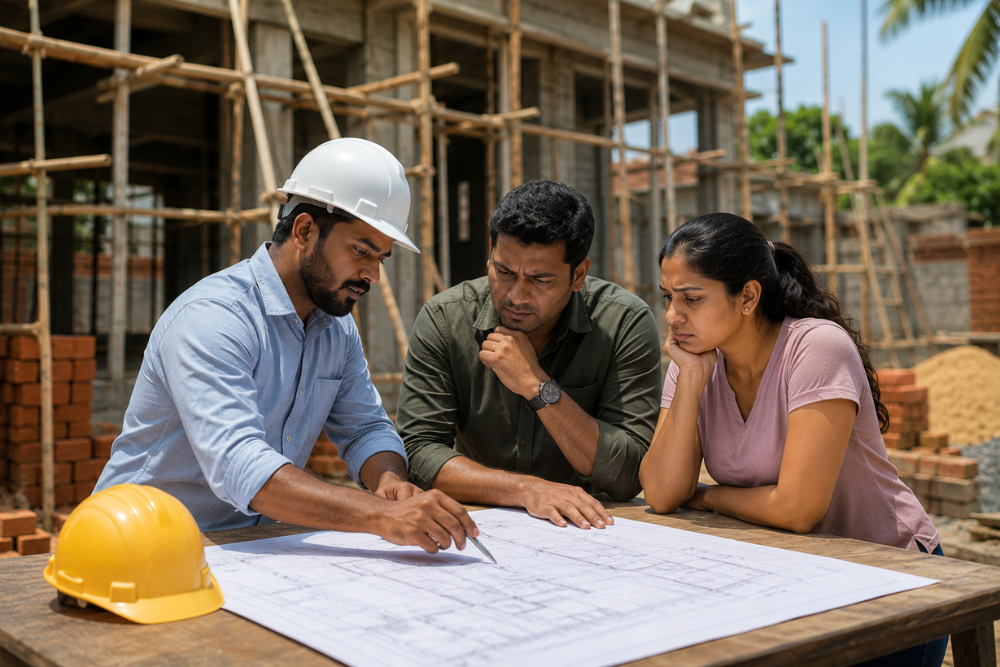
Building a house is one of the biggest financial investments most Sri Lankans will ever make. Yet many homeowners rush into hiring a contractor and make advance payments without asking the right questions first. This can lead to budget overruns, construction delays, poor workmanship, and costly disputes later on. Before you hand over a single rupee, it is important to know exactly who you are hiring, what you are paying for, and how the project will be managed from start to finish.
In this guide, we cover six essential questions every homeowner should ask house building contractors in Sri Lanka in 2026. Read on to learn how these simple questions can help you choose the right contractor, protect your budget, and avoid expensive mistakes.
Question 1: Is the Contractor a Registered Company with Proper Insurance?
Before you talk about designs or budgets, the first thing to confirm is whether the contractor is a legitimate, registered business.
In Sri Lanka, many contractors operate informally. If something goes wrong, an unregistered contractor leaves you with no legal ground to stand on and no one to hold accountable.
Here is what to check:
- Business registration: Ask if they are a registered company with the Registrar of Companies in Sri Lanka. A legitimate contractor will have no problem showing you proof.
- Professional registration: Some contractors are registered with bodies like CIDA or IESL. This is a good sign, but at minimum, company registration is non-negotiable.
- Liability insurance: This covers damage to your property if something goes wrong during construction.
- Workers' compensation: If a labourer gets injured on your site, this protects you from being held responsible.
A good contractor will provide these documents without hesitation. If they delay, make excuses, or cannot produce anything in writing, that alone is a reason to walk away.
Registered businesses are accountable. Informal contractors are not.
Question 2: Can You Show Me Houses You Have Built Before?
Any contractor can claim experience. What matters is whether they can prove it. Asking to see past work is one of the most useful things you can do before signing anything. It shows you the actual quality of their builds, not just what they promise in a sales pitch.
Here is what to ask and look for:
- Completed houses: Ask to visit at least one finished home they have built. Look at the quality of walls, tiling, plastering, and overall finishing standards.
- Similar projects: Check whether they have built houses similar to yours in size, style, and budget. A contractor experienced in small budget builds may not be the right fit for a two storey house.
- Active construction sites: Visiting a live site tells you how they manage daily work, how clean and organised the site is, and how workers are supervised.
- Previous clients: Ask for contact details of past clients and actually call them. Ask whether the contractor delivered on time, stayed within budget, and handled problems honestly.
A confident, experienced contractor will welcome this request. If they hesitate, give vague answers, or cannot point you to a single completed project, treat that as a serious warning sign.
Question 3: What Exactly Is Included in Your Quotation?
In Sri Lanka, it is common for homeowners to accept a quotation based on the total number alone. This is one of the biggest mistakes you can make.
A low quotation does not always mean a good deal. It often means items have been left out, and those costs will come back to you later, once construction has already started and you have no easy way out.
Before accepting any quotation, ask the contractor to break it down clearly:
- Materials: What specific materials are included? What brand or grade of cement, steel, tiles, and roofing are they pricing for?
- Labour costs: Is the full labour cost included from foundation to finishing, or only certain stages?
- Site preparation: Does the quote cover soil testing, levelling, and debris removal?
- Finishing work: Are items like plastering, painting, electrical fittings, and plumbing included or quoted separately?
When comparing quotations from two or three contractors, make sure you are comparing the same scope of work. A quotation that covers everything will always look more expensive than one that quietly leaves out half the work.
If a contractor cannot give you a clear, itemised quotation in writing, that is a sign of how they will handle your money throughout the entire build.
Question 4: How Will You Control Costs If the Budget Changes?
Even with a detailed quotation, construction costs in Sri Lanka can increase during the build. Material prices shift, unexpected site conditions appear, and design changes add up. The question is not whether changes will happen. It is how your contractor handles them when they do.
This is where many homeowners get caught off guard. Work begins, money is already spent, and suddenly the contractor is asking for more with little explanation.
Here is what to ask before that happens:
- Variation orders: Ask how they handle changes to the original scope. Any additional cost should be agreed upon in writing before that work begins, not after.
- Material price increases: Find out whether the quoted prices are fixed or subject to market changes. If prices can change, ask how much notice they will give you.
- Contingency fund: Ask whether the contract includes a buffer for unexpected costs. A reliable contractor will recommend setting aside around 10 to 15 percent of the total budget for this.
- Approval process: Confirm that no extra spending happens without your written approval first.
A contractor who gives clear, confident answers to these questions is one who has managed real projects before. Vague answers here usually mean unclear bills later.
Question 5: What Is the Construction Timeline and Payment Schedule?
Knowing when your house will be finished matters. But knowing when and why you are expected to pay matters just as much.
In Sri Lanka, two of the most common complaints from homeowners are projects that drag on for months beyond the agreed date, and contractors who ask for large payments upfront and then slow down or disappear.
A proper contractor will have clear answers to both.
On the timeline, ask:
- Start date: When exactly will work begin on site?
- Construction stages: Ask for a schedule broken into major milestones such as foundation, structure, roofing, and finishing.
- Completion date: Get a realistic end date in writing, along with what happens if the contractor causes delays.
On the payment schedule, ask:
- Stage based payments: Payments should be tied to completed stages of work, not to calendar dates or contractor requests.
- Upfront deposit: A reasonable deposit is normal, but never pay more than is necessary to get work started. A large upfront payment removes your leverage entirely.
- Final payment: Hold back a portion of the final payment until you are fully satisfied with the completed work.
A contractor who cannot give you a clear timeline or avoids talking about payment structure is telling you something important before the build even begins.
Question 6: What Warranty and After-Build Support Do You Offer?
Most homeowners focus all their attention on getting the house built. Very few think about what happens after the contractor hands over the keys.
In Sri Lanka, defects that appear weeks or months after construction are more common than most people expect. Roof leaks, wall cracks, damp patches, and poor electrical work often only show up once you start living in the house. By that point, many contractors are already on their next project and difficult to reach.
Here is what to ask before you reach that point:
- Warranty period: Ask how long they cover their work after handover. A confident contractor will offer a clear defects liability period in writing.
- What is covered: Find out exactly which parts of the build are included. Structural work, roofing, plumbing, and electrical should all be discussed.
- How to raise issues: Ask what the process is if you spot a defect after handover. Who do you contact, and how quickly will they respond?
- Manufacturer warranties: Some materials like roofing sheets, tiles, and fittings come with their own warranties. Ask whether these documents will be handed over to you at completion.
A contractor who brushes off this question or gives vague assurances is showing you exactly how they will behave when a problem appears after you have already paid in full.
Additional Questions Worth Asking
Once you are satisfied with the answers to the six main questions, these are worth raising before you sign anything as shown below. They are smaller in scope but can make a big difference to how smoothly your build runs day to day.
- Daily site management: Ask who will actually be present on your site each day. Is it the contractor, a dedicated site supervisor, or a subcontractor? Knowing who is in charge of daily work tells you who is accountable when something goes wrong.
- Dispute handling: Ask how they handle disagreements mid-build. A contractor who has a clear, calm answer to this has dealt with real problems before and knows how to resolve them professionally.
- Progress updates: Find out how often they will update you on progress and through what channel, whether that is a weekly site visit, a phone call, or a WhatsApp update. Set this expectation early.
- Permit applications: Ask whether they handle building permit applications or whether that responsibility falls on you. A contractor familiar with local council processes will usually manage this on your behalf.
- Local area experience: Ask whether they have built in your area before. Contractors who know the local council, soil conditions, and supplier networks in your area tend to run smoother projects with fewer surprises.
How to Compare and Choose the Right Contractor
Interviewing more than one contractor is smart. But without a structured way to compare them, you will likely end up choosing the one who seemed most confident or quoted the lowest price. Neither is a reliable way to make a decision this big.
Use this table to score each contractor across the same criteria:
| Factor | Contractor A | Contractor B | Contractor C |
| Company registration | Yes | Yes | No |
| Past projects shown | 3 houses | 1 house | None |
| Itemised quotation | Yes | Partial | No |
| Cost control process | Clear | Vague | None |
| Timeline provided | Yes | Yes | No |
| Warranty offered | 1 year written | Verbal only | None |
Once you have chosen your contractor, run through this checklist before signing anything:
| Check | What to Do |
| Company registration | Ask to see proof. Do not take their word for it. |
| Completed project visit | Visit at least one finished house and judge the quality yourself. |
| Previous client calls | Call at least two past clients and ask about delays, problems, and how they were handled. |
| Quotation review | Go through every line. Confirm all materials, labour, and finishing work are included. |
| Contract reading | Read every clause. If something is unclear or missing, ask before signing. |
| Payment schedule | Confirm payments are tied to completed stages, not dates or requests. |
| Written agreements | Every decision and change must be in writing. Verbal agreements are hard to enforce. |
The best contractor is rarely the cheapest or the most confident in the room. The right one gives clear, honest, documented answers and has the work to back it up.
Common Mistakes Homeowners Make When Hiring Contractors
Even homeowners who do their research still fall into these traps. Most of these mistakes(as shown below) do not feel like mistakes at the time, which is exactly what makes them so costly.
- Choosing the lowest quotation: A cheaper quote is only a better deal if it covers the same scope of work. Most low quotes leave out key items like finishing work, site preparation, or certain materials. You end up paying for those later, at a higher cost and with less control.
- Paying too much upfront: A large upfront payment removes your leverage completely. Once a contractor has most of the money, your project is no longer their priority. Pay in stages, tied to work that has actually been completed.
- Skipping reference checks and site visits: Talking to past clients and visiting a completed project takes a few hours. Fixing a poorly built house takes years and far more money. The time spent checking is never wasted.
- Ignoring contract clauses: Many homeowners sign contracts without reading them carefully. Payment terms, variation costs, and dispute processes are all in there. If you do not read it, you cannot enforce it.
- Failing to monitor progress: Once construction begins, regular site visits matter. Contractors who know the homeowner is paying attention are less likely to cut corners or slow down without reason.
Need Help on Building Your Dream Home?
At Hello Builders, we specialize in turning your vision into reality with high-quality construction, modern designs, and expert project management. From luxury villas to contemporary homes, we handle every step of the process with professionalism and attention to detail.
Here’s why Hello Builders is the trusted choice for homeowners in Sri Lanka:
- Expertise & Quality: We use certified materials and follow best practices to ensure your home is safe, durable, and stylish.
- Comprehensive Services: Architectural design, structural engineering, interior solutions, council approvals, and full project management(all under one roof).
- Customer-Focused Approach: We work closely with you to bring your dream home to life while respecting your budget and timeline.
Take the first step toward your perfect home today. Click below to get in touch with our team!
| Contact Us |
Final Thoughts
Choosing the right house building contractor is one of the most important decisions you will make during your home construction journey. While price is an important factor, it should never be the only factor. Taking the time to ask the right questions about registration, experience, quotations, cost control, timelines, payment schedules, and warranties can help you avoid costly mistakes and unnecessary stress later on.
Before paying a single rupee, make sure every promise is supported by written documents, clear agreements, and proven experience. A reliable contractor will welcome your questions and provide transparent answers without hesitation.
By carrying out proper checks and comparing contractors carefully, you can move forward with confidence and give your project the best possible chance of being completed on time, within budget, and to the standard you expect.
Key Takeaways
- Always verify that the contractor is a registered company and has the necessary insurance before making any payment.
- Ask to see completed projects and speak with previous clients to confirm the contractor's experience and reliability.
- Request a detailed, itemised quotation so you know exactly what materials, labour, and services are included.
- Compare quotations based on the scope of work rather than choosing the lowest price alone.
- Confirm how the contractor handles budget changes and additional costs before construction begins.
- Make sure all variations and extra expenses require your written approval before work is carried out.
- Ask for a clear construction timeline with major milestones and an expected completion date.
- Use stage-based payment schedules instead of making large upfront payments to protect your investment.
- Check that the contractor provides a written warranty and a clear process for handling defects after handover.
- Keep all agreements, approvals, and project changes in writing to avoid disputes and misunderstandings later.
FAQs
How much does it cost to build a house in Sri Lanka?
Construction costs vary based on location, design, materials, labour, and finishing level. There is no single per-square-foot rate that applies to every project. The best way to get an accurate figure is to request a detailed, itemised quotation from at least three contractors once your design and specifications are finalised.
Do house building contractors in Sri Lanka handle design and approvals?
Some contractors offer a full design-and-build service that covers architecture, structural engineering, and council approvals. Others handle construction only. Always confirm exactly what is included in the scope before signing, so you know whether you need to hire an architect or engineer separately.
How long does it take to build a house in Sri Lanka?
Timelines depend on house size, design complexity, material availability, weather, and local approvals. A straightforward single-storey home may take several months, while larger or custom builds take considerably longer. Ask your contractor for a milestone-based schedule in writing so you have a clear reference point throughout the project.
Is it better to hire a contractor or manage the build myself?
A contractor simplifies the process by managing labour, materials, scheduling, and site supervision under one agreement. Self-managing can reduce some costs but demands significant time, technical knowledge, and daily involvement. For most homeowners, hiring a reliable contractor with a clear written agreement is the more practical and lower-risk option.
Should I get a quotation or a cost plan first?
A cost plan is more useful at the early stage because it gives you a broad picture of the total project scope before finalising your design. A formal quotation makes sense once your plans and specifications are ready. Skipping the cost plan and jumping straight to quotations often leads to budget surprises later.