
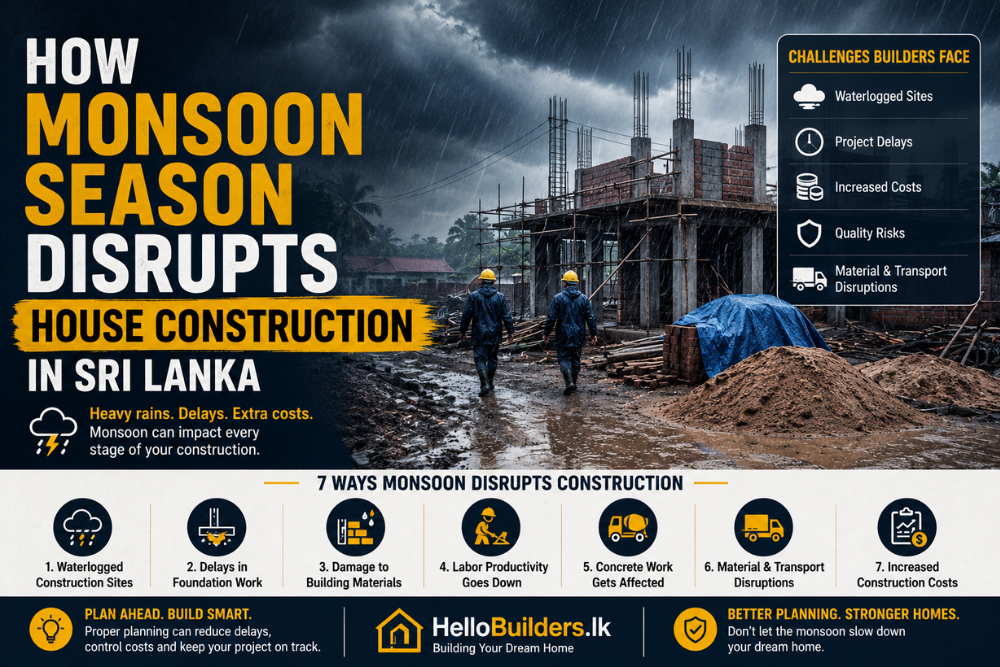
If you are planning to build a house in Sri Lanka, the monsoon season is something you cannot ignore. Heavy rains, waterlogged sites, and unexpected delays can seriously affect construction timelines, budgets, and even the quality of work.
In this article, we break down how monsoon seasons disrupt house construction in Sri Lanka, the key challenges builders face, and why proper planning is essential before starting any project during rainy periods. Keep reading to understand what really happens on-site and how these weather conditions can impact your construction journey.
How Monsoon Seasons Behave in Sri Lanka?
Sri Lanka experiences two main monsoon seasons every year, and both have a strong impact on construction work. These weather patterns bring long periods of rain, strong winds, and unstable ground conditions that affect house building projects.
- South-West Monsoon: The South-West monsoon usually occurs from May to September. It mainly affects the western, southern, and central parts of Sri Lanka, including major cities like Colombo and surrounding areas. During this time, these regions receive heavy and continuous rainfall. Construction sites often face flooding, muddy ground conditions, and frequent work interruptions.
- North-East Monsoon: The North-East monsoon typically happens from December to February. It mainly impacts the northern and eastern parts of the country. Although it is sometimes less intense than the South-West monsoon in certain areas, it still brings consistent rain that can slow down construction activities and affect material handling and transport.
Heavy Rain Periods and Impact on Timelines
Between and during these monsoon seasons, Sri Lanka can also experience sudden heavy rain periods. These short but intense rains can stop construction work immediately. Even a few days of rain can push back schedules, especially for foundation, concrete, and outdoor structural work. Delays tend to build up quickly and affect the overall project timeline.
Why Construction Sites Are Vulnerable
Construction sites are highly exposed because most work is done outdoors and depends on dry conditions. Open land, unfinished structures, and uncovered materials are all affected by rain. Poor drainage, soft soil, and lack of proper site protection make it even harder to continue work during monsoon periods.
7 Ways Monsoon Season Disrupts House Construction
Monsoon season in Sri Lanka creates multiple challenges that directly affect house construction projects. From early site preparation to finishing work, heavy rainfall and unstable conditions can interrupt almost every stage of building.
Below are the seven main ways it disrupts construction activities:
1. Waterlogged Construction Sites
During the monsoon season in Sri Lanka, heavy and continuous rainfall often leads to waterlogged construction sites. This is one of the most common and immediate problems builders face when working on house projects during this period.
When rain falls for several days, the ground becomes saturated and cannot absorb more water. As a result, water starts collecting on the surface of the construction site. In many cases, especially on low-lying land or sites without proper drainage, large puddles or even small pools of water form across the area. This makes it difficult to carry out basic construction activities.
Waterlogged conditions slow down almost every part of the building process. Workers cannot move freely on muddy ground, and vehicles or machinery may get stuck. Excavation work becomes very difficult because the soil becomes soft and unstable. Even simple tasks like marking layouts or transporting materials across the site become time-consuming and risky.
Another major issue is that standing water can delay the preparation of foundations. If the base is not dry and stable, it is not possible to continue with concrete work or reinforcement placement. This leads to unwanted downtime and pushes the project timeline further.
In many Sri Lankan construction sites, especially residential plots without proper site planning, waterlogging becomes a repeated issue during both monsoon seasons. Without proper drainage systems or temporary water control methods, work often has to stop completely until conditions improve.
2. Delays in Foundation Work
Foundation work is one of the most important stages in house construction, but during the monsoon season in Sri Lanka, it often faces serious delays. This happens mainly because foundation work depends on dry, stable ground conditions, which are difficult to maintain during heavy rainfall.
When continuous rain affects a construction site, the soil becomes soft, muddy, and unstable. Excavation work slows down because the sides of the pit can collapse easily, making it unsafe for workers. In some cases, trenches filled for foundations get flooded with rainwater, requiring extra time for pumping out water and drying the area before work can continue.
Concrete work is also heavily affected. A proper foundation requires dry conditions for mixing, pouring, and setting concrete. If rainwater mixes with fresh concrete, it weakens the structure and reduces its strength. Because of this risk, contractors often have to stop work completely during heavy rain, waiting for better weather conditions.
Reinforcement placement also becomes difficult. Steel bars can get covered in mud and water, which reduces bonding quality if not cleaned properly. This adds extra steps and time before the next stage of construction can continue.
Overall, foundation delays during the monsoon season can push back the entire construction schedule. Since the foundation is the base of the building, any delay at this stage affects all later stages of the project, increasing both time and cost.
3. Damage to Building Materials
During the monsoon season in Sri Lanka, one of the biggest challenges in house construction is the damage caused to building materials. Most construction materials are stored on-site in open or semi-covered areas, which makes them highly vulnerable to heavy rain and moisture.
Materials like cement, sand, steel bars, bricks, and timber can all be affected by continuous exposure to rain. Cement is especially sensitive because it can absorb moisture quickly. If cement bags are not stored in a dry, raised, and covered area, they can harden and become unusable. This leads to direct financial loss and material waste.
Sand and aggregates can also become contaminated with excess water and mud. When this happens, their quality reduces, and they must be dried or replaced before use. This slows down work and increases preparation time.
Steel reinforcement bars are another major concern. When exposed to rain for long periods, they begin to rust. Rusted steel can reduce the strength of the structure if not cleaned properly before use. This adds extra labor and delays the construction process.
Even bricks and timber can absorb moisture, causing them to weaken, swell, or crack. Wet timber is especially problematic because it can later shrink or warp after installation, affecting finishing work.
Overall, poor protection of building materials during the monsoon season leads to waste, higher costs, and project delays. Proper storage and covering of materials are essential to reduce these risks on construction sites in Sri Lanka.
4. Transport and Delivery Problems
During the monsoon season in Sri Lanka, transporting construction materials to building sites becomes a major challenge. Heavy rainfall, road flooding, and poor visibility all contribute to delays in delivery schedules, which directly affects ongoing construction work.
Many construction projects rely on timely delivery of materials such as cement, sand, steel, bricks, and tiles. However, during heavy rains, roads can become slippery, blocked, or partially flooded, especially in rural and low-lying areas. This slows down transport vehicles or makes certain routes completely inaccessible. As a result, trucks carrying materials may arrive late or get stuck on the way.
Even in urban areas, traffic congestion increases during heavy rain, especially in cities like Colombo and surrounding regions. This leads to longer travel times and unpredictable delivery schedules. Contractors often cannot plan site work properly because they are unsure when materials will arrive.
Another issue is the risk of damaging materials during transport. If materials are not properly covered, rainwater can enter trucks and damage cement bags, wooden items, or packaging. This leads to unusable materials and additional replacement costs.
Fuel consumption and transport costs also tend to increase during the monsoon season due to slower movement and longer routes. Some suppliers may even delay dispatches until weather conditions improve, further affecting construction timelines.
Overall, transport and delivery problems during the monsoon season create a chain reaction of delays that slow down the entire construction process and increase project costs.
5. Slow Concrete and Masonry Work
During the monsoon season in Sri Lanka, concrete and masonry work often slows down significantly due to continuous rain and high moisture levels. These tasks are very sensitive to weather conditions, and even small changes in rain patterns can affect the quality and speed of construction.
Concrete work requires dry or controlled conditions for proper mixing, pouring, and setting. When it rains heavily, rainwater can mix with fresh concrete, changing the water-cement ratio. This weakens the final structure and reduces its durability. Because of this risk, workers often have to pause concrete pouring during rain or cover freshly poured areas, which slows down progress.
The curing process is also affected. Concrete needs a stable environment to gain strength over time. Excess moisture and water pooling can disturb this process, leading to cracks or uneven surfaces. In many cases, contractors prefer to delay concrete work rather than risk poor quality results.
Masonry work, such as bricklaying and block work, is also affected. Wet bricks and blocks do not bond properly with mortar, which can reduce the strength of walls. Continuous rain also washes away fresh mortar, making it difficult to maintain alignment and finish quality.
In addition, workers face difficulty handling materials on slippery surfaces, which reduces productivity. Walls may need extra adjustments or rework if rain affects the initial setting stage.
Overall, monsoon conditions slow down both concrete and masonry work, forcing construction teams to work in shorter windows or stop work entirely during heavy rain periods.
6. Safety Risks for Workers
During the monsoon season in Sri Lanka, construction sites become much more dangerous for workers due to wet and unstable conditions. Heavy rainfall creates multiple safety risks that can slow down work or even force a complete stop on-site activities.
One of the main issues is slippery surfaces. When the ground is covered with water and mud, it becomes difficult for workers to walk or carry materials safely. This increases the chance of slips, falls, and other physical injuries, especially on uneven terrain or near excavation areas.
Water also affects tools and equipment. Electric tools and wiring used on construction sites can become hazardous when exposed to rain or moisture. If proper insulation or protection is not in place, there is a risk of electric shocks, short circuits, or equipment failure.
Excavation sites become particularly risky during heavy rain. Trenches can fill with water quickly, making them unstable and increasing the risk of soil collapse. This can trap workers or cause serious accidents if safety measures are not properly followed.
Visibility is another concern. Heavy rain reduces clear sight on site, making it harder for workers to coordinate tasks, operate machinery, or move materials safely. This often leads to slower work and higher chances of mistakes.
Because of these risks, contractors often reduce working hours or temporarily stop construction during heavy rainfall. While this improves safety, it also contributes to project delays and increased labor costs.
7. Work Stoppages and Project Delays
During the monsoon season in Sri Lanka, one of the most serious impacts on house construction is frequent work stoppages that lead to overall project delays. When heavy rain continues for several hours or days, many construction activities cannot be carried out safely or effectively, forcing teams to pause work completely.
Outdoor tasks such as excavation, foundation work, concrete pouring, and masonry are the first to be affected. Since these activities depend heavily on dry conditions, even short periods of rain can interrupt the workflow. In many cases, workers have to leave the site until conditions improve, which creates gaps in the construction schedule.
These stoppages do not only affect daily progress but also create a chain reaction across the entire project. When one stage is delayed, it automatically pushes back the next stages such as wall construction, roofing, plumbing, and finishing work. This results in a longer overall project timeline than originally planned.
Another issue is the difficulty in resuming work after interruptions. After heavy rain, sites often need cleanup, water removal, and material rechecking before construction can continue. This additional preparation time further slows progress.
Repeated stoppages also increase labor and overhead costs. Contractors may still need to manage workers, equipment, and site security even when active construction is not happening.
Overall, monsoon-related work stoppages create unpredictable schedules, making it difficult to meet deadlines and increasing both time and cost for house construction projects in Sri Lanka.
How Builders Manage Monsoon Challenges
During the monsoon season in Sri Lanka, experienced builders take several practical steps to reduce delays and protect construction work. Since rain can disrupt almost every stage of building, proper planning and site management become very important.
- Temporary Shelters for Materials: Builders often set up temporary sheds or covered storage areas to protect materials like cement, steel, and timber from rain. Waterproof covers and raised platforms are also used to prevent damage from water and moisture.
- Better Drainage Systems on Site: Good drainage is essential during monsoon construction. Builders create temporary trenches, channels, or pumps to remove excess rainwater from the site. This helps reduce waterlogging and keeps the ground more workable.
- Adjusting Construction Schedules: Work schedules are often changed based on weather conditions. Outdoor tasks like excavation and concrete pouring are planned during dry days, while indoor or less weather-sensitive work is done during rainy periods.
- Using Weather Forecasts for Planning: Contractors closely monitor weather updates to plan daily activities. By checking forecasts, they can avoid starting critical work when heavy rain is expected and reduce unnecessary stoppages.
- Additional Actions: Builders also use protective coverings for unfinished structures, improve site safety measures, and keep emergency tools ready for rain conditions. Some projects even increase manpower on dry days to compensate for lost time during bad weather.
Overall, these strategies help reduce the impact of monsoon disruptions and keep construction projects moving more efficiently despite challenging weather conditions.
Conclusion
Monsoon season in Sri Lanka is one of the biggest external challenges in house construction. As discussed, heavy rainfall affects almost every stage of the building process, from site preparation and foundation work to material handling, transport, safety, and overall project timelines. These disruptions are not isolated issues but often create a chain reaction that slows down the entire construction schedule.
Waterlogged sites, damaged materials, transport delays, and unsafe working conditions all combine to reduce productivity and increase project costs. In many cases, even well-planned projects can face unexpected stoppages simply due to continuous rain and unstable ground conditions. This makes construction during monsoon periods more complex and less predictable.
However, these challenges can be managed with proper planning and preparation. Builders who use drainage systems, protect materials, adjust schedules, and monitor weather forecasts are better able to reduce delays and maintain steady progress. While monsoon conditions cannot be avoided, their impact can certainly be minimized with the right approach.
Overall, understanding how monsoon seasons affect construction helps homeowners, builders, and contractors make better decisions, plan more realistically, and avoid unnecessary delays and costs.
Key Takeaways
- Monsoon seasons in Sri Lanka significantly affect house construction due to heavy and continuous rainfall.
- The South-West monsoon mainly impacts the western, southern, and central regions, while the North-East monsoon affects the northern and eastern areas.
- Heavy rain periods can suddenly stop construction work and cause unexpected delays in project timelines.
- Waterlogged construction sites slow down movement, excavation work, and the use of machinery.
- Foundation work is highly affected because wet soil and flooding make it unsafe and unstable for construction.
- Building materials like cement, steel, timber, and bricks can get damaged if they are not properly stored and protected.
- Transport and delivery of materials often get delayed due to flooded roads and poor weather conditions.
- Concrete and masonry work slow down because rain affects setting, bonding, and curing processes.
- Safety risks for workers increase during monsoon due to slippery surfaces, poor visibility, and electrical hazards.
- Proper planning, drainage systems, and weather-based scheduling can help reduce the impact of monsoon disruptions on construction projects.
FAQs
Can house foundations be built during the monsoon season?
Yes, but it requires careful planning. Builders need proper site drainage, waterlogged soil must be cleared before pouring concrete, and trenches should be protected from flooding. In flood-prone areas, foundation depth and plinth height should be adjusted. With the right preparation, foundation work can continue safely even during Sri Lanka's rainy periods.
Is monsoon construction more expensive in Sri Lanka?
Yes. Costs rise due to work delays, material damage, rework, and extra spending on protective covers and drainage setups. Contractors may also charge more for working in difficult conditions. Most experienced builders recommend setting aside an additional 10–20% of your total budget as a contingency fund before starting construction during monsoon periods.
Are landslides a construction risk during monsoon season in Sri Lanka?
Yes, especially in hilly and central regions. Heavy monsoon rain saturates slopes and weakens soil stability, increasing landslide risk on and around construction sites. Areas already identified as high-risk by Sri Lanka's National Building Research Organization require extra caution. Building on or near unstable slopes during monsoon season is strongly discouraged without a proper site assessment.
What design features help houses withstand monsoon conditions in Sri Lanka?
Key features include raised plinths to avoid flooding, proper roof overhangs to direct rainwater away from walls, waterproof membranes on roofs and wet areas, and well-planned drainage around the foundation. Sloping the ground away from the building and using moisture-resistant materials also help reduce long-term water damage in Sri Lanka's tropical climate.