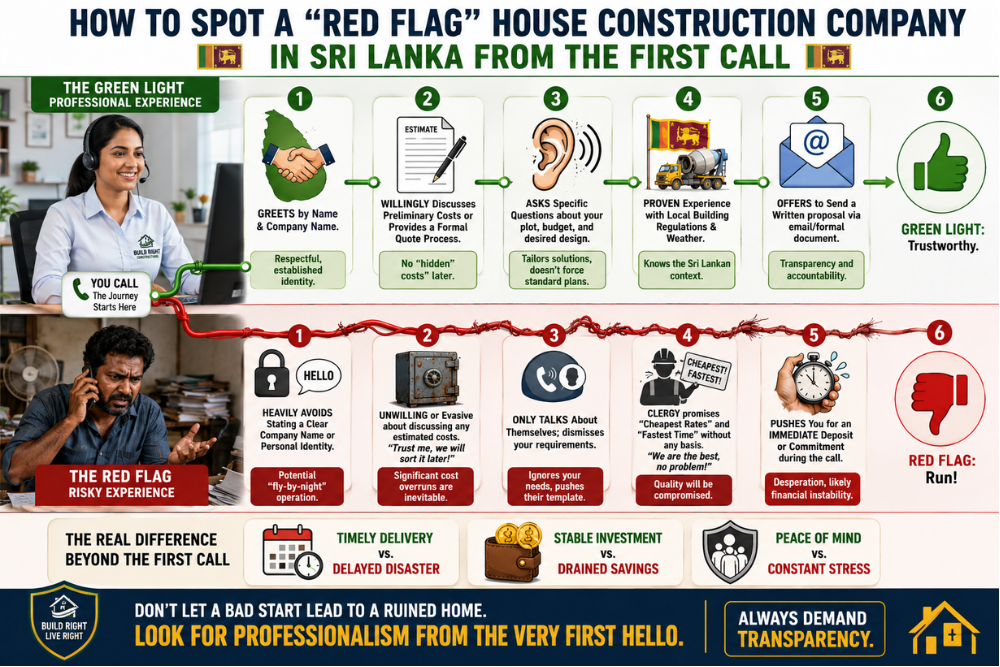
Choosing the right house construction company in Sri Lanka is one of the most important decisions you will make when building your home, and it often starts with just a single phone call. The problem is, many homeowners don’t realize that early warning signs can show up right from that first conversation.
In this article, you’ll learn how to quickly identify a bad construction company before you commit, so you can avoid costly mistakes, delays, and stress later on.
Why This Matters More in Sri Lanka
House construction in Sri Lanka comes with unique challenges that make it easier for homeowners to make costly mistakes if they are not careful from the very beginning. The first signs of a bad construction company often get hidden in normal business behavior, especially in the local market conditions.
One major issue is fluctuating material costs and economic conditions. Prices of cement, steel, and other key materials can change quickly, and some companies take advantage of this by giving unclear or low initial quotes, then increasing costs later under different excuses. This makes it harder for homeowners to understand the real project cost from the start.
Another problem is the lack of awareness among first-time homeowners. Many people building a house for the first time are not familiar with construction processes, contracts, or standard pricing structures. Because of this, they may not recognize early warning signs during the first call or meeting, and bad contractors can easily take advantage of this gap.
Finally, there is a large gap between good and bad contractors in the local market. Professional companies follow proper systems, give clear communication, and maintain transparency. On the other hand, poor-quality contractors may operate without structure, proper documentation, or accountability. This difference is not always visible at first, which is why the first interaction becomes very important in identifying who you are dealing with.
Now that you understand why this matters so much in Sri Lanka, let’s look at the early signs you can actually notice from the very first call to identify a bad house construction company.
They Are Hard to Reach from the Start
One of the first and easiest warning signs of a bad house construction company in Sri Lanka is how difficult they are to reach right from the beginning. The way they handle your first call usually reflects how they will manage the entire project.
If a company misses your call, does not call back, or responds after a long delay, it is not a good sign. While one delay can happen, repeated poor response usually shows a lack of systems, poor customer service, or low professionalism.
Some companies also answer in a very vague or careless way, without showing interest in your project. They may rush the conversation, avoid details, or sound like they are not fully prepared to speak with clients. This often means they are not organized behind the scenes either.
In contrast, a good construction company will:
- Answer calls or respond quickly
- Clearly introduce themselves and their company
- Show interest in your project from the start
- Ask basic questions to understand your needs
Bad communication at the start is important because it usually does not improve later. In construction projects, communication is continuous, so if it is weak in the first call, it is likely to become a bigger problem later.
Good communication vs bad communication is often the clearest early difference between a reliable contractor and a risky one.
They Give You a Price Before Asking About Your Project
A major red flag in house construction companies in Sri Lanka is when they give you a price immediately without properly understanding your project. If a contractor quotes a cost on the first call without asking detailed questions, it usually means the estimate is not genuine or reliable.
A proper construction quote should never be based on guesswork. It requires basic information such as your land size, building type, design requirements, location, and budget expectations. Without these details, any price given is simply an assumption, not a real calculation.
In many cases, this is used as a bait tactic. The company may give a low or attractive lump sum figure to get your interest, but later increase the cost once the project starts. This leads to stress, disputes, and unexpected financial pressure during construction.
Another issue is when they provide a single total price with no breakdown. A proper quote should clearly explain:
- Material costs
- Labor charges
- Design or architectural fees
- Permit and approval costs
- Any additional or hidden expenses
Without this breakdown, you have no way of knowing what you are actually paying for.
A good construction company will always ask questions first, understand your needs, and then provide a realistic, itemized estimate. If a company skips this step and jumps straight to pricing, it is a strong warning sign that should not be ignored.
The Price Sounds Too Good to Be True
In house construction, one of the most common traps is an unusually low price that looks attractive at first but is not realistic in practice. If a quote feels much cheaper than other companies without a clear explanation, it is usually a warning sign.
Unrealistically low bids are often used as a way to win the project quickly. Once the work begins, some companies start adding hidden charges, material upgrades, or unexpected “extra costs” that were never mentioned in the beginning. This is how the final cost ends up much higher than expected.
Another issue is that low pricing often means something has been left out of the estimate. This could be quality materials, proper labor costs, engineering supervision, or even important approvals. While the initial price looks attractive, the actual project may suffer in quality or face delays later.
Many homeowners also make the mistake of comparing companies based only on the final number. In reality, a slightly higher but transparent quote is often safer than a very low one with missing details. The cheapest option can quickly become the most expensive if problems arise during construction.
A reliable construction company will always justify its pricing clearly, explain what is included, and avoid unrealistic promises. If a price feels too good to be true, it usually is, and it deserves a closer look before making any decision.
They Can't Show You CIDA Registration or Proper Licenses
A serious warning sign when choosing a house construction company in Sri Lanka is when they cannot clearly show their registration or legal credentials. A professional contractor should have no issue providing proof of licensing when asked.
One of the most important credentials in Sri Lanka is CIDA registration (Construction Industry Development Authority). This registration shows that the contractor is officially recognized and categorized based on their experience, financial capacity, and technical ability. If a company is registered, it also means they are more accountable under industry standards.
If a contractor avoids the question, delays giving proof, or makes excuses about registration, it is a strong red flag. An unregistered company is essentially unverified, which means there is no formal authority ensuring their work quality or accountability if something goes wrong.
In addition to CIDA registration, a proper construction company should also have:
- Business registration documents
- Relevant contractor licenses
- Contractors All Risk (CAR) insurance, which protects your project from damage or accidents
CAR insurance is especially important because it protects both the homeowner and the project during construction. A company that works without it is exposing you to unnecessary financial risk.
A trustworthy contractor will openly share these documents without hesitation. If a company cannot prove its legal standing, it is safer to walk away before any agreement is made, no matter how attractive their price or promises may seem.
They Push You to Decide Fast
Another common warning sign of a bad house construction company in Sri Lanka is pressure to make a quick decision. If a contractor is rushing you to sign an agreement or commit immediately, it usually means they are trying to close the deal before you have time to think properly.
You may hear phrases like “this offer is only valid today”, “sign now to get a discount”, or “we are very busy, so you must confirm quickly”. These are often artificial tactics used to create urgency, not real limitations.
A professional construction company will never force you to decide on the spot. Instead, they will:
- Give you time to compare other quotes
- Allow you to ask questions freely
- Encourage you to review plans and costs properly
High-pressure behavior is risky because house construction is a long-term and expensive commitment. Decisions should be made carefully, not emotionally or under stress. Companies that rush you are often trying to avoid detailed discussions or hide weak points in their offer.
In most cases, if a company is truly confident in their service and pricing, they will not need to pressure you. They will let their work, transparency, and professionalism speak for itself. If you feel rushed during the first interaction, it is usually a sign to slow down or step back before moving forward.
They Have No Past Work to Show You
One of the strongest warning signs of a bad house construction company in Sri Lanka is when they cannot show any proof of past work. A genuine contractor should always have completed projects they can confidently present to potential clients.
If a company has no portfolio, no project photos, and no client references, it becomes very difficult to trust their capability. Construction is a visual and practical industry, and real experience should always be visible through finished homes, ongoing projects, or documented case studies.
Some companies may try to avoid this by giving excuses or showing unclear or stock images. In such cases, it is important to be cautious. A reliable contractor will have:
- Photos of completed houses
- Details of ongoing projects
- Contactable client references (when possible)
Another simple but effective step is to ask to visit a recently completed project site. This gives you a real idea of their workmanship, finishing quality, and attention to detail. Most professional companies in Sri Lanka will be open to this because they are proud of their work.
You should also be careful when checking online reviews. Fake reviews often look overly generic or repetitive, while real reviews usually include specific details about the project experience, timelines, and communication.
If a company cannot show any real evidence of past work, it is a strong signal that they may not have the experience needed to handle your project safely and professionally.
They Ask for the Full Payment Upfront
One of the most dangerous warning signs in house construction is when a company asks for full payment before starting or early in the project. In Sri Lanka, this is a common way some homeowners end up facing delays, poor workmanship, or even abandoned projects.
A serious construction project always runs in stages. Materials are purchased gradually, work progresses step by step, and payments should follow the same structure. When a company demands 100% upfront payment, it removes accountability and puts all the risk on the homeowner.
In most reliable construction agreements, payments are linked to project milestones, such as:
- Foundation completion
- Structural work completion
- Roofing stage
- Finishing and handover
This ensures that payment is only made when actual progress is delivered. It also keeps the contractor motivated to complete each stage properly.
Asking for full cash without a written agreement is an even bigger red flag. Without proper documentation, there is no legal protection if something goes wrong. A professional company will always provide a clear contract that outlines payment terms, timelines, and responsibilities.
A trustworthy contractor does not need full payment upfront because they operate with proper planning, cash flow management, and confidence in their work. If a company insists on full advance payment, it is usually a sign to step back and reconsider before making any commitment.
They Don't Know Local Building Rules
A clear sign of an unreliable house construction company in Sri Lanka is when they are not familiar with local building rules and approval processes. Construction is not just about building walls and roofs. It must follow legal and technical regulations set by local authorities.
In Sri Lanka, every residential construction project typically requires building permits, zoning approvals, and local council clearances. A professional contractor should be able to guide you through these steps or at least clearly explain what is needed. If a company avoids talking about permits or seems unsure about the process, it shows a lack of proper experience.
This becomes even more important depending on the location of your land. Certain areas may have coastal regulations, environmental restrictions, or specific setback requirements. Ignoring these rules can lead to serious issues such as project delays, fines, or even forced demolition in extreme cases.
Climate knowledge also plays a big role in Sri Lanka. A good construction company understands how to build for:
- Heavy monsoon rains
- High humidity conditions
- Coastal corrosion risks
- Proper ventilation and heat control
If a contractor does not mention these factors at all, it often means they are using a one-size-fits-all approach, which can reduce the durability of your home over time.
A reliable construction company will always prioritize compliance and explain the approval process clearly before starting work. If a contractor seems unaware of local building requirements or treats them as unimportant, it is a strong warning sign that should not be ignored.
Questions to Ask on That First Call
The first call with a house construction company is not just for them to speak. It is also your chance to quickly test how professional and reliable they are. Asking the right questions early can help you filter out weak contractors before you waste time or money.
Here are some important questions you should always ask:
How long have you been operating?
-This helps you understand their experience level. A company with real experience will be able to confidently explain their background, previous projects, and how they handle different construction challenges.
Are you CIDA registered?
-This is one of the most important questions in Sri Lanka. A proper contractor should be able to confirm their CIDA registration without hesitation and explain their classification if needed.
Can I see past projects similar to mine?
-This helps you check whether they have real experience with the type of house you want to build. It also gives you confidence in their workmanship and design capability.
How do you structure payments?
-Their answer should clearly mention milestone-based payments. If they avoid this question or push for large upfront payments, it is a warning sign.
Who will be my point of contact throughout the project?
-Good communication is essential in construction. You should know exactly who will update you, manage the site, and handle your concerns during the entire process.
A professional company will answer these questions clearly and confidently. If they hesitate, give vague answers, or try to change the topic, it is usually a sign that something is not right.
What a Good Company Does Differently
After looking at the warning signs of a bad construction company, it is equally important to understand how a good, reliable contractor behaves. This makes it much easier to compare options and make a confident decision.
A professional house construction company in Sri Lanka will always start by asking questions before giving any price. They take time to understand your land, design needs, budget, and expectations before suggesting anything. This shows that they are focused on your project, not just closing a sale.
They also provide a clear, itemized estimate instead of a single vague number. A proper quote breaks down costs such as materials, labor, permits, and other expenses so you know exactly what you are paying for. This level of transparency reduces confusion and prevents future disputes.
Good companies are also easy to reach and communicate with clearly. They respond on time, explain things in simple terms, and are willing to answer follow-up questions without avoiding them. This consistency in communication is a strong sign of professionalism.
Another key difference is that they always have verifiable past work and real client references. They can show completed projects, ongoing sites, and even connect you with previous clients when needed. This builds trust and proves their experience in real-world construction work.
Summary Table: Difference Between a Bad House Construction Company vs a Good Company
| Bad House Construction Company | Good House Construction Company |
| Gives price without asking details | Asks questions before giving a quote |
| Provides vague or lump sum estimate | Provides clear, itemized estimate |
| Hard to reach and slow responses | Easy to contact and communicates clearly |
| No past work or fake examples | Verified projects and real references |
| Pushes for quick decisions | Gives time to compare and decide |
| Avoids legal or registration questions | Shares CIDA registration and documents openly |
Need Help on Building Your Dream Home?
At Hello Builders, we specialize in turning your vision into reality with high-quality construction, modern designs, and expert project management. From luxury villas to contemporary homes, we handle every step of the process with professionalism and attention to detail.
Here’s why Hello Builders is the trusted choice for homeowners in Sri Lanka:
- Expertise & Quality: We use certified materials and follow best practices to ensure your home is safe, durable, and stylish.
- Comprehensive Services: Architectural design, structural engineering, interior solutions, council approvals, and full project management(all under one roof).
- Customer-Focused Approach: We work closely with you to bring your dream home to life while respecting your budget and timeline.
Take the first step toward your perfect home today. Click below to get in touch with our team!
| Contact Us |
Final Thoughts
Building a house in Sri Lanka is a major investment, and the decision you make at the very beginning can directly affect your budget, timeline, and long-term peace of mind. As you’ve seen throughout this article, many of the biggest problems in construction projects don’t start during the building stage. They often start from the very first phone call.
A bad construction company will usually show early warning signs such as poor communication, unclear pricing, pressure tactics, lack of proper documentation, or no proof of past work. On the other hand, a reliable contractor will be transparent, ask the right questions, provide clear estimates, and communicate in a structured and professional way.
The key takeaway is simple: never rush the first decision. That initial interaction is often the best filter you have to separate professional companies from risky ones. Taking a little extra time at the start can save you from major financial loss, delays, and stress later in your project.
If something feels unclear, rushed, or too good to be true during that first call, it usually is worth a second look. Choosing the right construction partner is not just about price. It is about trust, clarity, and long-term reliability.
Key Takeaways
- The first phone call often reveals more about a construction company than most homeowners realize.
- Poor communication from the start usually indicates bigger problems during the actual construction process.
- Giving a price without understanding your project is a strong warning sign of an unreliable contractor.
- Extremely low prices often hide future costs, quality compromises, or missing work details.
- A professional company should always provide valid CIDA registration and legal documentation without hesitation.
- High-pressure tactics to make you decide quickly are usually used to hide weaknesses or risks.
- A lack of past projects or real client references is a major sign of inexperience or poor credibility.
- Asking for full payment upfront is unsafe and removes accountability from the contractor.
- A good contractor always follows local building rules and clearly explains permit and approval processes.
- The best companies ask questions first, provide detailed estimates, and communicate clearly throughout the process.
FAQs
Why do some construction companies have poor reputations?
Poor reputations usually build up over time from repeated project delays, weak communication, and a gap between what was promised during the sales stage and what actually gets delivered on site. Some companies focus more on closing deals than delivering quality work. When homeowners share these experiences online, the pattern becomes visible. A company's reputation is often the most honest picture of how they operate day to day.
What is a punch list in construction?
A punch list is a document prepared near the end of a project that lists all small repairs, unfinished items, or defects that need to be fixed before the final handover. It is a normal part of any professional project. A reliable contractor will go through this list with you, fix everything noted, and only request final payment once it is fully completed. If a contractor refuses to acknowledge or complete the punch list, it is a serious warning sign.
How do I spot poor workmanship before it becomes a big problem?
Look for visible signs such as uneven floor tiles, poorly finished wall surfaces, misaligned doors or windows, and fixtures that are not properly secured. During the construction process, check each stage before allowing the next to begin. Poor workmanship at early stages like foundation, plastering, or plumbing is often a sign that the company is cutting corners or using inexperienced workers without proper supervision.
Are large construction companies always better than smaller ones in Sri Lanka?
Not necessarily. Large companies may have more resources, but they sometimes use standardized methods that don't suit your specific land, location, or design needs. Smaller or mid-sized local companies can offer more personal attention and site-specific knowledge. What matters most is not the company's size, but their experience, transparency, documentation, and how well they communicate. Always judge a company by their actual track record, not just their brand name.
What should I do if my construction company stops responding? Start by documenting every attempt to contact them, calls, messages, and emails with dates and times. Then review your contract to check the communication and dispute terms. If the situation does not improve, you can escalate by contacting local consumer protection bodies or the Construction Industry Development Authority (CIDA) in Sri Lanka. Do not make any further payments until communication is restored and the issue is clearly addressed in writing.
Why are there so many complaints about construction companies online?
Construction is a high-value, long-term process with many stages where things can go wrong. When expectations don't match delivery, homeowners are more likely to speak up publicly. In Sri Lanka, the rise of social media has made it easier to share both good and bad experiences. A company with consistently negative feedback across multiple platforms is worth avoiding. However, also be cautious of companies with only perfect reviews, as these can sometimes be manufactured.
What role do subcontractors play in poor construction quality?
Most construction companies use subcontractors for specific tasks like electrical, plumbing, or tiling. If the main contractor does not properly supervise or vet these subcontractors, their work can fall below standard and go unnoticed until problems surface later. A professional construction company takes full responsibility for every subcontractor on their site. Always ask your contractor how they manage and oversee subcontracted work, as the answer tells you a lot about their overall quality control.