
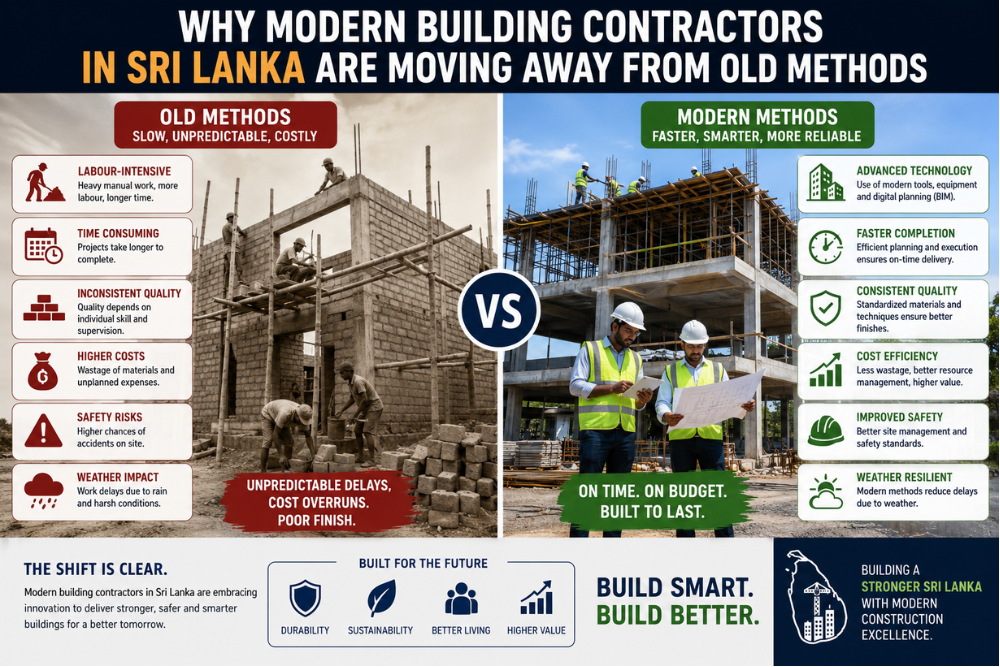
Sri Lanka’s construction industry is changing fast, and many building contractors are no longer relying on the old methods that were once common across the country. Rising material costs, labor shortages, tighter deadlines, higher client expectations, and new technology are pushing the industry toward smarter and more efficient ways of building.
If you are planning to build a home, invest in property, or simply want to understand where the market is heading, this article explains the top 7 reasons modern building contractors in Sri Lanka are moving away from traditional methods and what it means for the future of construction.
1. Raw Material Costs are Unpredictable and Keep Rising
One of the biggest reasons modern building contractors in Sri Lanka are moving away from old construction methods is the constant rise in raw material prices. Key materials such as river sand, cement, steel, timber, and aggregates often experience sudden price changes due to supply shortages, import costs, fuel prices, and market demand. This makes it difficult for contractors to estimate project costs accurately when using traditional building methods.
Older construction systems usually depend heavily on large volumes of on-site materials. Traditional brickwork, plastering, and manual concrete mixing can lead to higher wastage through breakage, over-ordering, poor storage, and inefficient handling. Even small levels of waste can create major extra costs when material prices are already increasing.
Modern contractors are now choosing smarter alternatives such as pre-engineered materials, ready-mix concrete, lightweight panels, steel framing systems, and prefabricated components. These solutions are produced with better precision, helping reduce waste and giving contractors stronger control over budgets.
For clients, this shift often means fewer unexpected expenses, better planning, and improved value for money. In a market where construction costs can change quickly, modern methods give contractors a more stable and reliable way to complete projects successfully.
2. Skilled Labor is Running Out
Another major reason building contractors in Sri Lanka are moving away from old methods is the growing shortage of skilled labor. Traditional construction depends heavily on experienced masons, carpenters, bar benders, tilers, and finishing workers who have learned their trade over many years. Today, finding enough qualified workers for large or time-sensitive projects has become increasingly difficult.
Many younger workers are choosing different career paths, overseas employment, or industries that offer more stable income and working conditions. As older tradespeople retire, fewer replacements are entering the construction sector. This has created delays, higher labor costs, and inconsistent workmanship on many traditional building sites.
Old construction methods often require large teams working on-site for long periods. When labor is limited, projects can slow down quickly. Contractors also face challenges managing attendance, productivity, and quality control when relying only on manual processes.
Modern construction methods help solve this problem. Prefabricated wall systems, steel structures, ready-mix concrete, and modular components reduce the need for large on-site crews. Much of the work is completed in controlled factory environments where processes are faster and more accurate.
For contractors and clients, this means fewer delays, better consistency, and reduced dependence on hard-to-find skilled workers. As labor shortages continue, modern systems are becoming the practical choice for future construction in Sri Lanka.
3. Traditional Construction is Too Slow for Today's Deadlines
Speed has become a major priority in the construction industry, and many contractors in Sri Lanka now see traditional building methods as too slow for modern project timelines. Older brick-and-mortar construction often takes longer because each stage must be completed manually and in sequence. Foundations, wall building, plastering, curing, roofing, and finishing can stretch timelines for months.
Traditional construction is also heavily affected by weather conditions. Rain, high humidity, and poor site access can delay masonry work, concrete curing, and exterior finishing. When labor shortages are added to the problem, project completion dates can move even further back.
Today’s clients expect faster handovers, whether they are building homes, apartments, hotels, or commercial spaces. Developers also need quicker project completion so properties can be occupied, rented, or sold sooner. Long delays increase labor costs, site overheads, equipment rentals, and financing expenses.
Modern contractors are responding by using faster construction systems such as modular building methods, steel frame structures, ready-mix concrete, and prefabricated wall and roof components. Many of these solutions allow different parts of the project to happen at the same time instead of waiting for one stage to finish before starting the next.
In many cases, modern methods can reduce overall construction time by 30 to 50 percent. For both contractors and property owners, faster completion means lower costs, quicker returns, and less stress throughout the project.
4. Old Buildings Have Too Many Quality Problems
Many contractors in Sri Lanka are moving away from traditional building methods because older construction systems often lead to repeated quality issues. While some older buildings were built well, many projects using outdated methods face problems caused by inconsistent workmanship, poor material handling, and lack of modern quality control standards.
Common issues include hairline wall cracks, dampness, uneven plaster finishes, water leaks, roof problems, and poor alignment of doors or windows. In some cases, these defects appear only a short time after construction is completed, leading to repair costs and frustration for property owners.
Traditional single-layered wall systems can also provide weak thermal insulation. This means indoor spaces become hotter during warm weather and less comfortable throughout the day. As a result, homeowners and businesses often depend more on fans and air conditioning, which increases electricity bills over time.
Modern construction methods focus on accuracy, tested materials, and consistent installation standards. Prefabricated wall panels, engineered structural systems, moisture-resistant products, and better insulation materials help reduce common defects. Digital planning tools also improve measurements and coordination before construction begins.
For clients, this shift means stronger buildings, better comfort, lower maintenance costs, and fewer unexpected repairs. As customer expectations rise, contractors know that delivering reliable quality is no longer optional.
5. Clients Want Green, Durable, and Comfortable Buildings
Client expectations in Sri Lanka have changed significantly over the past few years. Property owners are no longer focused only on completing a building at the lowest possible cost. Many now want homes and commercial spaces that are environmentally friendly, long-lasting, and comfortable to live or work in.
There is growing demand for eco-friendly materials, energy-efficient lighting, natural ventilation, solar-ready designs, rainwater harvesting systems, and better insulation. These features help reduce energy use, lower monthly utility bills, and create healthier indoor spaces. As electricity costs rise, efficient buildings have become far more attractive to homeowners and investors.
Durability is another key priority. Clients want structures that can handle heat, heavy rain, humidity, and daily wear without constant repairs. Older construction methods sometimes struggle to provide the same level of performance, especially when poor materials or outdated techniques are used.
Modern contractors are responding with stronger building systems, moisture-resistant materials, insulated wall solutions, and smart design planning. These methods can improve indoor temperature control, reduce maintenance needs, and extend the life of the property.
Climate concerns and changing regulations are also encouraging more sustainable construction choices. As awareness grows, many clients now see green building features not as luxury extras, but as smart long-term investments.
6. Digital Tools Cannot Be Used with Traditional Methods
Modern construction is becoming more technology-driven, and this is another reason many contractors in Sri Lanka are moving away from old methods. Today’s projects often rely on digital tools to improve planning, accuracy, communication, and progress tracking. Traditional construction systems that depend on paper-based workflows and manual coordination cannot keep up with these new standards.
Many modern contractors now use Building Information Modeling (BIM), digital drawings, drone site surveys, project management software, and cloud-based reporting systems. These tools help teams identify design clashes early, monitor progress in real time, manage budgets, and reduce costly mistakes during construction.
Traditional methods often involve last-minute decisions on-site, handwritten measurements, and limited documentation. This can lead to delays, rework, material waste, and communication problems between contractors, suppliers, engineers, and clients.
Digital systems work best when construction methods are organized, standardized, and carefully planned from the beginning. Prefabricated components, engineered systems, and modular construction are easier to measure, track, and install using modern software tools.
Clients also appreciate the transparency that technology provides. They can receive progress updates, cost reports, visual plans, and clearer timelines throughout the project. Contractors who adopt digital tools are often able to deliver more accurate, efficient, and professionally managed results.
7. Foreign Investment and Global Competition Raised the Bar
Foreign investment has played a major role in changing the construction industry in Sri Lanka. As international developers, hotel brands, infrastructure investors, and commercial partners entered the market, they brought higher expectations for quality, speed, safety, and project management. This pushed many local contractors to move beyond older building methods.
Large-scale developments in Colombo and other growing areas, especially in the high-rise, tourism, retail, and office sectors, often require global construction standards. Investors expect accurate timelines, proper documentation, modern safety systems, and durable finishes that meet international benchmarks.
Traditional construction methods can struggle to meet these demands consistently, especially on complex or large-value projects. Delays, quality defects, and poor coordination can damage investor confidence and increase project costs.
To stay competitive, many Sri Lankan contractors have adopted modern systems such as steel structures, prefabrication, advanced planning software, and stronger quality control processes. These upgrades help local firms compete for premium residential, hospitality, and commercial contracts.
Global competition has also changed client expectations. What was once considered a bonus, such as efficient project delivery or premium finishing quality, is now often seen as the minimum standard. Contractors who modernize are better positioned to win future projects in an increasingly competitive market.
Additional Reasons Worth Mentioning
Beyond the main factors, several other changes are also pushing building contractors in Sri Lanka to move away from old construction methods.
1. Rural vs Urban Gap
Modern construction practices are more common in cities such as Colombo and other fast-developing urban areas, where demand is higher and access to new materials, machinery, and skilled professionals is easier. In many rural areas, contractors are still relying on traditional systems. This creates an uneven industry where some regions progress faster than others. Over time, modern methods are expected to spread further across the country.
2. Waste Management Pressure
Traditional building sites often generate high levels of waste through broken bricks, excess concrete, damaged materials, packaging, and rework caused by measurement errors. As land becomes more valuable and environmental concerns grow, waste disposal is receiving more attention. Contractors are under pressure to reduce waste and manage sites more responsibly. Modern methods such as prefabrication and precise material planning help lower unnecessary waste.
3. Client Demand for Design Flexibility
Today’s buyers want buildings that match their lifestyle, brand image, or future expansion plans. Open layouts, modern finishes, energy-saving features, and custom room designs are becoming more popular. Traditional methods can make design changes slower and more expensive during construction. Modern systems often allow greater flexibility, faster adjustments, and cleaner execution.
4. Insurance and Financing Requirements
Banks, lenders, and insurance providers are paying closer attention to construction quality and project risk. Buildings that follow modern engineering standards, approved plans, and proper safety practices may find it easier to secure funding or insurance coverage. Projects using outdated methods can sometimes face more questions, higher risk assessments, or slower approvals. This is another reason contractors are upgrading how they build.
What This Means for the Industry Going Forward
The move away from old construction methods is not a short-term trend. It signals a long-term change in how buildings will be planned, managed, and delivered across Sri Lanka. What started mainly in Colombo and other major cities is gradually spreading to suburbs, regional towns, and new development zones.
Contractors who adapt early are likely to gain the biggest advantage. Companies that invest in better systems, trained teams, modern equipment, and digital tools can complete projects faster, control costs more effectively, and meet rising client expectations. This can lead to stronger reputations, repeat business, and access to larger projects.
At the same time, contractors who continue relying only on outdated methods may find it harder to compete. Delays, quality issues, and rising costs can make it difficult to win clients in a market that now values speed, transparency, and long-term value.
For the industry to move forward successfully, training and skills development will be essential. Workers need opportunities to learn new construction techniques, safety standards, and technology-based systems. Government support, industry leadership, and private investment also need to move in the same direction.
Overall, the future of construction in Sri Lanka will likely belong to firms that combine local experience with modern building practices.
Need Help on Building Your Dream Home?
At Hello Builders, we specialize in turning your vision into reality with high-quality construction, modern designs, and expert project management. From luxury villas to contemporary homes, we handle every step of the process with professionalism and attention to detail.
Here’s why Hello Builders is the trusted choice for homeowners in Sri Lanka:
- Expertise & Quality: We use certified materials and follow best practices to ensure your home is safe, durable, and stylish.
- Comprehensive Services: Architectural design, structural engineering, interior solutions, council approvals, and full project management(all under one roof).
- Customer-Focused Approach: We work closely with you to bring your dream home to life while respecting your budget and timeline.
Take the first step toward your perfect home today. Click below to get in touch with our team!
| Contact Us |
Final Thoughts
The construction industry in Sri Lanka is clearly going through a major shift, with modern building contractors steadily moving away from traditional methods that no longer match today’s demands. Rising costs, labor shortages, stricter timelines, changing client expectations, and the rapid adoption of technology have all contributed to this change.
What was once considered standard practice is now being replaced by faster, more efficient, and more reliable construction systems. Modern methods are helping contractors reduce waste, improve quality, control budgets, and deliver projects in a shorter time frame. At the same time, clients are benefiting from better-designed, more durable, and energy-efficient buildings.
This shift is not just about new materials or tools. It represents a full transformation in how buildings are planned and delivered. Contractors who adapt to these changes are better positioned to succeed in a competitive and fast-evolving market, while those who remain dependent on outdated methods may find it increasingly difficult to keep up.
Ultimately, the future of construction in Sri Lanka is moving toward smarter, more sustainable, and technology-driven building practices.
Key Takeaways
- Modern building contractors in Sri Lanka are shifting away from old methods mainly due to rising material costs and budget uncertainty.
- A shortage of skilled labor is making traditional, labor-heavy construction methods harder to sustain.
- Faster project delivery is now a priority, and old construction techniques are too slow for current deadlines.
- Traditional building methods often lead to quality issues such as cracks, dampness, and poor insulation.
- Clients increasingly prefer green, durable, and energy-efficient buildings over low-cost traditional options.
- Digital tools like BIM, drones, and project management software do not work effectively with outdated construction systems.
- Foreign investment and global competition have raised construction standards across Sri Lanka.
- Modern construction methods help reduce material waste and improve site efficiency.
- Clients now demand more design flexibility, which is easier to achieve with modern building systems.
- The future of construction in Sri Lanka is moving toward faster, smarter, and more technology-driven building practices.
FAQs
What are the modern methods of construction used in Sri Lanka?
Modern methods used in Sri Lanka include precast concrete components, prefabricated wall panels, cold-formed steel framing, modular sub-assemblies, and ready-mix concrete systems. These shift a large portion of building work from the construction site to controlled factory environments, improving precision, speed, and overall quality.
What are the key benefits of using precast concrete in construction?
Precast concrete can reduce on-site labor by up to 80% compared to traditional blockwork. It is faster to install, reduces the need for plastering, and lowers the overall structural weight of a building. These factors combined can deliver significant cost savings and a faster project completion timeline.
Is offsite construction a sustainable option for Sri Lanka?
Yes. Manufacturing building components in a factory setting allows better control over material use and significantly reduces on-site waste. Offsite construction is globally recognized as a more environmentally responsible approach and aligns with Sri Lanka's growing push toward greener, more sustainable building practices.
What are the main barriers to adopting modern construction methods in Sri Lanka?
The biggest barriers are deeply rooted traditions of on-site, labor-intensive building practices and the initial investment required for modern manufacturing technology and training. Resistance from parts of the industry, limited supplier networks outside major cities, and lower awareness in rural markets also slow down wider adoption.
How are AI and robotics changing construction in Sri Lanka?
While still at an early stage locally, AI and robotics are helping contractors optimize workflows, reduce human error, and address labor shortages. These technologies support smarter scheduling, automated material handling, and data-driven decision-making, gradually moving the industry toward a more precise and efficient way of building.
What should I look for when choosing a modern building contractor in Sri Lanka?
Look for a contractor with proven experience in modern construction systems, transparent and fixed pricing, and a clear track record of on-time delivery. Also check whether they use digital planning tools, follow proper safety and engineering standards, and can clearly explain how their methods differ from traditional approaches.
Are modern homes in Sri Lanka more expensive to build?
Not necessarily. While some modern materials may have a higher upfront cost, reduced labor needs, less material waste, and faster completion times often make the total project cost competitive or lower than traditional builds. Modern methods also reduce long-term expenses through better insulation, fewer defects, and lower maintenance needs.