
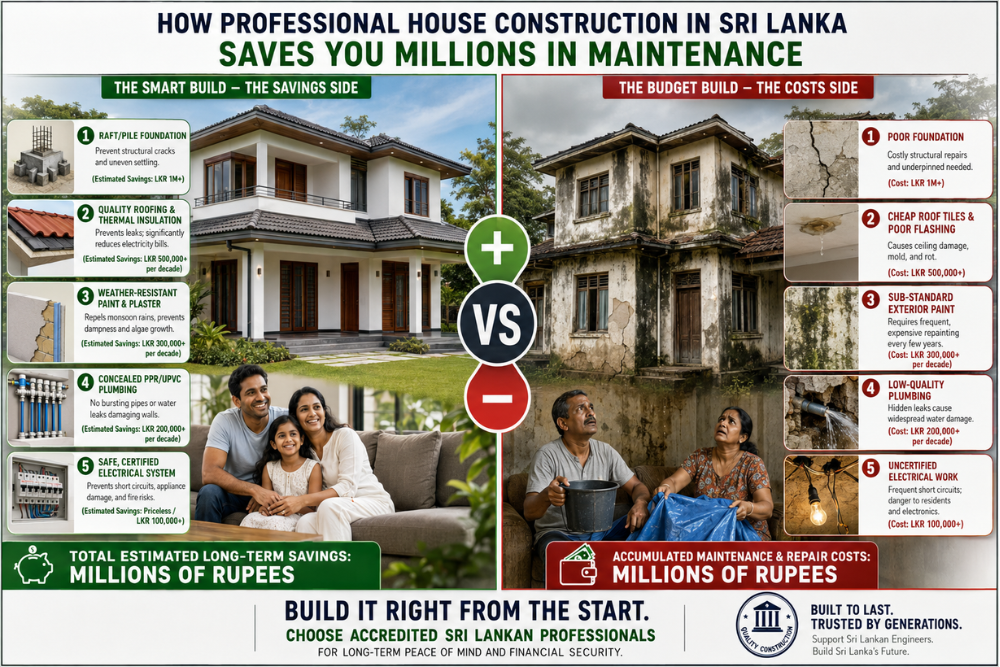
Building a house is one of the biggest investments you will ever make, but what many homeowners in Sri Lanka don’t realize is that the real cost often starts after construction is finished. Poor workmanship, weak materials, and lack of proper planning can lead to constant repairs, rising maintenance costs, and unexpected expenses over the years.
In this article, you’ll learn how professional house construction helps prevent these issues and saves you millions in long-term maintenance by building stronger, smarter, and more durable homes from the start.
Why Maintenance Costs Become High in Poorly Built Homes
Poorly built homes in Sri Lanka often start small issues that slowly turn into expensive long-term repairs. What looks like a minor defect in the beginning can grow into repeated maintenance work, higher repair bills, and even safety risks. Most of these problems, as shown below, come from shortcuts during construction, low-quality materials, and lack of proper supervision.
Cracks and Structural Damage
Cracks in walls, ceilings, and foundations are one of the most common issues in poorly constructed homes. These usually happen due to weak foundation work, poor soil testing, or low-quality cement and reinforcement.
Over time, small cracks can expand because of temperature changes, moisture, and building movement. If ignored, they may affect the structural strength of the house, leading to costly reinforcement work, plaster repairs, and even partial rebuilding in severe cases.
Water Leakage
Water leakage is another major reason maintenance costs keep increasing. It often occurs due to poor roofing work, weak waterproofing, or low-quality sealing around bathrooms, balconies, and roofs.
In Sri Lanka’s rainy climate, this becomes a serious issue. Continuous leaks can damage ceilings, paint, electrical systems, and even furniture. What starts as a small damp patch can turn into mold growth and structural decay, requiring repeated repair work.
Electrical Failures
Improper electrical installations can lead to frequent breakdowns and safety hazards. Poor wiring, overloaded circuits, and unqualified workmanship are common causes in low-quality construction.
These issues often result in short circuits, power failures, and the need for constant electrician visits. In some cases, homeowners may even need to rewire parts of the house, which is a costly and disruptive process.
Repeated Repairs
When a house is not built with proper standards, maintenance becomes a continuous cycle. One problem leads to another, creating a pattern of repeated fixes instead of permanent solutions.
For example, fixing a leak without addressing waterproofing will only result in the same issue returning. Similarly, patching cracks without treating the root cause leads to recurring wall damage. Over time, these repeated repairs add up to significant long-term expenses.
How Professional Construction Prevents These Costs in Sri Lanka
Professional house construction in Sri Lanka reduces long-term maintenance costs by focusing on correct planning, quality materials, and proper execution from the start. Instead of fixing problems after they appear, it prevents them at the construction stage itself. This approach helps homeowners avoid repeated repairs, unexpected damage, and high maintenance expenses over time.
Key benefits of using professional construction includes following:
1. Preventing Structural and Foundation Failure
Professional house construction reduces long-term maintenance costs by ensuring the foundation and structure are built correctly from the start. Most major structural problems in houses begin with a weak or poorly designed foundation.
In poorly built homes, issues like uneven settling, wall cracks, and sloping floors occur due to lack of soil testing, poor design, or low-quality materials. These problems are expensive to fix and often require major reconstruction.
Professional builders carry out proper soil testing, calculate load requirements accurately, and design the foundation based on site conditions. They also use correct reinforcement, proper cement ratios, and controlled curing to strengthen the structure.
With proper planning and execution, the risk of structural failure is reduced, preventing costly repairs such as foundation strengthening or rebuilding later.
2. High-Quality Waterproofing and Weather Protection
Professional house construction reduces long-term maintenance costs by properly protecting the building against water damage and weather exposure from the start.
In poorly built homes, weak waterproofing or incorrect installation allows rainwater to enter through roofs, walls, balconies, and bathrooms. Over time, this leads to damp walls, peeling paint, mold growth, and damage to ceilings and structural elements. These issues often require repeated repairs, especially in Sri Lanka’s heavy monsoon conditions.
Professional builders use proper waterproofing systems in critical areas such as roofs, wet zones, and external walls. They ensure correct application methods, quality sealing materials, and proper surface preparation before finishing work begins.
Weather protection is also planned based on local climate conditions. This includes correct roof slope design for drainage, protective coatings for exterior walls, and proper sealing around openings to prevent water penetration.
By controlling water entry and protecting the structure from constant moisture exposure, professional construction prevents recurring damage. This significantly reduces repair frequency and avoids ongoing costs related to leaks, repainting, and ceiling restoration.
3. Proper Plumbing and Electrical Installations
Professional house construction helps reduce long-term maintenance costs by ensuring plumbing and electrical systems are installed correctly from the beginning. These systems are hidden inside walls and floors, so any mistake becomes expensive to fix later.
In poorly constructed homes, plumbing issues such as pipe leaks, low water pressure, and blockages are common. These usually happen due to low-quality pipes, poor joint work, or incorrect pipe layout. Electrical problems like short circuits, power trips, and frequent failures often result from bad wiring practices or overloaded circuits.
Professional builders plan plumbing and electrical layouts before construction starts. Plumbing systems are designed with proper pipe sizing, correct routing, and access points for maintenance. Quality pipes and fittings are used to reduce the risk of leaks and early failure.
For electrical systems, proper load calculations are done to avoid overload. Certified electricians install wiring using safe methods, with correct distribution of circuits for lighting, appliances, and heavy loads. Safety components like breakers and grounding are also properly installed.
By doing it right during construction, homeowners avoid expensive future work such as breaking walls to fix hidden leaks or rewiring entire sections of the house. This significantly reduces long-term maintenance costs and prevents frequent service issues.
4. High-Quality Materials and Craftsmanship
Using high-quality materials and skilled workmanship is one of the main reasons professional house construction reduces long-term maintenance costs.
In poorly built homes, low-grade materials are often used to reduce initial construction costs. This leads to faster wear and tear, such as fading paint, weak finishes, broken fixtures, and early material failure. As a result, homeowners end up spending more on frequent repairs and replacements.
Professional construction focuses on selecting materials that are suitable for Sri Lanka’s climate and long-term use. This includes strong cement, quality steel reinforcement, durable roofing materials, and reliable finishing products. These materials last longer and perform better under heat, humidity, and heavy rain conditions.
Craftsmanship is equally important. Even good materials can fail if they are installed poorly. Skilled workers ensure proper mixing, correct installation techniques, and attention to detail during finishing work. This reduces defects such as uneven surfaces, weak joints, and early deterioration.
By combining strong materials with proper workmanship, the overall durability of the house increases. This reduces the need for constant repairs, repainting, and replacement work, leading to significantly lower maintenance costs over time.
5. Efficient Planning and Legal Compliance
Professional house construction reduces long-term costs through proper planning and full compliance with building regulations before construction begins.
In poorly planned projects, changes during construction are common. These include redesigning layouts, fixing measurement errors, and correcting structural misalignment. Such mistakes increase material waste, delay completion, and create long-term defects that lead to higher maintenance costs.
Professional builders start with detailed architectural and structural planning. Every stage of construction is designed in advance, including space layout, material requirements, and construction sequencing. This reduces errors and avoids costly on-site changes.
Legal compliance is also a key part of professional construction. Approved building plans, council regulations, and safety standards are followed throughout the project. This ensures the building is structurally safe and reduces the risk of future legal or approval issues when selling or modifying the property.
Proper planning also improves coordination between engineers, contractors, and suppliers. This reduces material waste, avoids rework, and ensures each stage is completed correctly the first time.
Overall, efficient planning and legal compliance help prevent hidden construction errors that often lead to long-term repair costs and financial loss.
6. Lower Energy Bills Through Smarter Construction
Professional house construction helps reduce long-term running costs by improving energy efficiency through smarter design and material choices.
In poorly built homes, weak insulation, poor ventilation, and bad layout design often lead to higher electricity use. Rooms become hotter during the day and retain heat at night, forcing heavier use of fans and air conditioning. Poor natural lighting also increases dependence on artificial lighting during the day.
Professional construction addresses these issues during the design stage. Proper building orientation is used to reduce direct heat exposure, and window placement is planned to improve natural airflow and lighting. This reduces the need for artificial cooling and lighting.
High-quality roofing materials and insulation methods are also used to reduce heat transfer into the house. Proper sealing of gaps and openings further helps maintain indoor temperature more efficiently.
Efficient electrical design also plays a role in reducing energy waste. Proper circuit planning and energy-efficient systems help avoid unnecessary power loss.
By improving thermal comfort and reducing energy waste, professional construction lowers monthly electricity bills and reduces long-term household running costs.
7. Structural Warranty That Protects Your Investment
Professional house construction often includes structural warranties that protect homeowners from unexpected repair costs after the project is completed.
In poorly managed construction, once the house is handed over, any structural issue becomes the homeowner’s full responsibility. Problems such as cracks, settling, or material failure can result in expensive repairs with no support from the builder.
With professional construction, a warranty or guarantee period is usually provided for key structural elements. This means that if defects appear due to construction quality during the warranty period, they are repaired without additional cost to the homeowner.
This protection encourages builders to maintain higher construction standards, since they are accountable for the quality of their work. It also gives homeowners financial security, especially in the early years when hidden defects are most likely to appear.
By reducing the risk of paying for early structural repairs, warranties help protect the long-term value of the property and reduce unexpected maintenance expenses.
Financial Impact
The biggest advantage of professional house construction becomes clear when you compare long-term costs. A cheaper build may save money at the start, but it often leads to continuous repair expenses over time. Professional construction increases the initial investment but significantly reduces maintenance and repair costs over the years.
Comparison: Cheap Build vs Professional Build
| Cost Factor | Cheap Construction | Professional Construction |
| Initial Construction Cost | Lower | Higher |
| Structural Repairs | Frequent and costly | Rare and minimal |
| Waterproofing Issues | Common leaks and damage | Well protected and stable |
| Electrical & Plumbing Repairs | Regular breakdowns | Long-lasting systems |
| Repainting & Finishing | Every few years | Longer durability |
| Overall Maintenance Cost (10–20 years) | Very high | Significantly lower |
Long-Term Repair Savings (10–20 Years)
In a poorly built home, maintenance costs build up continuously. Small issues like leaks, cracks, and wiring faults often repeat, leading to ongoing repair cycles. Over 10–20 years, these repeated fixes can cost a significant portion of the original construction value.
In contrast, a professionally built home is designed to minimize these recurring problems. Strong structure, proper waterproofing, and quality installations reduce the need for frequent repairs. Most maintenance is limited to minor upkeep rather than major corrective work.
Maintenance Reduction Over Time
Professional construction shifts costs from “constant repair spending” to “occasional maintenance.” This means:
- Fewer emergency repair costs
- Longer lifespan of building systems
- Reduced need for major renovations
- More predictable yearly maintenance expenses
Overall, while the upfront cost is higher, the long-term financial savings can be substantial, especially over a 10–20 year period.
Additional Benefits
Beyond reducing maintenance costs, professional house construction also provides several long-term advantages that improve the overall value and experience of owning a home.
- Higher Resale Value and Better Documentation: A professionally built house usually has higher market value because buyers trust its structural quality and durability. Proper engineering plans, approvals, and documentation also make it easier to sell the property in the future. This transparency increases buyer confidence and strengthens resale potential.
- Faster Project Completion With Less Waste: Good planning and experienced project management help complete construction within the expected timeline. Materials are used efficiently, and rework is minimized. This reduces delays, avoids unnecessary costs, and ensures the project moves smoothly from start to finish.
- Peace of Mind and Stress-Free Building Process: Professional construction reduces uncertainty for homeowners. With proper supervision, clear timelines, and quality control, there are fewer unexpected issues during the build. This makes the entire process more predictable and less stressful, especially for first-time homeowners.
Need Help on Building Your Dream Home?
At Hello Builders, we specialize in turning your vision into reality with high-quality construction, modern designs, and expert project management. From luxury villas to contemporary homes, we handle every step of the process with professionalism and attention to detail.
Here’s why Hello Builders is the trusted choice for homeowners in Sri Lanka:
- Expertise & Quality: We use certified materials and follow best practices to ensure your home is safe, durable, and stylish.
- Comprehensive Services: Architectural design, structural engineering, interior solutions, council approvals, and full project management(all under one roof).
- Customer-Focused Approach: We work closely with you to bring your dream home to life while respecting your budget and timeline.
Take the first step toward your perfect home today. Click below to get in touch with our team!
| Contact Us |
Final Thoughts
Building a house in Sri Lanka is not just about completing construction. It is about deciding how much you will spend on maintenance for the next 10 to 20 years. Poor construction may look cheaper at the beginning, but it often leads to repeated repairs, structural issues, and rising costs that continue long after the project is finished.
Professional house construction changes this outcome by focusing on strong foundations, proper waterproofing, correct installations, quality materials, and careful planning. Instead of reacting to problems later, it prevents them from happening in the first place. This is what ultimately reduces long-term maintenance costs and protects your investment.
While the initial cost of professional construction may be higher, the long-term savings are significant. Fewer repairs, lower energy bills, longer material lifespan, and fewer structural issues all contribute to a home that is cheaper to maintain over time and more reliable in the long run.
In the end, choosing professional construction is not an added expense. It is a financial decision that helps you avoid unnecessary costs and ensures your home remains safe, durable, and cost-efficient for decades.
Key Takeaways
- Professional house construction helps reduce long-term maintenance costs by preventing structural issues from the start.
- Weak foundations and poor design are the main reasons for expensive repairs in poorly built homes.
- Proper waterproofing prevents water damage, mold growth, and repeated ceiling and wall repairs.
- Correct plumbing and electrical installations reduce the risk of leaks, short circuits, and costly rewiring work.
- High-quality materials and skilled workmanship increase durability and reduce frequent replacements.
- Efficient planning and legal compliance help avoid construction errors, delays, and future repair costs.
- Smart design and insulation reduce energy usage and lower monthly electricity bills.
- Structural warranties provide financial protection against early construction defects.
- A professional build has higher upfront cost but significantly lower maintenance costs over 10–20 years.
- Overall, professional construction protects both the property value and long-term financial stability.
FAQs
What is meant by professional house construction?
Professional house construction means building a home with qualified architects, structural engineers, and skilled contractors who follow approved plans, proper construction methods, and legal building standards. It covers everything from soil testing and foundation work to finishing, ensuring the house is structurally safe, durable, and built to last long-term.
How much does it cost to build a house in Sri Lanka in 2026?
The cost varies depending on size, location, and finish quality. A basic house starts around LKR 15,000 per square foot, while premium builds can go significantly higher. For a standard 1,500 sq ft home, total construction costs typically range between LKR 22–35 million, excluding land.
What is the average cost per square foot for house construction in Sri Lanka?
As of 2025–2026, basic construction costs around LKR 15,000 per square foot. Mid-range builds with better finishes cost approximately LKR 18,000–22,000 per square foot. Luxury or high-specification homes can exceed LKR 30,000 per square foot depending on materials, design complexity, and the builder you choose.
How long does it take to build a house in Sri Lanka?
A standard single-storey house typically takes 8–14 months to complete with professional builders. Timeline depends on house size, design complexity, material availability, and weather conditions. Proper project planning by professionals helps avoid delays and keeps construction moving within the agreed schedule.
How do I choose a reliable construction company in Sri Lanka?
Look for companies with chartered architects and engineers, a proven portfolio of completed projects, transparent pricing, and clear contracts. Check for structural warranties, council approval assistance, and client reviews. Avoid builders who cannot provide proper documentation or quote unusually low prices without a detailed breakdown.
What materials are best for house construction in Sri Lanka's climate?
Sri Lanka's tropical climate requires materials that handle high humidity, heavy rain, and heat. SLS-certified cement, quality steel reinforcement, fiber cement roofing, and moisture-resistant external plaster are recommended. For interiors, anti-mold paint and termite-treated timber help reduce long-term damage from humidity and pests.
Is it cheaper to build a house or buy a house in Sri Lanka? Building is generally more cost-effective if you already own land, as you control design, materials, and quality. Buying a ready-built house is faster but often costs more for the same size. However, buying from an unknown builder carries the same maintenance risks as poor-quality construction.
What approvals are required for house construction in Sri Lanka? You need approved building plans from your local Municipal Council, Urban Development Authority (UDA), or Pradeshiya Sabha depending on your location. Structural drawings, site plans, and drainage layouts must be submitted. Building without approvals can result in fines, demolition orders, or difficulty selling the property in the future.