
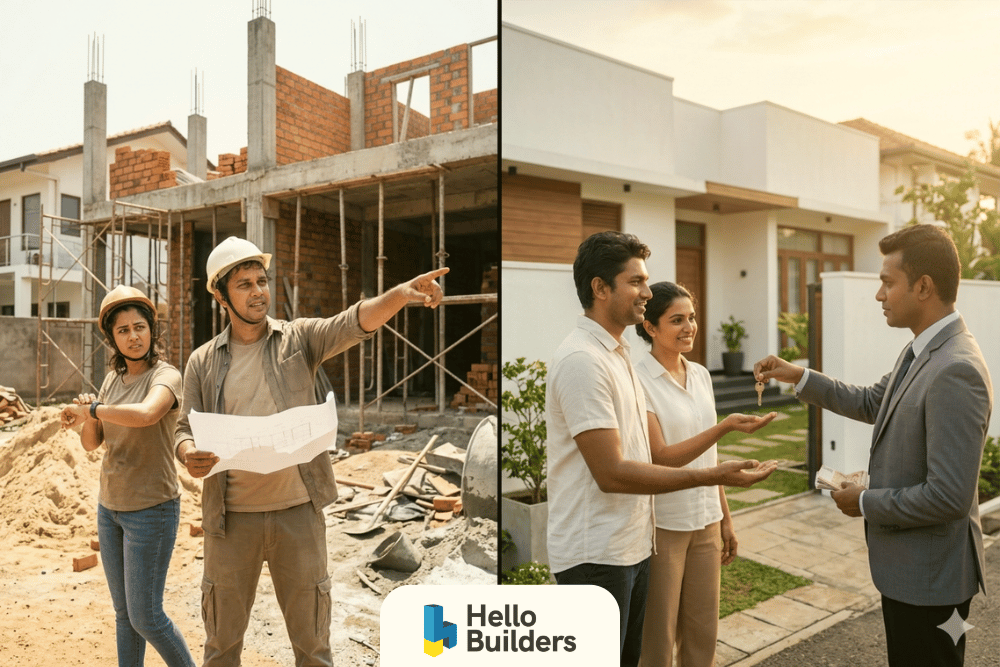
Are you thinking about buying a home or building one from scratch in Sri Lanka? It’s a big decision, and what construction companies don’t always tell you can make a huge difference to your budget, timeline, and peace of mind.
In this article, we reveal the hidden truths, compare the costs and processes, and guide you through everything you need to know before making one of the most important investments of your life. Keep reading to discover which option is right for you in 2026.
What is Buying an Existing House?
Buying an existing house means purchasing a property that has already been built and is ready for occupancy. In Sri Lanka, this option allows buyers to move in immediately after completing legal formalities. Existing houses are listed on real estate websites, local property agents, or classified ads. Buyers can inspect the property, evaluate the condition, and negotiate the price.
However, it may have hidden issues like older electrical systems, plumbing, or wear and tear that could require repairs.
What is Building a New House?
Building a new house involves purchasing land and constructing a home from the ground up. This process gives full control over the design, layout, materials, and finishes.
In Sri Lanka, building a new house typically requires hiring an architect, getting building permits, and engaging a contractor. While this approach can be more time-consuming and expensive initially, it allows homeowners to create a space tailored to their specific needs and modern standards.
How Both Paths Work in Sri Lanka
In Sri Lanka, both buying and building a house require attention to legal and administrative steps:
- Land ownership: Buyers must ensure that the property has a clear title and is free of disputes. When building, you need to own or legally secure a plot of land.
- Approvals: New constructions require approvals from local authorities, including building permits, environmental clearances, and compliance with zoning regulations. Existing homes may also need inspection certificates for safety and legality.
- Real estate listings: Buying an existing home usually involves browsing listings online, contacting agents, or visiting open houses. For building, the focus is on sourcing land and selecting reliable contractors.
Being aware of these basics helps buyers compare the two options clearly and make an informed choice. Now that you know the difference between buying and building, let’s explore how they compare in terms of cost, time, and other important factors.
Cost Comparison: How Much Does It Cost to Build vs Buy a House in Sri Lanka in 2026?
Choosing between buying or building comes down to money, but the costs can vary widely depending on your choices. Let’s take a look at the main differences.
Building Costs in Sri Lanka
Building a new house gives full control over design and materials, but costs vary by finish, location, and complexity:
| Finish Level | Cost per Sqft | Estimated Cost for 1,500 Sqft |
| Basic | LKR 5,500–7,500 | LKR 82L–1.1Cr |
| Mid-range | LKR 8,000–12,000 | LKR 1.2Cr–1.8Cr |
| Luxury | LKR 13,000–20,000+ | LKR 1.95Cr–3Cr+ |
These figures cover construction only. The land, architect fees, permits, and utility connections can add another 15–25% on top.
Buying Costs for an Existing House
Buying an existing house is usually faster but can be more expensive in cities. Prices depend on location, size, and condition:
| Location | Price Range |
| Colombo city | LKR 3Cr–10Cr+ |
| Colombo suburbs | LKR 1.5Cr–4Cr |
| Kandy, Galle, Negombo | LKR 80L–2.5Cr |
| Rural areas | LKR 25L–80L |
In high-demand areas like Colombo, buying can actually cost more than building, because land value alone drives prices up.
Additional Hidden and Extra Costs:
Hidden and Extra Costs Can Include the Following:
| For Building | For Buying |
| Soil testing and site preparation | Stamp duty (3–4% of property value) |
| Architect and engineer fees | Legal and notary fees |
| Building permit and UCC approval | Home inspection costs |
| Utility connections | Renovation and repair costs |
| Cost overruns (typically 10–20%) | Property transfer taxes |
Even though both options have advantages, hidden costs can push the final price higher, so planning a clear budget is essential.
Because of these facts, always make sure to budget at least 15–20% more than the quoted figure, whichever path you choose.
Time and Process: How Long Does It Take to Build a House in Sri Lanka?
If you need a home quickly, the timeline alone can make the decision for you. Building takes longer than most contractors admit. Not because construction is slow, but because of everything that has to happen before work even begins.
Building Timeline: Stage by Stage
| Stage | Estimated Time |
| Design and drawings | 4–8 weeks |
| UCC approval and permits | 3–6 months |
| Foundation and ground works | 3–5 months |
| Walls, roof, and structure | 4–8 months |
| Interior finishing | 3–5 months |
| Total | 12–24 months |
Here, the permit stage alone takes 3 to 6 months, and construction cannot begin until it is approved. Monsoon rains between May and September also slow down foundation and structural work, adding further delays most contractors won't warn you about.
Tip: Start construction between November and January to make the most of the dry months before the next monsoon cycle.
Buying Timeline: Stage by Stage
| Stage | Estimated Time |
| Property search | 2–8 weeks |
| Offer and sale agreement | 1–2 weeks |
| Title check and legal survey | 2–4 weeks |
| Bank loan approval | 3–6 weeks |
| Deed transfer and registration | 1–2 weeks |
| Total | 2–4 months |
Buying is significantly faster, but title disputes and loan approvals are the two stages most likely to cause unexpected delays in Sri Lanka.
Quality and Longevity of Construction
Quality is the one factor that affects your home and your wallet for the next 30 to 50 years. In Sri Lanka, quality problems show up differently depending on whether you build or buy, and knowing what to look for in each case can save you from costly surprises down the line.
| Building | Buying | |
| Main quality risk | Contractor cutting corners | Hidden defects from previous owner |
| Most common issues | Thin slabs, poor waterproofing, low-grade steel | Termite damage, old wiring, corroded pipes |
| Visibility of problems | Hidden until 2–5 years after completion | Hidden until after purchase |
| How to check | Independent structural engineer at key stages | Professional property inspection |
| Inspection cost | LKR 20,000–50,000 | LKR 15,000–40,000 |
| Your control over quality | High, if actively managed | Low, depends on previous owner |
When You Build
Building gives you control over quality, but only if you actively manage it. The most common shortcuts contractors take in Sri Lanka include using substandard cement mixes, thin slabs, low-grade steel, and skipping waterproofing on roofs and bathrooms. These issues are invisible during construction but create serious problems within 2 to 5 years.
Protect yourself by getting material specifications, like brand names, grades, and thicknesses, written into the contract before work begins. Hiring an independent structural engineer to inspect the foundation, slab, and roof stages catches the most critical problems before they are buried under finishing work.
When You Buy
Older homes in Sri Lanka commonly hide:
- Termite damage in wooden beams and roof timbers
- Outdated wiring not rated for modern appliance loads
- Corroded plumbing pipes in homes over 20 years old
- Roof leaks from aged tiles or deteriorating asbestos sheets
- Moisture and flood damage in low-lying areas
None of these are visible during a casual walkthrough. A professional property inspection costs between LKR 15,000 and LKR 40,000, a small price compared to discovering structural problems after the purchase is already done.
A poorly built or maintained house can need major repairs within 5 to 7 years. When comparing costs, always factor in a realistic 10-year maintenance estimate on both sides, not just the upfront price you pay on day one.
Design and Personal Needs: Can You Customize a House You Buy in Sri Lanka?
One of the most common regrets among Sri Lankan homebuyers is purchasing a property that does not suit how their family actually lives, only to spend extra money trying to fix it afterward. Here is how building and buying compare when it comes to design control.
| Building | Buying | |
| Layout control | Full, designed from scratch | Limited, fixed by previous owner |
| Room sizes | Customized to your needs | Whatever exists, minor changes only |
| Ventilation and natural light | Designed in from the start | Difficult and costly to improve later |
| Energy-efficient features | Built in at no extra cost | Requires retrofitting at additional cost |
| Outdoor spaces and parking | Planned as part of the design | Work with what is already there |
| Customization cost | Included in build cost | Paid separately as renovation |
| Council approval for changes | Done once at design stage | Required again for any structural change |
Building gives you full control before a single wall goes up. Room sizes, ventilation suited to Sri Lanka's heat and humidity, solar panel readiness, rainwater harvesting, and outdoor layouts are all decisions you make at the design stage, at no extra cost. Making those same changes after construction can cost two to three times more.
Buying means working around decisions someone else already made. Cosmetic changes like repainting or replacing fittings are straightforward, but anything structural comes with a real price:
| Renovation Type | Estimated Cost |
| Kitchen remodel | LKR 3L–8L |
| Bathroom upgrade | LKR 1.5L–4L |
| Adding a room or floor | LKR 15L–30L+ |
| Full rewiring | LKR 2L–5L |
| Interior repaint | LKR 1L–2.5L |
Structural changes like adding a floor or removing a load-bearing wall also require fresh council approvals, adding time and cost on top of the renovation itself.
If the home you are buying needs significant work to suit your needs, calculate the full renovation cost before agreeing on a purchase price, not after. In many cases, the gap between what you pay and what you actually get closes faster than expected once the renovation bill is added in.
Financing and Loans
Financing looks very different depending on whether you build or buy, and the option that seems simpler on paper is not always the one that works best for your situation. Here is how the two paths compare side by side.
| Building | Buying | |
| Loan type | Construction loan | Home mortgage |
| How funds are released | In stages (drawdowns) | Single lump sum to seller |
| Loan-to-value | Up to 70–80% of construction cost | Up to 70–75% of property value |
| Down payment needed | 20–30% of construction cost | 25–30% of purchase price |
| Interest rate (2026) | 11–14% per annum | 11–13% per annum |
| Key documents needed | BOQ, approved building plans, land deed | Title deed, valuation report, sale agreement |
| Bank involvement during process | High, stage inspections required | Low, mostly upfront |
| Extra costs | Permits, utility connections, cost overruns | Stamp duty (3–4%), legal fees |
When You Build
Building requires more preparation before the bank will even approve your loan. You need an approved BOQ from a contractor, council-approved building plans, and your land deed all in order before the application is processed.
Once approved, the bank releases funds in stages and sends a valuer to inspect your site at each stage, meaning delays in construction directly delay your next drawdown.
When You Buy
Buying is easier, since you can complete the deal with one application, one approval, and the funds go directly to the seller at deed transfer. The biggest upfront surprise for most buyers is stamp duty, which runs at 3–4% of the property value and is paid separately on top of your down payment.
If you value a straightforward process with fewer moving parts, buying is easier to finance. If you are willing to manage the paperwork and cash flow carefully between each stage, a construction loan gives you more flexibility to spread costs over time.
Important Note: Talk to your bank before you finalize your contractor or sign any sale agreement, not after. Knowing exactly what your bank will cover changes the numbers significantly on both sides.
Hidden Risks Construction Companies Don’t Highlight
When deciding to build a house in Sri Lanka, it’s easy to focus on the upfront costs and design features. However, there are several hidden risks that many construction companies do not openly disclose.
Being aware of these risks can save you significant time, money, and stress.
1. Price Escalation After Initial Quotes
Many builders provide initial cost estimates that seem reasonable, but the final bill can end up much higher. Prices of construction materials like cement, steel, and tiles fluctuate frequently in Sri Lanka, and labour costs can increase during delays. Some companies may also add charges for minor changes or extras during construction.
Without a clear agreement, these costs can escalate unexpectedly, leaving homeowners with a larger budget than originally planned.
2. Lack of Transparent Contracts
Not all construction contracts are detailed or transparent. Some contracts may not specify the quality of materials, timelines, or what happens if there are delays or defects. Without clearly defined terms, homeowners can face disputes over payments, work quality, or responsibilities. A vague contract makes it difficult to hold the builder accountable for missed deadlines or substandard work.
3. No Insurance or Warranty Coverage
Many construction companies in Sri Lanka do not offer sufficient insurance or warranties for their work. This means if structural issues, leaks, or defects appear after moving in, the homeowner may have to cover repair costs themselves. Proper insurance or warranty coverage protects against unforeseen problems, but it is often overlooked or offered only for a limited period.
4. After-Sales Support and Accountability Issues
After the house is completed, some builders are difficult to contact or unresponsive to complaints. Issues such as finishing defects, plumbing problems, or electrical faults may remain unresolved for months. A lack of proper after-sales support can be stressful, especially if additional costs are needed to fix these issues independently.
While building a new house allows customization and modern designs, hidden risks like rising costs, unclear contracts, lack of warranties, and poor after-sales support can turn the process into a stressful experience. Homeowners need to research contractors carefully, request clear agreements, and consider insurance to protect their investment.
Which Option Makes Sense for Different Buyers
Deciding whether to buy or build a house depends on your priorities, timeline, and budget. Both options have advantages and challenges, and the right choice varies for different buyers.
Situations Where Buying is Better
Buying an existing house is often the better choice if you:
- Need to move quickly: Existing homes are ready for occupancy, making them ideal for those who cannot wait months or years for construction.
- Prefer less stress: The process is simpler than building, with fewer stages to manage. Legal checks and inspections are usually the main steps, and there’s no need to supervise construction or deal with contractors daily.
- Have a fixed budget: With buying, the total cost is mostly known upfront, apart from minor repairs or renovations.
This option is suitable for busy professionals, families needing immediate housing, or anyone looking to avoid the complexities of construction.
Situations Where Building is Better
Building a new house is ideal if you:
- Want a customized home: You have full control over layout, design, and materials to suit your lifestyle.
- Consider long-term investment: A well-built house using modern standards and quality materials can have higher resale value and lower maintenance costs over time.
- Are flexible with time and budget: Building takes longer and may require contingency funds for unexpected expenses, but it allows you to create a home that matches your exact needs.
This option suits buyers who prioritize personalization, modern features, or long-term value over immediate occupancy.
Real-Life Considerations in Sri Lanka
When choosing between buying and building, several local factors come into play:
- Location availability: Land in Colombo and other cities is limited and expensive, making building a new home more challenging in prime areas. Buying may be easier in these locations.
- Budget constraints: Construction costs vary by region and materials, and hidden expenses can increase the total cost. Buying may be more predictable financially, but renovating an older home can add unexpected costs.
- Infrastructure and approvals: Building a new home requires permits and reliable contractors, which can be time-consuming in some districts. Existing homes already have approved structures, reducing delays.
Overall,
- Buy if you want speed, simplicity, and a known cost.
- Build if you want a custom home, modern features, and long-term investment.
By weighing your priorities against Sri Lankan realities, you can choose the option that best fits your lifestyle and financial situation.
How to Protect Yourself
Whether you decide to buy or build a house in Sri Lanka, taking precautions can save you from unexpected costs, legal issues, and stress. Here’s a guide to help you protect your investment.
1. Checklist Before Signing Any Contract
Before committing to a purchase or construction, ensure the following:
- Clear ownership: Verify the land or property title is free of disputes and encumbrances.
- Permits and approvals: Confirm that all necessary approvals, such as building permits or local authority clearances, are in place.
- Contract details: Ensure the contract clearly specifies timelines, materials, costs, and responsibilities of all parties.
- Inspection reports: For existing homes, request professional inspections for structural integrity, plumbing, electrical systems, and potential hidden defects.
2. Questions to Ask Builders and Sellers
Asking the right questions can uncover hidden issues:
- For builders: “What materials and brands will be used?” “Do you provide warranties or after-sales support?” “How do you handle delays or cost overruns?”
- For sellers: “Are there any repairs needed?” “Have there been previous renovations or structural issues?” “What are the legal and tax obligations?”
Clear answers can prevent surprises later and help you choose trustworthy professionals.
3. Budget Realistically
- Include contingency funds: Set aside at least 10–20% of your total budget for unexpected expenses.
- Plan for hidden costs: These can include utility connections, legal fees, taxes, minor repairs, or upgrades.
- Track costs carefully: Keep detailed records of payments, invoices, and quotes to avoid overspending.
Protecting yourself starts with research, clear contracts, and careful budgeting. By taking these steps, you can reduce risks, avoid hidden expenses, and ensure a smoother process whether you’re buying or building a home.
Final Thoughts: Buy or Build?
Deciding whether to buy or build a home in Sri Lanka is one of the biggest choices you’ll make, and both options come with unique advantages and challenges.
Buying an existing house offers speed, convenience, and predictable costs, making it ideal for those who need a ready-to-move-in home or prefer a simpler process. Building a new house gives full control over design, materials, and features, offering long-term value and personalization, but it requires more time, careful planning, and attention to hidden risks.
Understanding the costs, timelines, financing, quality considerations, and potential pitfalls is essential to making an informed decision. Start by carefully evaluating your priorities, budget, and lifestyle needs. Take steps to protect yourself with clear contracts and professional inspections. Make sure to plan for contingencies and unexpected costs. By doing this, you can avoid common mistakes and create a home that truly fits your vision.
Ultimately, whether you choose to buy or build, being informed and prepared will ensure your investment in a Sri Lankan home in 2026 is a successful and rewarding one.
Need Help on Building Your Dream Home?
At Hello Builders, we specialize in turning your vision into reality with high-quality construction, modern designs, and expert project management. From luxury villas to contemporary homes, we handle every step of the process with professionalism and attention to detail.
Here’s why Hello Builders is the trusted choice for homeowners in Sri Lanka:
- Expertise & Quality: We use certified materials and follow best practices to ensure your home is safe, durable, and stylish.
- Comprehensive Services: Architectural design, structural engineering, interior solutions, council approvals, and full project management(all under one roof).
- Customer-Focused Approach: We work closely with you to bring your dream home to life while respecting your budget and timeline.
Take the first step toward your perfect home today. Click below to get in touch with our team!
| Contact Us |
Key Takeaways
- Buying an existing house allows for faster occupancy, while building a new home takes more time and planning.
- Building a new house offers full control over design, layout, materials, and finishes.
- Existing homes may have hidden issues like outdated plumbing, electrical systems, or structural wear.
- Construction costs in Sri Lanka vary widely depending on finish, location, and design complexity.
- Hidden and extra costs, such as permits, taxes, legal fees, and utility connections, can affect both buying and building.
- Building a new house may face delays from weather, material shortages, or labour availability.
- Quality of construction directly impacts long-term maintenance costs and resale value.
- Buying an existing house is simpler financially, but building requires multiple loans and careful budgeting.
- Hidden risks from builders (such as price escalation, unclear contracts, and poor after-sales support) can increase stress and costs.
- Choosing the right option depends on your priorities, timeline, budget, and need for customization.
FAQs
- What permits are needed to build a house in Sri Lanka?
You need UCC approval from local councils, environmental clearances if applicable, and structural certifications. These processes can take 3–6 months. Construction companies might downplay paperwork burdens or skip full compliance to cut corners.
- How to choose a reliable home construction company in Sri Lanka?
Ask for detailed BOQs, past project references, ICTAD registration, and fixed-price contracts; check reviews on platforms like Reddit. Verify that firms don't exclude finishes or use vague scopes to pad costs later.
- What financing options are available for building a house in Sri Lanka?
Bank loans like BOC's housing schemes cover land purchase plus construction up to 70–80% of costs, with rates around 10–12% for eligible borrowers. Lenders require approved BOQs and may reject vague contractor bids, something companies rarely warn you about upfront.
- Is 2026 a good year to build a house in Sri Lanka?
With the government's 2026 National Housing Programme planning 31,000 homes, material prices may stabilize and infrastructure could improve. However, post-economic recovery inflation could still raise costs 10–15% year-over-year, so locking in contracts early matters.
- What mistakes to avoid when building a house in Sri Lanka?
Avoid vague lump-sum quotes, skipping structural drawings, overbuilding unused space, and not having at least 75% of cash available upfront. Always tie payments to clear milestones, and watch out for contractors pushing unnecessary upgrades without proper cost justification.