
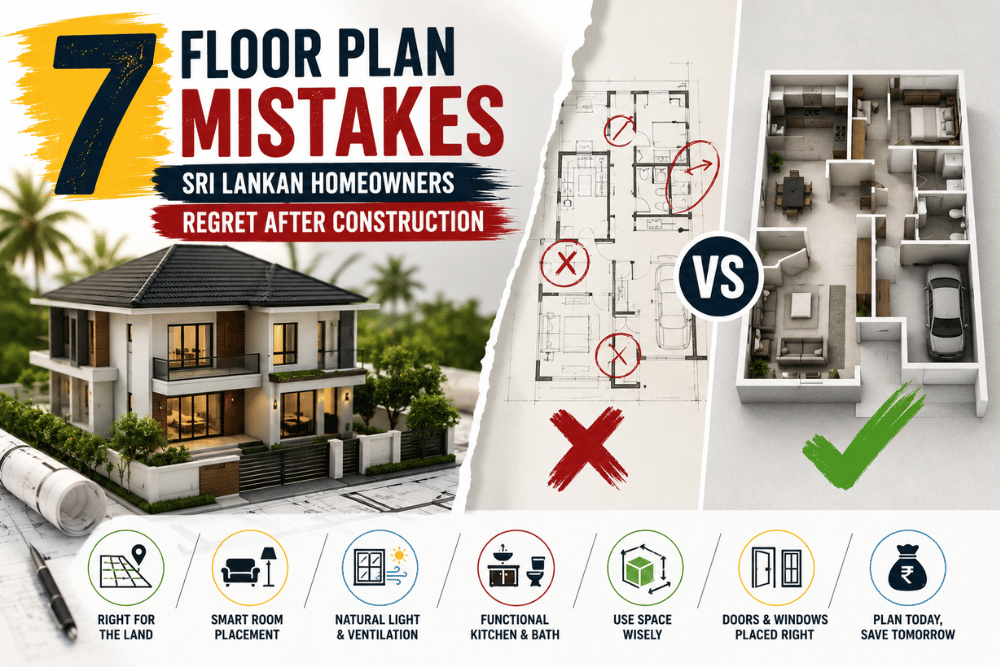
If you are planning to build a house in Sri Lanka, the floor plan you choose will decide how comfortable, practical, and cost-effective your home will be for years to come. Many homeowners only realize the importance of good planning after construction is complete, when changes are expensive or impossible.
In this article, you will learn the most common floor plan mistakes Sri Lankan homeowners regret after building, and more importantly, how to avoid them before it’s too late.
Mistake 1: Not Matching the Floor Plan to the Land
One of the biggest mistakes Sri Lankan homeowners make is starting construction with a floor plan that does not properly match the land. Many people choose or design a house layout first and try to “fit” it onto the plot later, without fully studying the land’s size, shape, and slope. This often creates serious problems during construction and even after moving in.
In Sri Lanka, land parcels are not always perfectly square or flat. You may have narrow blocks in urban areas or sloped land in hilly regions. When a floor plan is not designed around these conditions, it can lead to wasted space, awkward building positions, and poor access to natural light and ventilation. In some cases, parts of the land are left unused or difficult to develop properly.
A mismatched design can also force unnecessary changes during construction, which increases costs and delays. Rooms may end up feeling squeezed, pathways become inefficient, and the overall home layout feels uncomfortable in daily use.
The better approach is to let the land guide the design from the beginning. A good architect or designer will first study the soil, shape, slope, and orientation of the land before drawing the floor plan. This ensures the house fits naturally into the space, making better use of every square foot.
When the floor plan is aligned with the land, the home becomes more practical, cost-effective, and comfortable to live in for years to come.
Mistake 2: Wrong Room Placement
Another common regret among Sri Lankan homeowners is poor room placement in the floor plan. This happens when bedrooms, kitchen, living areas, and other spaces are arranged without considering how the home will actually be used on a daily basis. At first, the layout may look fine on paper, but after construction, the problems become clear.
One major issue is privacy. For example, placing bedrooms too close to living or guest areas can make family members feel exposed or disturbed. Similarly, positioning the kitchen far away from the dining area or service entrance creates unnecessary movement and makes daily tasks less efficient.
Room placement also affects comfort. In Sri Lanka’s hot climate, placing bedrooms or living spaces in areas that receive strong afternoon sun can make the house uncomfortable and increase cooling costs. Likewise, rooms located near busy roads or noisy boundaries may suffer from constant disturbance.
Bad placement can also affect the overall flow of the house. When rooms are not logically connected, movement becomes awkward and time-consuming, especially for families with children or elderly members.
The better approach is to carefully separate private and shared zones in the design stage. Bedrooms should be placed in quieter areas, while living and dining spaces should connect smoothly. Sun direction, wind flow, and noise sources should also be considered before finalizing the layout.
Good room placement ensures the home feels practical, comfortable, and easy to live in every day.
Mistake 3: Skipping Natural Light and Ventilation Planning
Many Sri Lankan homeowners regret not planning for natural light and ventilation during the floor plan stage. This mistake usually happens when window placement, room orientation, and airflow direction are not carefully considered before construction begins. As a result, the home may look fine structurally but feel uncomfortable to live in.
A common problem is dark interiors. When rooms do not have enough or properly positioned windows, natural daylight cannot enter effectively. This leads to a constant need for artificial lighting during the day, increasing electricity costs over time.
Poor ventilation is another major issue. Without proper airflow paths, hot air gets trapped inside the house, making rooms feel stuffy and uncomfortable. In Sri Lanka’s hot and humid climate, this becomes even more serious, as it directly affects daily comfort and health. Homes without cross-ventilation often rely heavily on fans or air conditioning, which further increases energy bills.
Another mistake is ignoring sun direction. Rooms that face the harsh afternoon sun can become excessively hot, while others may remain too cold or damp if they never receive enough light.
The better approach is to design with climate in mind. Cross-ventilation should be planned by placing windows and openings on opposite walls where possible. Bedrooms and living areas should be positioned to capture morning light, while west-facing walls should be shaded or protected to reduce heat gain.
Proper natural light and ventilation planning makes a home brighter, healthier, more energy-efficient, and far more comfortable to live in throughout the year.
Mistake 4: Getting the Bathroom and Kitchen Placement Wrong
Poor placement of bathrooms and kitchens is another mistake that many Sri Lankan homeowners only realize after construction is complete. These two areas are essential for daily living, yet they are often positioned without proper thought about convenience, privacy, and functionality.
One common issue is placing the kitchen too far from the dining area, entrance, or service yard. This creates unnecessary movement when cooking, carrying groceries, or managing household chores. It can make daily routines feel slow and inefficient, especially for larger families.
Bathrooms are often placed in unsuitable locations as well. Some floor plans position them too close to living rooms or dining areas, which affects privacy and comfort. In other cases, bathrooms are placed in hard-to-reach corners, making them less practical for regular use. Poor placement can also lead to plumbing complications during construction, increasing both cost and maintenance issues later.
In Sri Lanka, where homes often have limited space, these mistakes can significantly reduce the usability of the entire house layout.
A better approach is to design these spaces based on real-life daily flow. The kitchen should be connected logically to the dining area, storage zones, and service entry points. Bathrooms should be placed in private, easily accessible areas without disrupting the main living spaces.
Good planning of kitchen and bathroom placement improves hygiene, convenience, and overall comfort. When done correctly, these spaces support smooth daily routines and add long-term value to the home instead of becoming a source of frustration.
Mistake 5: No Storage Planning in the Design
A very common mistake in Sri Lankan home design is not planning storage spaces from the beginning. Many homeowners focus mainly on bedrooms, living areas, and the kitchen, but forget to include proper storage zones in the floor plan. This often leads to serious inconvenience after construction is complete.
When storage is not included in the design stage, the house may look neat on paper but quickly become cluttered in real life. Items like shoes, cleaning tools, groceries, seasonal items, and household equipment often end up without a proper place. As a result, these items are stored in corners, hallways, or visible living areas, making the home feel disorganized.
Another issue is that adding storage later is not always easy. Built-in cupboards, under-stair storage, utility rooms, or attic spaces need to be planned early. If they are missed, homeowners are forced to use external cabinets or make costly modifications, which may not fit well with the original design.
In Sri Lanka, where families often live in compact spaces, smart storage planning becomes even more important. Without it, even a well-designed house can feel cramped and messy over time.
The better approach is to integrate storage into everyday living needs. Each activity, such as cooking, laundry, cleaning, and shopping, should have a designated storage solution nearby. This helps keep the home organized, functional, and easy to maintain.
Good storage planning ensures the house stays clean, efficient, and comfortable long after construction is completed.
Mistake 6: Poor Traffic Flow Between Rooms
Poor traffic flow is a mistake that often goes unnoticed during the design stage but becomes very frustrating after construction. It happens when the movement paths inside the house are not properly planned, making daily routines awkward and inefficient.
In many Sri Lankan homes, corridors are either too narrow or unnecessarily long, which wastes space and makes movement uncomfortable. In some cases, doors are placed in positions where they clash with each other or open directly into another room, creating confusion and reducing usability. These small design issues can have a big impact on how the home feels in everyday life.
Another common problem is the lack of clear separation between different functional areas. For example, family members may need to pass through private spaces like bedrooms to reach common areas, which reduces privacy and convenience. This becomes even more challenging for households with children, elderly members, or frequent visitors.
Poor traffic flow also affects the overall efficiency of the home. Simple activities like carrying groceries, moving between kitchen and dining areas, or accessing bathrooms can become unnecessarily complicated.
The better approach is to carefully plan how people will move through the house before finalizing the floor plan. Every key movement path, such as entering the home, going to bedrooms, using the kitchen, or accessing bathrooms, should feel natural and direct. A simple mental walkthrough of the house layout can help identify problems early.
Good traffic flow ensures the home feels spacious, comfortable, and easy to live in, even if the actual size is limited.
Mistake 7: No Room Left for Future Expansion
Many Sri Lankan homeowners regret not planning for future expansion when designing their floor plan. At the time of construction, the house is usually designed based only on current needs, such as the number of family members or available budget. However, over time, these needs can change, and the lack of flexibility becomes a serious limitation.
Common situations include children growing up and needing separate rooms, elderly parents moving in, or the need for a home office or study area. When the original design does not leave any space for expansion, homeowners are often forced to make costly structural changes or even partial demolition to accommodate new requirements.
This problem is more serious in tightly planned layouts where every square foot of land is already used. Without reserved space or structural allowance for future floors, adding extra rooms later becomes difficult and expensive. In some cases, it may not even be possible without major reconstruction.
Another issue is that rigid designs reduce long-term value. A home that cannot adapt to changing family needs may feel outdated much sooner than expected.
The better approach is to design with flexibility in mind from the beginning. This can include leaving open areas for future rooms, planning stronger foundations for a possible second floor, or designing multipurpose spaces that can change use over time.
Good future planning ensures the home remains practical, adaptable, and valuable for many years, without forcing unnecessary renovation costs later.
Additional Mistakes Worth Knowing
1. Designing Beyond Budget and Local Reality
Another important mistake Sri Lankan homeowners make is designing a house that does not match their actual budget or local construction reality. Some floor plans look impressive but are too complex or expensive to build within the planned budget. This often leads to financial pressure during construction, causing delays, compromises, or unfinished work.
In some cases, the design may also be difficult to execute using locally available materials and skilled labour. When this happens, contractors are forced to simplify parts of the plan during construction, which can reduce quality or change the original design intent. Over time, these compromises affect both the appearance and durability of the house.
A practical floor plan should balance design ideas with what is realistically achievable in Sri Lanka’s construction environment. Keeping the design simple, functional, and budget-aligned helps ensure smoother execution and fewer surprises.
2. Getting Room Sizes Wrong on Paper
Another common issue is misjudging room sizes during the design stage. Rooms may appear spacious on the floor plan, but once furniture is added, they can feel tight and uncomfortable. This usually happens when actual furniture sizes are not considered while setting room dimensions.
For example, a bedroom may look large on paper but struggle to fit a bed, wardrobe, and movement space properly. Similarly, living rooms and dining areas may not accommodate real-life usage comfortably if dimensions are not planned carefully.
On the other hand, oversized rooms can also become a problem. They waste valuable space and increase construction costs without adding real functionality.
The better approach is to design rooms based on actual furniture layouts and daily use. This ensures the home feels balanced, practical, and cost-efficient once it is built.
Need Help on Building Your Dream Home?
At Hello Builders, we specialize in turning your vision into reality with high-quality construction, modern designs, and expert project management. From luxury villas to contemporary homes, we handle every step of the process with professionalism and attention to detail.
Here’s why Hello Builders is the trusted choice for homeowners in Sri Lanka:
- Expertise & Quality: We use certified materials and follow best practices to ensure your home is safe, durable, and stylish.
- Comprehensive Services: Architectural design, structural engineering, interior solutions, council approvals, and full project management(all under one roof).
- Customer-Focused Approach: We work closely with you to bring your dream home to life while respecting your budget and timeline.
Take the first step toward your perfect home today. Click below to get in touch with our team!
| Contact Us |
Final Thoughts
A well-designed floor plan is the foundation of every successful home, but as seen throughout these common mistakes, even small planning oversights can lead to long-term regret. In Sri Lanka, where land conditions, climate, budget, and lifestyle needs vary widely, careful planning becomes even more important before construction begins.
Most of the issues homeowners face, whether it is poor room placement, lack of ventilation, weak traffic flow, or no future expansion planning, do not appear during the design stage. They only become clear after the house is built, when changes are expensive or sometimes impossible. That is why floor planning should never be rushed or treated as a formality.
The key lesson is simple: a good home is not just about appearance, but how well it works in daily life. A practical layout that matches the land, supports natural light and airflow, fits real furniture sizes, and allows future flexibility will always perform better in the long run than a complicated design that only looks good on paper.
Before finalizing any floor plan, it is worth reviewing every detail carefully with your architect or builder and thinking through daily routines inside the house. This small step can prevent costly mistakes and ensure the home truly supports your lifestyle for many years to come.
Key Takeaways
- A floor plan must always match the land size, shape, and slope to avoid space wastage and design issues.
- Poor room placement can reduce privacy, comfort, and daily convenience inside the home.
- Natural light and ventilation planning is essential for a comfortable and energy-efficient home in Sri Lanka’s climate.
- Incorrect kitchen and bathroom placement can disrupt daily routines and create long-term plumbing challenges.
- Storage should be planned from the beginning to prevent clutter and improve long-term organization.
- Good traffic flow between rooms makes daily movement easier and improves overall home functionality.
- Planning for future expansion helps avoid costly renovations when family needs change over time.
- Designing beyond budget or local construction reality can lead to delays, compromises, and unfinished work.
- Incorrect room sizing on paper can result in uncomfortable spaces or wasted construction cost.
- A practical floor plan focuses on real-life use, not just appearance, to ensure long-term comfort and value.
FAQs
How much does it cost to fix floor plan mistakes after building in Sri Lanka?
The cost varies depending on the change, but structural fixes such as moving walls, relocating bathrooms, or adding rooms can run from LKR 500,000 to several million. Minor changes like adding storage or adjusting doors are cheaper but still disruptive. Fixing mistakes on paper before construction always costs far less than fixing them after.
Should I hire an architect for floor plan design in Sri Lanka?
Yes, especially if you are building on a tight plot, sloped land, or have a specific budget. A qualified architect helps you avoid costly layout mistakes, ensures the design matches local climate conditions, and manages approvals. The fee is a small cost compared to the expense of correcting a poorly designed floor plan later.
What floor plan mistakes cause waterproofing problems in Sri Lanka?
Poor bathroom placement, flat roof designs without proper drainage slopes, and kitchens positioned against exterior walls without adequate protection are common culprits. In Sri Lanka's wet zone, these mistakes lead to wall dampness, ceiling leaks, and mold growth. Planning drainage paths, roof overhangs, and wet area placement early prevents most waterproofing issues.
Can I modify my floor plan during construction in Sri Lanka?
Minor changes like adjusting door positions, window sizes, or room finishes are usually possible in the early stages. However, structural changes such as moving load-bearing walls or relocating plumbing become expensive and complicated once work has progressed. Always confirm major changes with your engineer before proceeding to avoid safety risks and additional costs.