
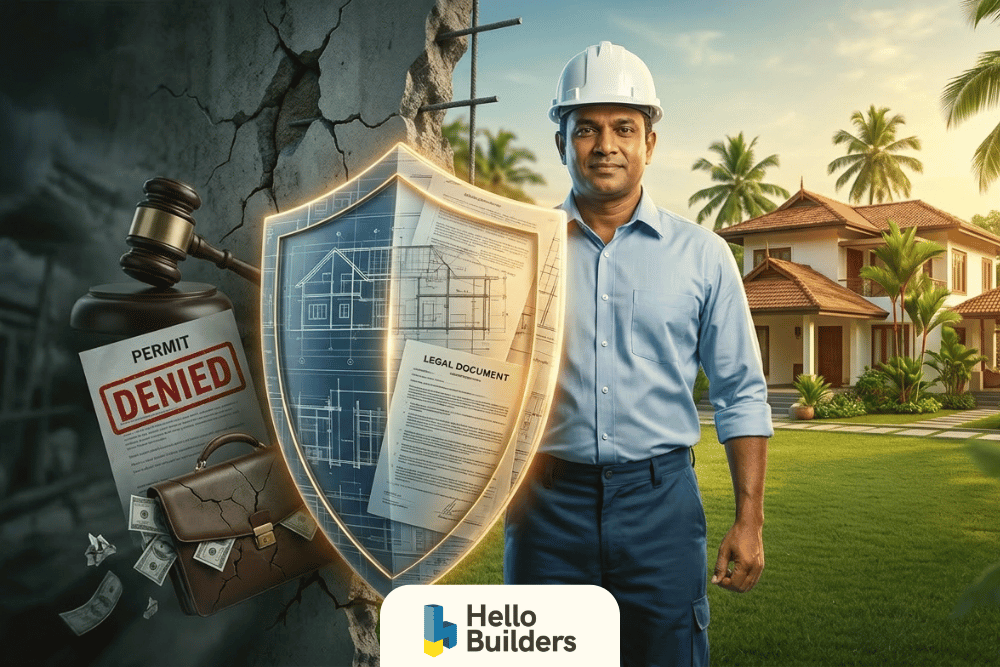
5 Legal Problems You Can Avoid by Choosing Professional House Builders in Sri Lanka
Building your dream home in Sri Lanka is exciting, but it can quickly turn stressful if legal issues arise. From missing permits to construction defects, many homeowners face costly problems that could have been avoided.
In this article, we’ll show you 5 legal problems you can prevent by choosing professional house builders, helping you protect your investment, save time, and ensure a smooth construction process. Keep reading to learn how the right experts can make all the difference.
Problem 1: Missing or Wrong Permits and Approvals
One of the biggest legal mistakes you can make when building a house in Sri Lanka is starting construction without the correct permits. Many homeowners assume they can begin work and sort out approvals later. That decision can cost you heavily.
Here’s what you need to know in general:
UDA and Municipal Council Approval Requirements
Before you lay the foundation, you must obtain approval from the relevant local authority. Depending on your location, this may include your Municipal Council, Urban Council, Pradeshiya Sabha, or the Urban Development Authority (UDA).
You are required to submit:
- Approved building plans
- Survey plans
- Ownership documents
- Structural drawings (if required)
- Development permit applications
Each authority has specific zoning rules, road access requirements, boundary limits, and height restrictions. If you fail to follow these rules, your construction may be considered illegal.
Consequences: Fines, Demolition Notices, and Legal Trouble When Selling
If you build without proper approval or deviate from the approved plan, you may face:
- Heavy fines
- Stop-work notices
- Demolition orders
- Refusal of completion certificates
The problem does not end there. When you try to sell your house in the future, buyers and banks will check for approved plans and completion certificates. If your property does not have proper approvals, you may struggle to transfer ownership or secure financing.
In serious cases, unauthorized structures may have to be altered or removed before a sale can proceed.
How Professionals Handle All Government Documentation
When you choose a professional house builder, you reduce this risk significantly. A reputable company will:
- Check zoning rules before designing your home
- Prepare drawings according to local authority standards
- Submit all required applications
- Follow up with council officers
- Ensure approvals are granted before construction begins
You do not have to run between government offices or worry about missing paperwork. Professionals handle the process correctly from the start.
Development Permits and Clearance Procedures
In many areas, you must obtain a development permit before construction begins. This includes clearance related to:
- Road access
- Drainage systems
- Environmental conditions
- Setback requirements from boundaries
Professional builders understand these procedures and ensure your plans comply before submission. This prevents delays, rejections, and legal action later.
By choosing experienced professionals, you protect yourself from costly legal problems and ensure your home is built on a solid legal foundation.
Problem 2: Building Code Violations and Regulation Non-Compliance
Even if you obtain initial approval, you can still face serious legal problems if your construction does not follow building regulations. Many homeowners only focus on design and cost, but ignoring building rules can lead to penalties, rejected inspections, and future legal disputes.
Here’s what you need to know in general:
Sri Lanka Building Regulations and Zoning Laws
In Sri Lanka, your construction must comply with regulations set by local authorities and the Urban Development Authority. These rules control:
- Land use (residential, commercial, mixed-use)
- Building height limits
- Density restrictions
- Environmental considerations
If you build a structure that does not match the zoning classification of your land, you could face legal notices or be forced to modify the structure.
Floor Area Ratio Requirements
Floor Area Ratio (FAR) determines how much total floor space you can build compared to your land size. If you exceed the permitted ratio:
- Your approval may be cancelled.
- You may be denied a completion certificate.
- You could be ordered to remove excess construction.
When you hire unqualified builders, they may ignore FAR limits just to maximize space, putting you at legal risk.
Access Road and Boundary Requirements
Authorities require minimum road width access for residential properties. You must also follow setback rules that define how far your building must be from:
- Front boundary
- Side boundaries
- Rear boundary
If your house crosses these limits, you may receive a violation notice. Correcting such mistakes after construction can be expensive and legally complicated.
Safety Standards and Structural Requirements
You are legally responsible for ensuring your home meets structural and safety standards. This includes:
- Proper foundation design.
- Approved structural drawings.
- Load-bearing calculations.
- Fire safety requirements.
- Drainage and sanitation standards.
If you use unqualified engineers or contractors, structural defects can result in legal claims, insurance issues, and safety hazards.
How Professional Builders Stay Current with Changing Regulations
Building regulations do not remain the same. Authorities update rules based on urban planning needs and safety standards. If you are not aware of these updates, your project may unintentionally violate new requirements.
Professional builders:
- Work closely with qualified architects and engineers.
- Monitor regulatory updates from local authorities.
- Design according to current zoning and safety standards.
- Ensure inspections are passed at every stage.
When you choose professionals, you reduce the risk of legal action, costly redesigns, and compliance problems. You ensure your home is not only well-built but also legally secure.
Problem 3: Contract Disputes and Payment Issues
Legal problems do not always start with permits or regulations. Many disputes begin with unclear agreements between you and your contractor. If your contract is weak or incomplete, you may face serious financial and legal trouble during construction.
Common Contractor Disputes in Sri Lanka
In Sri Lanka, common disputes between homeowners and contractors include:
- Delays in project completion.
- Sudden price increases.
- Disagreements over material quality.
- Incomplete or abandoned work.
- Extra charges not discussed at the start.
When expectations are not clearly defined, misunderstandings quickly turn into legal conflicts.
Problems with Unclear Contracts
If you rely on verbal agreements or poorly written contracts, you leave yourself unprotected. An unclear contract may fail to define:
- Scope of work
- Material specifications
- Timeline for completion
- Payment schedule
- Penalties for delays
Without these details in writing, it becomes difficult for you to prove what was originally agreed upon. This can lead to lengthy disputes or even court action.
Payment Delays and Cost Overruns
Another common issue is unexpected cost escalation. Some contractors provide low initial quotations and later demand additional payments due to:
- “Unforeseen expenses”
- Changes in material prices
- Design adjustments
- Labor cost increases
If your contract does not clearly outline how variations are handled, you may be forced to pay more than your original budget. Payment disputes can delay construction and strain your finances.
Bait-and-Switch Pricing Tactics
Some unlicensed or inexperienced builders use bait-and-switch tactics. They attract you with an unusually low quote but later substitute cheaper materials or request extra payments to continue work.
You may only realize the problem after construction has progressed, leaving you with limited options.
How Professional Companies Provide Fixed-Price Guarantees
When you choose a professional house builder, you protect yourself from many of these risks. Reputable companies typically:
- Provide detailed written contracts.
- Clearly define material specifications.
- Outline stage-based payment schedules.
- Explain how variations are priced.
- Offer fixed-price or guaranteed pricing agreements.
A fixed-price contract gives you cost certainty. You know what you are paying from the beginning, and the terms are clearly documented.
By working with professionals, you reduce the chances of financial disputes, unexpected charges, and legal battles. You gain clarity, transparency, and peace of mind throughout your construction journey.
Problem 4: Construction Defects and Structural Failures
When you build a house, you are not just investing in walls and a roof. You are investing in long-term safety. If construction is done poorly, the legal and financial consequences can be serious. Structural defects often lead to disputes, insurance problems, and costly repairs.
a. Poor Foundation Work Due to Skipped Soil Testing
Your foundation depends heavily on soil conditions. If proper soil testing is skipped, your house may suffer from:
- Uneven settlement
- Cracks in walls and floors
- Water seepage issues
- Long-term structural instability
Some inexperienced builders avoid soil testing to cut costs. However, if foundation problems appear later, you may have to spend large amounts on repairs. In severe cases, you could face legal claims if structural failure causes damage or injury.
Professional builders ensure soil tests are conducted before foundation work begins. This protects you from preventable structural risks.
b. Structural Problems from Unqualified Engineers
Structural design is not something you should leave to guesswork. If unqualified individuals prepare structural drawings, your building may not meet load-bearing or safety standards.
This can result in:
- Weak beams and columns
- Roof instability
- Cracks due to poor reinforcement
- Failure to meet safety inspections
When structural defects arise, you may struggle to claim compensation if the work was done by unlicensed professionals.
c. Quality Issues from Using Unlicensed Contractors
Unlicensed contractors often use substandard materials or improper construction methods to reduce costs. While this may seem cheaper at first, it increases your risk of:
- Early deterioration
- Water leakage
- Electrical and plumbing faults
- Non-compliance with safety regulations
These issues can reduce your property value and create legal complications if you plan to sell your house later.
The Importance of Chartered Professionals
When you work with chartered architects and engineers registered under the Institution of Engineers Sri Lanka or the Sri Lanka Institute of Architects, you gain professional accountability.
Chartered professionals:
- Follow national standards
- Carry professional responsibility
- Maintain proper documentation
- Ensure structural safety
This reduces your exposure to legal disputes caused by technical negligence.
Warranty Protection from Reputable Companies
Professional construction companies often provide written warranties for structural work and materials. This gives you legal protection if defects appear within a specified period.
A warranty ensures:
- Repairs are handled without extra cost
- You have documented proof of responsibility
- Your investment is protected
By choosing experienced and qualified professionals, you reduce the risk of structural failures and legal complications. You build not just a house, but a safe and legally secure home.
Problem 5: Property Title and Land Documentation Problems
Even if your house is built perfectly, legal trouble can arise if your land documents are not in order. Many homeowners focus only on construction and overlook land verification. This can create serious complications later, especially when you try to sell, mortgage, or transfer the property.
Ownership Verification Issues
Before construction begins, you must make sure the land legally belongs to you and is free from disputes. Common issues in Sri Lanka include:
- Unclear title history
- Multiple ownership claims
- Errors in deed descriptions
- Inherited land without proper transfer
If ownership is disputed after construction starts, your entire investment may be at risk. Legal battles over land can take years to resolve.
Professional builders usually advise you to verify your title through a qualified lawyer before starting work. This protects you from future ownership disputes.
Survey Plan Requirements
An approved and updated survey plan is essential before submitting building plans to local authorities. The survey plan confirms:
- Exact land boundaries
- Total land extent
- Road access
- Setback measurements
If your survey plan is outdated or inaccurate, your building approval may be rejected. Worse, you may unknowingly build across boundary lines, leading to disputes with neighbors.
Professional builders work closely with licensed surveyors to ensure your construction stays within legal limits.
Transfer Complications from Illegal Construction
If you build without proper approvals or violate building regulations, transferring ownership becomes difficult. Banks and buyers often request:
- Approved building plans
- Certificates of conformity
- Completion certificates
Without these documents, you may struggle to sell your property or obtain financing. In some cases, illegal structures must be corrected before transfer can take place.
How Professionals Ensure Proper Documentation from Start to Finish
When you choose a professional house builder, documentation is handled carefully from day one. They typically:
- Confirm land documents before design begins
- Work with lawyers and surveyors
- Submit correct plans for approval
- Secure required permits and certificates
- Assist in obtaining completion documentation
This organized approach ensures your property remains legally secure throughout construction and beyond.
By working with professionals, you protect yourself from title disputes, transfer delays, and legal risks that can affect your property’s value in the long term.
Why Choosing a Professional House Builder in Sri Lanka Matters
When it comes to building a home, choosing the right builder is about more than just getting the work done. Here’s why choosing a professional house builder in Sri Lanka in really important:
- Reduces Legal Risk: A professional builder ensures all permits, approvals, and regulations are followed. From UDA and Municipal Council approvals to building code compliance, they manage the legal requirements so you don’t face fines, stop-work orders, or complications when selling your property. You can avoid costly mistakes that often arise when working with unlicensed or inexperienced contractors.
- Protects Your Investment: Your house is likely one of your biggest investments. By working with qualified engineers, chartered architects, and licensed contractors, you reduce the risk of construction defects, structural failures, and poor workmanship. Professionals also handle property documentation and survey plans, keeping your investment safe from legal disputes and ownership complications.
- Ensures Smooth Project Completion: Professional builders plan and manage every stage of construction, from approvals to final handover. They provide clear contracts, fixed-price agreements, and warranties, ensuring your project stays on schedule and within budget. With experts handling inspections, approvals, and quality control, you avoid delays and unnecessary stress, giving you peace of mind throughout the building process.
By choosing a professional house building company in Sri Lanka, you ensure your home is legally compliant, structurally sound, and efficiently built, saving you time, money, and unnecessary legal headaches.
Need Help on Building Your Dream Home in Sri Lanka?
At Hello Builders, we specialize in turning your vision into reality with high-quality construction, modern designs, and expert project management. From luxury villas to contemporary homes, we handle every step of the process with professionalism and attention to detail.
Here’s why Hello Builders is the trusted choice for homeowners in Sri Lanka:
- Expertise & Quality: We use certified materials and follow best practices to ensure your home is safe, durable, and stylish.
- Comprehensive Services: Architectural design, structural engineering, interior solutions, council approvals, and full project management(all under one roof).
- Customer-Focused Approach: We work closely with you to bring your dream home to life while respecting your budget and timeline.
Take the first step toward your perfect home today. Click below to get in touch with our team!
| Contact Us |
Final Thoughts
Building a home in Sri Lanka can be exciting, but it comes with its share of legal challenges. From missing permits and building code violations to contract disputes, construction defects, and land documentation issues, the risks are real and often costly.
By choosing a professional house builder, you protect yourself from these problems, ensure your home is legally compliant and structurally sound, and enjoy a smoother, stress-free construction process. Investing in experienced professionals is not only about quality construction but also about safeguarding your time, money, and peace of mind.
Key Takeaways
- Always obtain proper UDA and Municipal Council approvals before starting construction.
- Missing or wrong permits can lead to fines, demolition orders, and legal trouble when selling.
- Professional builders ensure compliance with Sri Lanka’s building codes and zoning laws.
- Ignoring floor area ratios, boundary limits, or safety standards can create costly legal issues.
- Clear, written contracts prevent disputes, payment delays, and unexpected cost overruns.
- Fixed-price agreements from reputable companies provide financial certainty.
- Structural defects often arise from unqualified engineers or skipped soil testing.
- Chartered professionals guarantee higher construction quality and compliance with safety standards.
- Proper land documentation and updated survey plans prevent ownership disputes and transfer complications.
- Hiring professional house builders protects your investment, reduces legal risk, and ensures smooth project completion.
FAQs
What happens if you build without plan approval in Sri Lanka?
Unauthorized building triggers notices to halt work, fines, or demolition by local authorities like Pradeshiya Sabha. It complicates property sales or transfers due to non-conformity certificates. Professional builders secure approvals upfront, avoiding these under Housing and Town Improvement Ordinance.
How to verify if a house builder is professional and legal?
Check CIDA registration, professional body membership (e.g., architects), and past project references. Ensure they provide insured contracts, BOQs, and handle permits. Reviews and site visits confirm compliance with UDA regulations.
Can professionals avoid zoning and land use violations?
Yes, they verify street lines, setbacks, and FAR via UDA plans, preventing non-compliance fines. Unprofessional hires ignore flood-prone or filled lands, leading to structural failures. Experts conduct surveys and obtain valid PPCs.
What role does insurance play with professional builders?
Professional builders carry insurance for workmanship, injuries, and delays, protecting homeowners from claims. Uninsured unlicensed ones leave owners liable for accidents or defects. CIDA-registered firms adhere to this for accountability.