
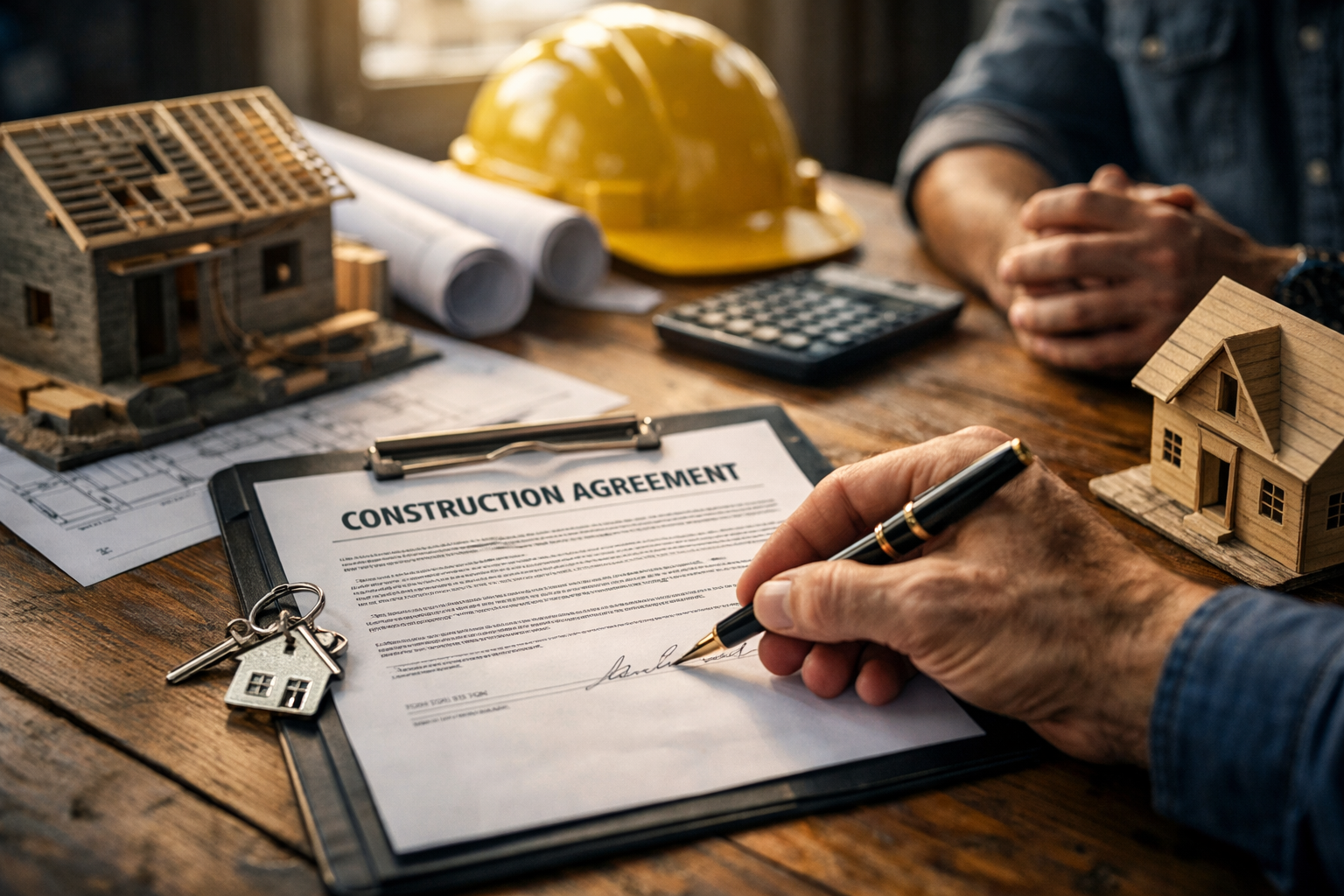
Building your dream home in Sri Lanka is exciting, but signing a house construction agreement without careful checks can lead to costly mistakes and delays. From hidden costs to unclear timelines, small oversights can create big problems.
In this guide, we walk you through 15 essential things to check before signing your construction agreement in 2026, helping you make informed decisions and protect your investment. Read on to ensure your home is built smoothly, on time, and exactly as you envisioned.
So, without further ado, let’s explore the checklist:
1. Builder’s Registration and Legal Status
Before signing a house construction agreement, always confirm that the builder is legally registered in Sri Lanka. This helps protect you if problems arise later.
Check whether the builder is registered with CIDA (Construction Industry Development Authority) and ask for their registration number and grade. Make sure the registration is valid and suitable for the size of your project.
Also, verify the builder’s business registration. Confirm whether they operate as a company, partnership, or individual, and ensure the name on the registration matches the name on the agreement.
If dealing with a company, confirm that the person signing the contract has the authority to do so.
This step is really important because hiring a registered builder makes it easier to enforce the agreement and seek legal action if needed. Unregistered builders carry a much higher risk.
2. Builder’s Past Work and Reputation
A builder’s past work gives you a clear idea of what to expect. Before signing the agreement, take time to check the builder’s previous projects and overall reputation.
Ask for details of recently completed houses and, if possible, visit at least one site to inspect the quality of work. Pay attention to finishing, structure, and overall build quality.
Speak to past clients and ask whether the builder:
- Completed the project on time.
- Stayed within the agreed budget.
- Responded well to problems or changes.
Also, check online reviews, social media pages, and local recommendations. Client reviews play an important role in understanding a builder’s reputation. Consistent, detailed feedback often reflects how a company operates throughout the construction process.
One of our recent clients shared the following experience:
“Hello Builders did a marvelous job of bringing our vision to reality. They are a great company with strong leadership and a talented staff. Their experienced team knows exactly what they are doing and delivers exceptional results. Their focus on quality, client satisfaction, flexibility, and friendliness is truly admirable. I highly recommend Hello Builders to anyone in need of construction work.”
— Google Review
Reviews like this highlight the importance of choosing a builder with proven experience, strong leadership, and a commitment to quality and client satisfaction.
However, keep in mind that, while one bad review is not always a red flag, repeated complaints about delays, poor quality, or payment disputes should be taken seriously.
A builder with a solid track record is far less likely to cause costly issues during construction.
3. Scope of Work Clearly Written
One of the most common causes of disputes in house construction is an unclear scope of work. Before signing the agreement, make sure every part of the construction work is clearly written and easy to understand.
What Is Included in the Construction
The agreement should list exactly what the builder will provide. This may include:
- Foundation and structural work.
- Walls, roofing, and plastering.
- Electrical and plumbing work.
- Doors, windows, flooring, and finishes.
If something is promised verbally, it must be written into the agreement. Verbal promises are difficult to prove later.
What Is Not Included
Just as important as inclusions are exclusions. The agreement should clearly state what is not included, such as:
- External works like boundary walls or gates.
- Landscaping.
- Utility connection fees.
- Furniture, fittings, or special finishes.
Clear exclusions help avoid misunderstandings and unexpected costs during construction.
Grey Areas That Cause Disputes
Problems often arise when items are vaguely described or not mentioned at all. Common grey areas include:
- Finishing quality and material brands.
- Electrical points and plumbing fixtures.
- Ceiling height, waterproofing, and paint types.
To avoid disputes, ask for detailed descriptions and specifications for all key items. A clearly written scope of work protects both the homeowner and the builder and helps the project run smoothly from start to finish.
4. Approved Building Plans and Drawings
Before signing a construction agreement, ensure all building plans and drawings are approved by the local authorities. Using unapproved plans can lead to legal problems, fines, or even having to halt construction.
Check that the plans are:
- Council-approved by the local municipal or urban council.
- Prepared or reviewed by a licensed architect or engineer.
- Accurate and consistent with the agreement, including dimensions, layout, and materials.
Matching the approved plans with what is written in the agreement helps avoid misunderstandings. Any changes to the plans during construction should be documented and approved to prevent disputes later.
5. Total Construction Cost and Payment Breakdown
Before signing the agreement, make sure the total construction cost is clearly written and matches your budget. Avoid vague terms like “subject to change” without explanation.
Stage-by-Stage Payment Schedule
The agreement should include a detailed payment plan linked to project milestones, for example:
- Foundation completed.
- Walls and roofing completed.
- Electrical and plumbing installed.
- Final handover.
This ensures you pay for work as it progresses, not upfront.
Avoid Large Upfront Payments
Paying a large sum before work starts increases risk if the project is delayed or the builder fails to deliver. Keep initial payments reasonable and linked to early work completion.
A clear cost breakdown and staged payments protect your investment and make it easier to track progress.
6. Materials and Quality Standards
One of the most important parts of a house construction agreement is specifying the materials and quality standards. Poor-quality materials are a common reason for delays, extra costs, and structural problems, so it’s essential to be clear about what will be used.
Here’s what you need to check in general:
Type and Brand of Materials
The agreement should clearly list the types and brands of materials to be used in construction. This includes items such as cement, bricks, steel, paint, tiles, and fixtures. Using well-known and reliable brands ensures durability and reduces the risk of defects.
Avoid vague descriptions like “good quality cement” or “standard tiles” without specifying the brand or grade.
Cement, Steel, Wiring, and Plumbing Details
Structural and functional materials should also be clearly documented:
- Cement and Steel: Specify the grade, quantity, and standards to ensure structural strength.
- Wiring and Electrical Fittings: Include the type of wiring, number of circuits, and brand of switches, sockets, and distribution boards.
- Plumbing and Fixtures: Mention the type of pipes, fittings, and water supply system, as well as any brands or quality standards being used.
Detailed documentation prevents arguments over substitutions or lower-quality replacements during construction.
Who Bears Cost Increases
The agreement should clearly define who is responsible if material costs rise during the project. In Sri Lanka, prices of cement, steel, and other materials can fluctuate significantly.
Decide whether:
- The homeowner will cover cost increases,
- The builder will absorb them, or
- Both parties will share the difference.
Clarifying this in advance prevents disputes and unexpected bills later.
Why This Matters
By specifying materials, grades, and quality standards, you protect your home’s longevity and your investment. It also helps maintain transparency between the homeowner and builder, ensuring that expectations are clear and that work is carried out to the agreed standard.
7. Construction Timeline and Completion Date
A clearly defined construction timeline is essential for managing expectations and avoiding disputes. Before signing the agreement, ensure the start and end dates, as well as key milestones, are documented as outlined below:
Start Date and End Date
The agreement should clearly state when construction will begin and the expected completion date. This helps both parties plan and reduces misunderstandings. Be realistic about timelines, considering factors like weather, material availability, and local approvals.
Milestones for Each Stage
Breaking the project into stages makes it easier to track progress and link payments to completed work. Typical stages might include:
- Foundation and structural work.
- Walls, roofing, and plastering.
- Electrical, plumbing, and other installations.
- Finishing, painting, and handover.
For each stage, the agreement should specify expected completion dates. This provides a clear framework for monitoring work and ensures accountability.
Delays and Acceptable Extensions
Construction delays can happen due to unavoidable circumstances like heavy rain, supply shortages, or changes requested by the homeowner. The agreement should define:
- What counts as an acceptable delay.
- How long extensions can be granted.
- How the builder should communicate delays.
Clearly outlining acceptable delays protects both parties and prevents disputes over missed deadlines.
Why This Matters
A well-defined timeline and milestone schedule give homeowners peace of mind and a way to monitor the project closely. It also ensures that the builder remains accountable, making it easier to manage payments and project expectations.
8. Penalties for Delays
Delays in construction can be costly and stressful, which is why a house construction agreement should clearly define penalties for delays. This ensures the builder is accountable and the homeowner is protected.
Delay Charges per Day or Month
The agreement should specify how much the builder will be charged if the project exceeds the agreed timeline. This is usually calculated as a fixed amount per day or month of delay. Clearly stating this figure helps both parties understand the financial consequences of missed deadlines.
Builder Responsibility vs External Delays
It’s important to distinguish between delays caused by the builder and those caused by external factors such as:
- Bad weather or natural events.
- Late delivery of materials from suppliers.
- Changes requested by the homeowner.
The agreement should clarify which delays are the builder’s responsibility and which are excusable. Only delays under the builder’s control should trigger penalty charges.
How Penalties Are Enforced
The agreement should also outline how penalties will be applied. Common methods include:
- Deducting the penalty from the builder’s payment.
- Requesting a separate payment for delays.
- Linking penalties to specific milestones.
Having clear enforcement rules ensures that penalties are fair and enforceable, reducing the risk of disputes.
Why This Matters
Defining penalties for delays protects your investment and motivates the builder to stick to the schedule. It also provides a legal basis to address issues if the project is significantly delayed, giving homeowners confidence and clarity throughout construction.
9. Variations and Extra Work Clause
During a house construction project, changes or extra work are often necessary. A well-defined variations clause in the agreement ensures that these changes are managed fairly, preventing disputes over costs or scope.
How Changes Are Approved
The agreement should explain how any changes to the original plan will be approved. Both the homeowner and builder should agree in writing before the work begins. Verbal approvals are risky and can lead to disagreements later.
Written Variation Process
A clear written variation process protects both parties. This process typically includes:
- Documenting the requested change.
- Getting signatures from both the homeowner and builder.
- Recording the impact on project timeline and quality.
Keeping a paper trail ensures accountability and makes it easier to resolve any disagreements.
Cost Approval Before Work Starts
Before any extra work begins, the agreement should require cost approval from the homeowner. This prevents unexpected bills and ensures the homeowner is aware of additional expenses. The agreement can also specify whether the cost will be calculated based on a pre-agreed rate or a quote provided by the builder.
Because of these facts, having a clear variations clause helps manage changes professionally and keeps the project on track. It prevents misunderstandings about what work is included in the original contract, what is extra, and who is responsible for additional costs.
10. Engineer and Supervisor Responsibilities
Proper supervision is key to ensuring that construction work meets quality standards and follows the approved plans. The agreement should clearly outline the roles and responsibilities of the engineer or site supervisor.
Who Supervises the Work
The agreement should specify who is responsible for supervising the construction. This could be:
- A licensed civil engineer.
- A site supervisor employed by the builder.
- Both in larger projects.
Knowing exactly who oversees the work ensures that someone is accountable for maintaining standards at every stage.
Frequency of Site Visits
The agreement should mention how often the engineer or supervisor will visit the site. Regular inspections help identify problems early and ensure that work is done according to the plans. Frequent site visits also make it easier to monitor safety, material usage, and workmanship.
Accountability if Work Quality Is Poor
It is important to define what happens if the work does not meet agreed quality standards. The agreement should clearly state who is responsible for correcting defects and within what time frame. This prevents disputes over responsibility and ensures that the builder or supervisor addresses any problems promptly.
Why This Matters
Clear supervision roles, frequent site checks, and defined accountability protect the homeowner’s investment. It ensures that the project is completed to the expected quality, reducing the risk of costly repairs after handover.
11. Warranty and Defect Liability Period
A warranty and defect liability period is a critical part of a construction agreement. It protects homeowners by ensuring that the builder is responsible for fixing defects after the project is completed.
Here’s what you need to know in general:
Structural Warranty Period
The agreement should clearly state the structural warranty period for the house. This usually covers major components such as the foundation, walls, roof, and load-bearing structures. In Sri Lanka, this period typically ranges from 15 to 20 years, depending on the builder and project type.
Fixing Defects After Handover
The agreement should specify how defects will be addressed after handover. This includes:
- Who is responsible for fixing defects.
- How quickly the builder must respond.
- Which types of defects are covered.
This ensures that the homeowner does not have to pay extra for repairs due to construction errors or poor-quality work.
Time Limit for Reporting Issues
The contract should also include a time limit for reporting defects. Homeowners must inspect the property carefully after completion and report any issues within this period. Clear reporting deadlines prevent misunderstandings and make it easier to enforce the warranty.
Why This Matters
A well-defined warranty and defect liability period provides peace of mind and protects your investment. It ensures that the builder remains accountable for quality work even after you have taken possession of the house.
12. Termination Clause
A termination clause in a construction agreement explains under what circumstances either the homeowner or the builder can cancel the contract. This protects both parties and clarifies responsibilities if the project cannot continue.
When Can You Cancel the Agreement
The agreement should clearly state when the homeowner can terminate the contract, such as:
- The builder fails to start work on the agreed date.
- Poor workmanship that is not corrected after notice.
- Repeated delays or breach of key terms.
Having this defined prevents disputes and ensures you have legal recourse if the builder does not meet their obligations.
When the Builder Can Cancel
The agreement should also explain when the builder can cancel the contract, for example:
- Non-payment by the homeowner according to the agreed schedule.
- Unreasonable changes or instructions that delay work.
- Safety or legal issues affecting construction.
Defining this ensures fairness and protects the builder from situations beyond their control.
Financial Consequences of Termination
The agreement should detail what happens financially if either party cancels the contract. This can include:
- Refunds for payments already made for work not completed.
- Payment for completed work and materials on site.
- Penalties for breach of contract.
Clear financial terms prevent conflicts and make termination processes smoother if needed.
Why This Matters
A well-defined termination clause protects both the homeowner and the builder, ensuring that neither party is unfairly disadvantaged. It also provides a clear framework for resolving situations where the contract cannot continue as planned.
13. Dispute Resolution Method
Even with a clear agreement, disagreements can arise during a construction project. A dispute resolution clause helps both parties resolve conflicts efficiently and avoid costly legal battles.
Mediation or Arbitration Clause
The agreement should include a mediation or arbitration clause. These methods allow both parties to settle disputes outside of court with the help of a neutral third party. Mediation and arbitration are usually faster, less formal, and less expensive than court proceedings, while still providing legally binding outcomes in the case of arbitration.
Court Jurisdiction in Sri Lanka
The agreement should clearly specify which courts in Sri Lanka have jurisdiction if disputes cannot be resolved through mediation or arbitration.
Typically, this is the civil courts in the district where the property is located. This ensures that any legal action is handled locally and avoids confusion over which court has authority.
Avoiding Costly Legal Battles
By defining the dispute resolution process, the agreement reduces the risk of long, expensive court cases. Both parties know in advance how conflicts will be addressed, making it easier to resolve issues quickly and fairly.
Furthermore, clear procedures also encourage communication and compromise rather than escalation.
Why This Matters
A well-defined dispute resolution clause protects both the homeowner and the builder. It provides a clear roadmap for resolving disagreements, saving time, money, and stress while ensuring that disputes do not derail the construction project.
14. Insurance and Risk Coverage
Construction work involves risks, both for workers and the property. A clear insurance and risk coverage clause in the agreement protects the homeowner, the builder, and third parties.
Here’s what you need to check in general:
Worker Insurance
The agreement should specify that the builder provides insurance for workers on site. This covers injuries that may occur during construction and ensures that the homeowner is not liable for accidents involving the builder’s employees.
Damage to Property or Neighbours
Construction can sometimes cause accidental damage to your property or neighbouring properties. The agreement should clearly outline who is responsible for repairing or compensating for such damage. This protects both the homeowner and neighbours from unexpected costs or disputes.
Who Bears Accident Risks
The contract should define who bears the risk for accidents or damage during construction. This includes risks from natural events, construction errors, or equipment accidents. Typically, the builder should carry insurance to cover these risks, but it should be clearly stated in the agreement.
Why This Matters
A clear insurance and risk coverage clause ensures peace of mind. It protects your investment, keeps construction safe, and clarifies responsibilities if accidents or damage occur. Without proper coverage, homeowners could face financial liability for incidents on or near the construction site.
15. Final Inspection and Handover Process
The final inspection and handover process is the last and one of the most important steps in a house construction project. It ensures that the completed house meets the agreed quality standards and is ready for occupation.
Snag List and Defect Fixing
Before making the final payment, conduct a thorough inspection of the property. Note any defects, unfinished work, or issues in a snag list. The builder should fix all items on this list before handover. This process ensures that nothing is overlooked and that the house is delivered in the agreed condition.
Final Payment Conditions
The agreement should clearly link final payment to the completion of all work and resolution of the snag list. Avoid paying the full amount before inspecting the property. Partial payments can also be structured to encourage timely defect corrections.
Documents to Collect at Handover
During handover, collect all relevant documents, including:
- Approved building plans.
- Material warranties.
- Occupancy permits.
- Maintenance manuals for installed systems.
Having these documents ensures legal compliance and helps with future maintenance or repairs.
Why This Matters
A proper final inspection and handover process protects homeowners from incomplete work, hidden defects, and legal issues. It ensures the builder delivers what was agreed and provides peace of mind that the house is safe, fully functional, and ready to live in.
Summary Table: Checklist
Need Help on Building Your Dream Home?
At Hello Builders, we specialize in turning your vision into reality through our expert consultations, high-quality construction services, modern designs, and skilled project management. From luxury villas to contemporary homes, we handle every step of the process with professionalism and attention to detail.
Here’s why Hello Builders is the trusted choice for homeowners in Sri Lanka:
- Expertise & Quality: We use certified materials and follow best practices to ensure your home is safe, durable, and stylish.
- Comprehensive Services: Architectural design, structural engineering, interior solutions, council approvals, and full project management(all under one roof).
- Customer-Focused Approach: We work closely with you to bring your dream home to life while respecting your budget and timeline.
Take the first step toward your perfect home today. Click below to get in touch with our team!
| Contact Us |
Final Thoughts
Signing a house construction agreement is one of the most important steps when building your dream home in Sri Lanka. Careful attention to details like the builder’s registration, past work, scope of work, timelines, materials, and warranties can save you from costly mistakes, delays, and disputes.
By reviewing all 15 points outlined in this guide, you can make informed decisions, protect your investment, and ensure that your home is built safely, on time, and to the quality you expect. A well-prepared agreement not only clarifies responsibilities but also gives you peace of mind throughout the construction process.
Taking the time to check these details before signing will help you avoid surprises, maintain control over your project, and turn your vision into a home you can truly enjoy.
Key Takeaways
- Check Builder Registration – Always confirm the builder is legally registered with CIDA and has valid business registration.
- Review Past Work and Reputation – Inspect previous projects and read client reviews to assess quality, reliability, and professionalism.
- Ensure a Clear Scope of Work – List exactly what is included and excluded in the agreement to avoid misunderstandings.
- Verify Approved Plans and Drawings – Use council-approved plans prepared or reviewed by a licensed architect or engineer.
- Understand Total Cost and Payment Schedule – Ensure costs are clearly written and payments are linked to project milestones, avoiding large upfront payments.
- Specify Materials and Quality Standards – Include types, brands, grades, and who bears cost increases to maintain durability and quality.
- Set Construction Timeline and Milestones – Clearly define start/end dates, stage completions, acceptable delays, and extensions.
- Include Penalties for Delays – Define delay charges, builder responsibilities, and enforceable methods to motivate timely completion.
- Clarify Warranties and Defect Liability – Define structural warranty periods, defect reporting timelines, and repair responsibilities after handover.
- Outline Insurance, Risk, and Handover Procedures – Include worker insurance, liability for accidents or property damage, final inspection, and documentation at handover.
FAQs
Is a lawyer necessary for signing a house construction contract in Sri Lanka?
Yes, hiring a lawyer is vital to review and oversee the signing, especially before any payments or plan finalization. They ensure clauses protect against delays or poor workmanship, adding weight to the agreement, particularly if you're overseas. Reputable firms provide contracts, but individuals often don't, making legal oversight essential.
Can you build a house without a formal construction agreement in Sri Lanka?
It's risky and not recommended. Individual workers often skip contracts, leading to disputes over payments or quality. Formal agreements with companies provide legal recourse; skipping one exposes you to financial losses without lawyer oversight.
Should you pay a deposit before signing a construction agreement in Sri Lanka?
Sign the contract first with lawyer review before any advance payments (typically 20-30%). Avoid upfront deposits without finalized plans and protections to prevent contractor abandonment.
What is the typical duration specified in a Sri Lankan house construction agreement?
Durations range from 6-18 months for a standard house, based on size (e.g., 2,000 sq ft) and site conditions, with clauses for extensions due to weather or approvals. Include daily penalties for delays.